
What Kind of Man Shoots a State Senator at 5 AM?
Why the rapid normalization of targeted local violence is the most dangerous trend in America right now.


We Keep Treating Political Violence Like Weather. It's the Climate.
Last June, a man in a fake-cop disguise knocked on Melissa Hortman’s door in Brooklyn Park, Minnesota, and shot her and her husband Mark to death. Earlier that morning, he’d shot State Senator John Hoffman and his wife in their own home and left them for dead. Hortman was the former Speaker of the Minnesota House. Hoffman was a sitting state senator. Neither was a federal official. Neither was a household name. Both were on a list a stranger had compiled of people he had decided to assassinate at home, in the predawn dark, before most of the country woke up.
I think about that morning a lot. Not because it was uniquely horrific, though it was, but because of how quickly it disappeared. There was a news cycle. There were statements. There was the usual sorting of who was to blame and on which side. And then it was gone. POOF!
This is the part I can’t get past. Political violence in this country isn’t an isolated event anymore. It’s happening so often that we don’t have time to actually look at any of it. A state legislator at 5 AM. A campus speaker on a quad in Utah. A judge in her driveway in Wisconsin. The governor of Pennsylvania’s house gets firebombed. Each one gets a day, maybe a week, in the glare of the outrage cycle. Then we move on. We treat them as separate weather events. We treat the perpetrators as broken loners acting on private demons. We don’t ask why this is the country we live in now.
But they can no longer be considered just unusual weather events. They are a part of the climate that we now live in.
Last summer, in the days right after Hortman was killed, I sat down and wrote the first draft of a graphic novel script. It was a frenzied couple of days. I have been drawing and redrawing it ever since. I’m still a good deal away from completing it. It’s more than 800 drawings, and I’ve done a few cycles of rewriting and redrawing on top of that.
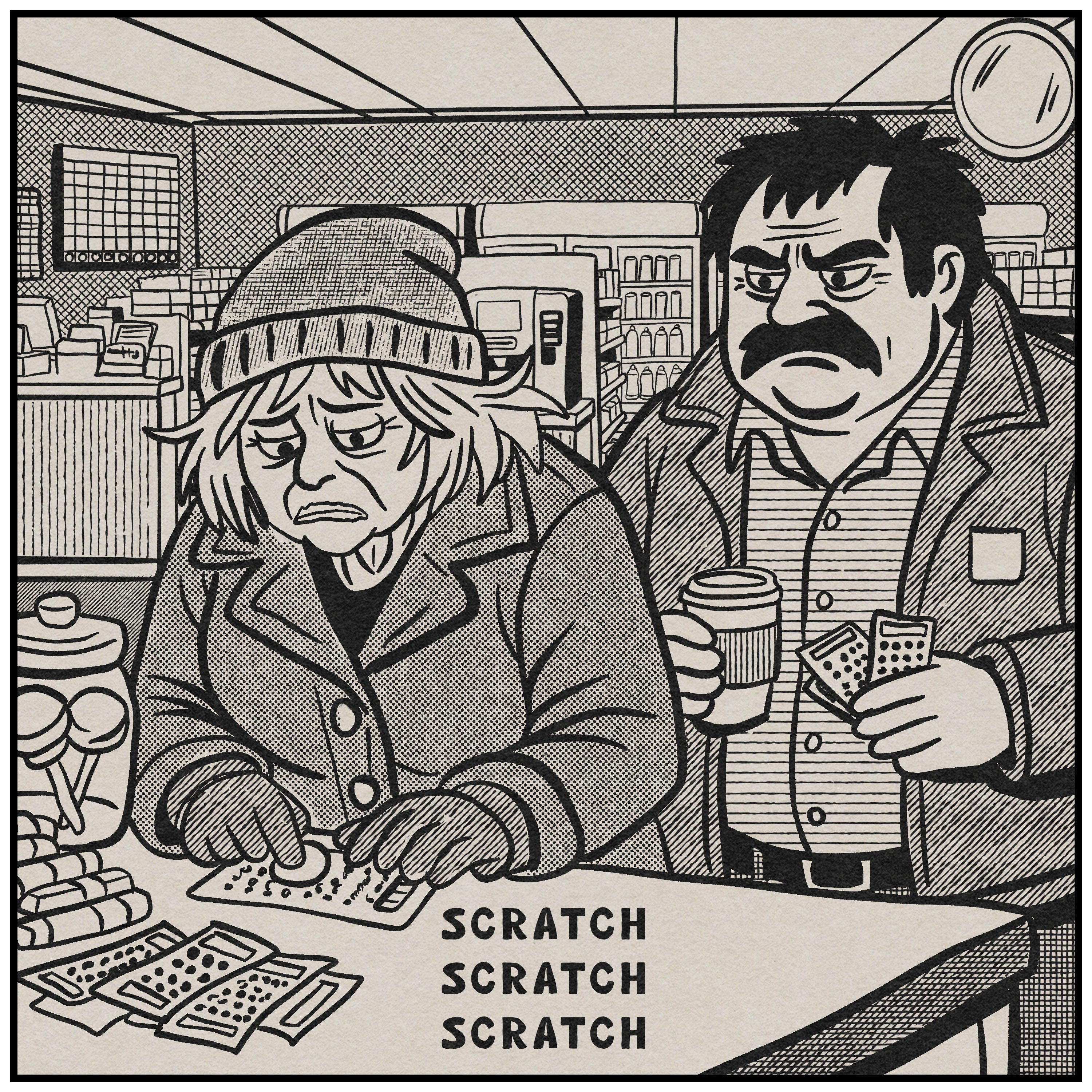
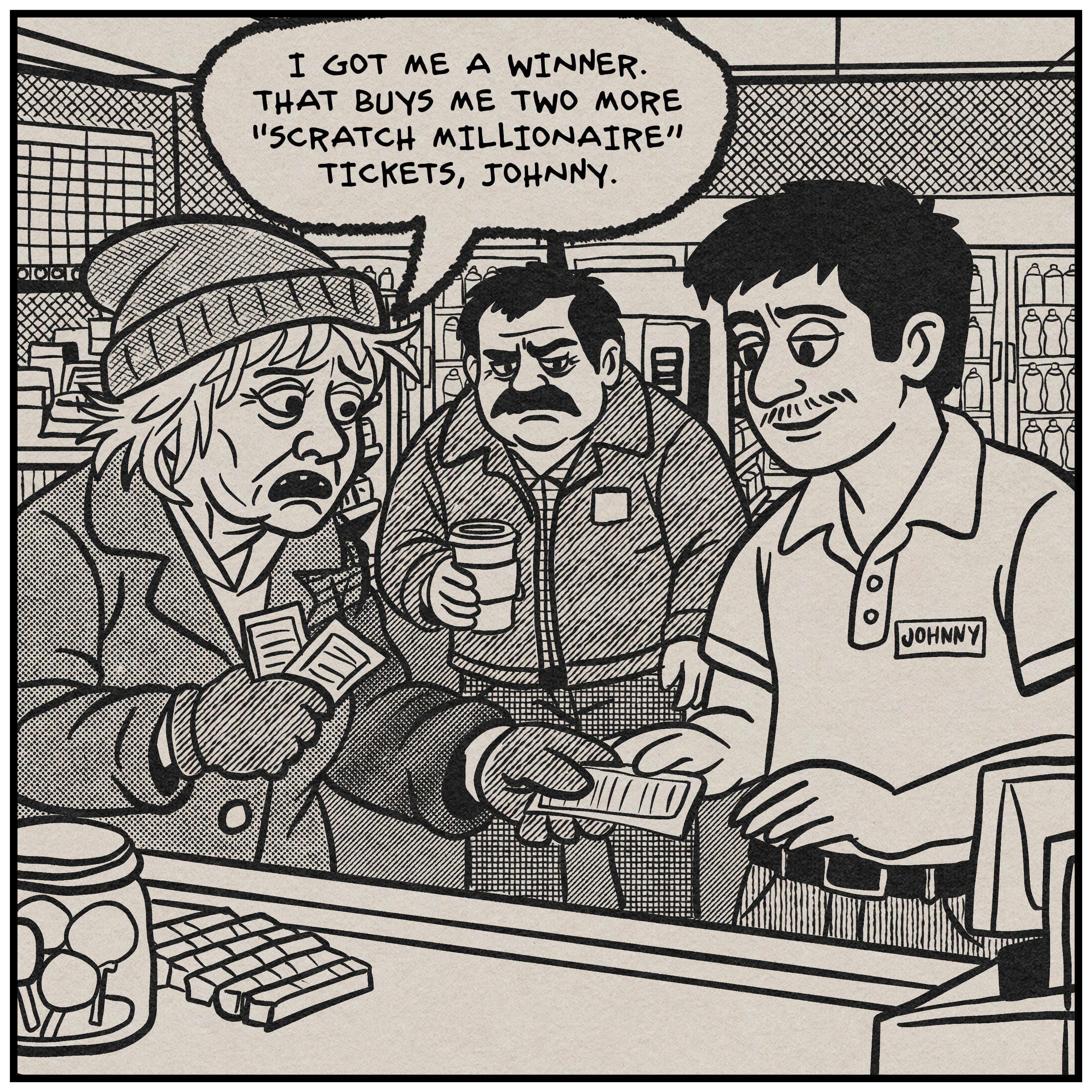
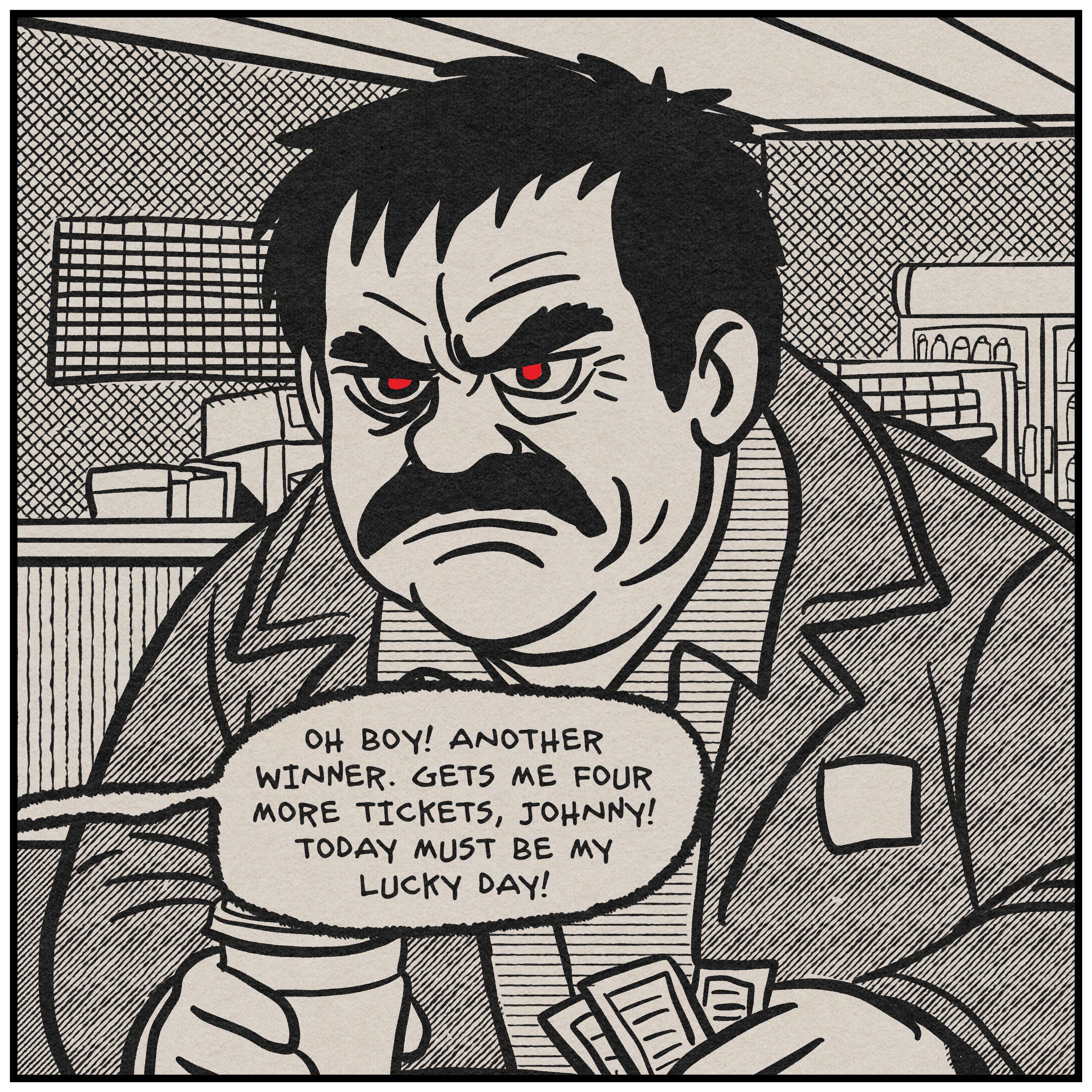
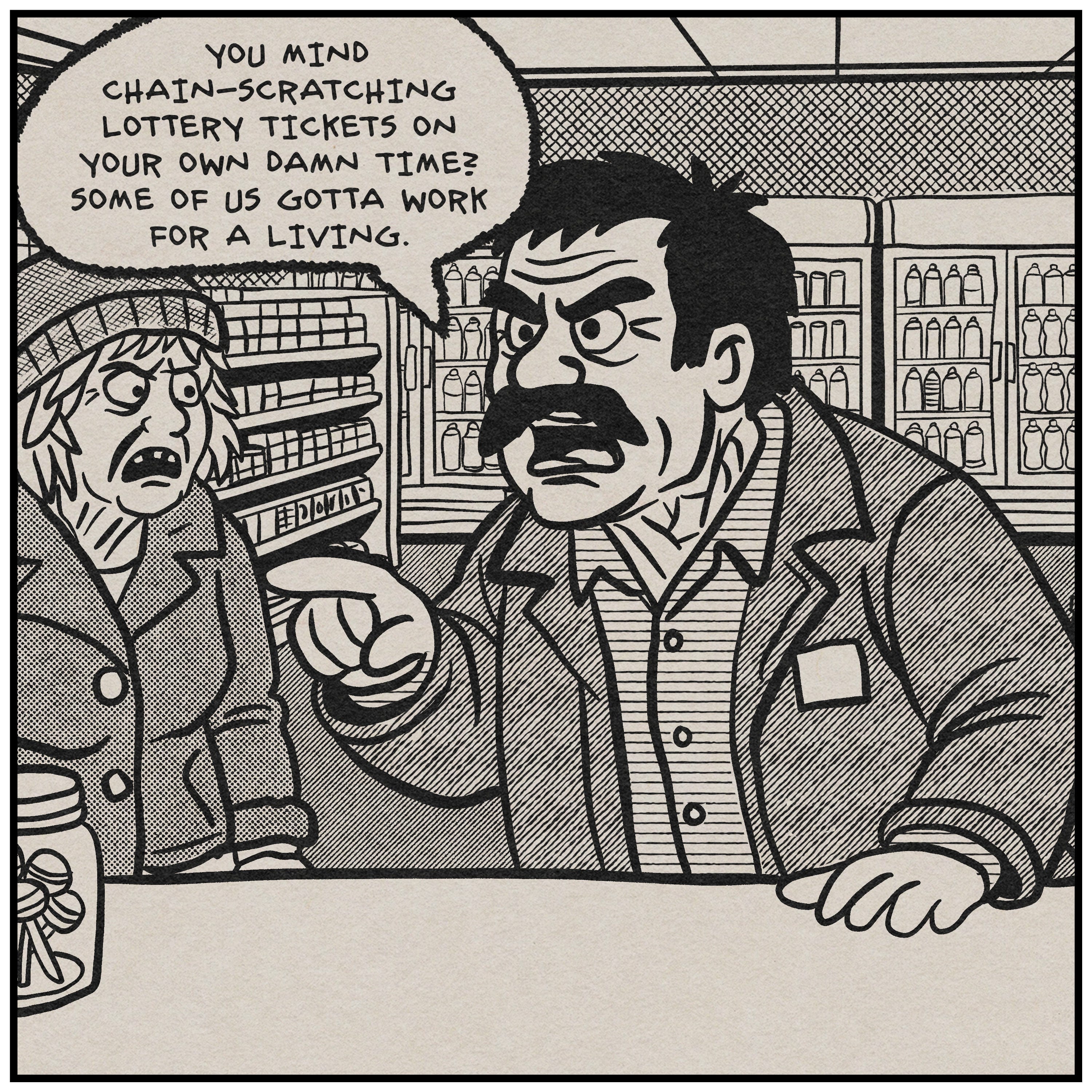
The book is called Powder Keg. On the surface, the story is about a political assassination in a small Vermont town. The actual story is about the system that produces the kind of man who would carry out something like that.
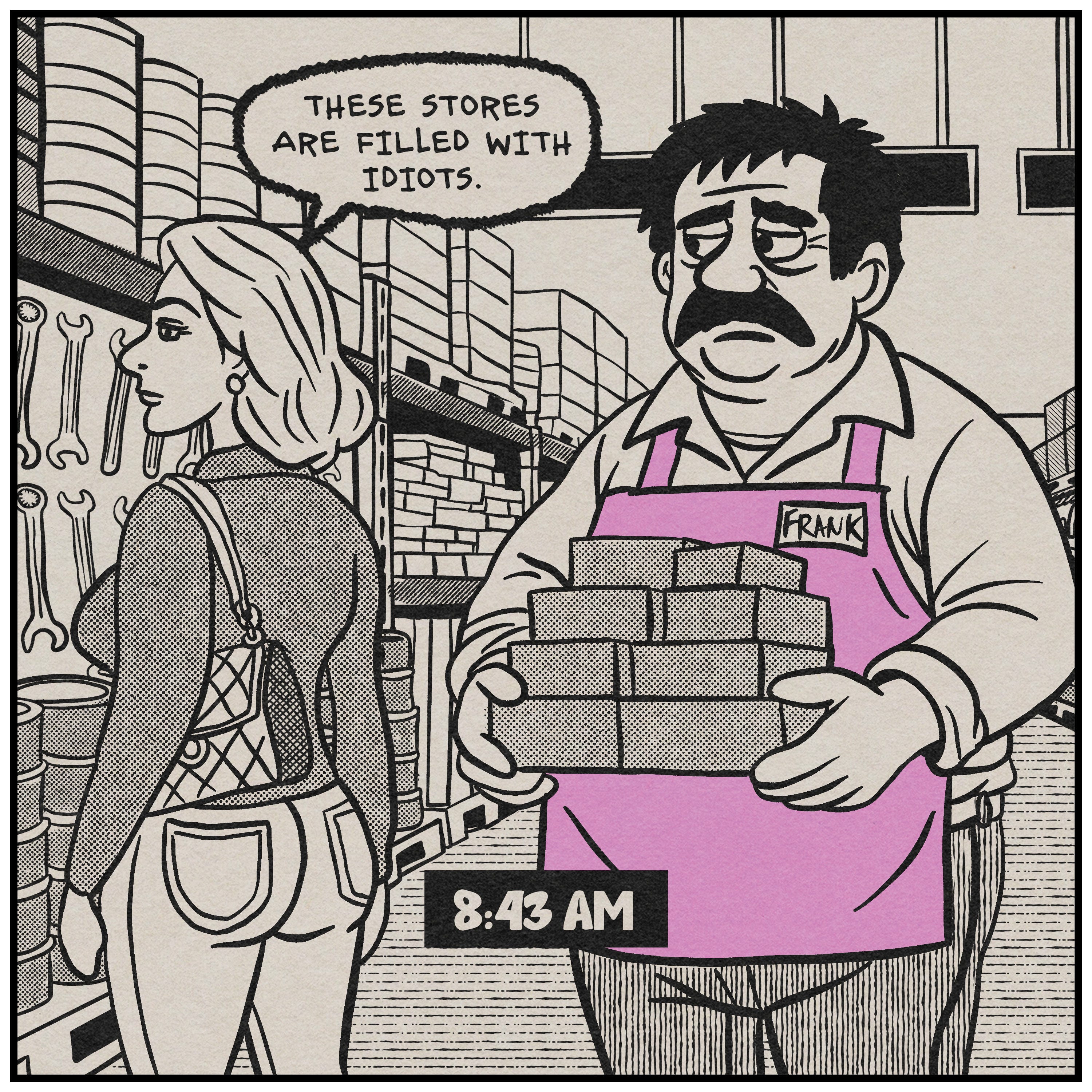
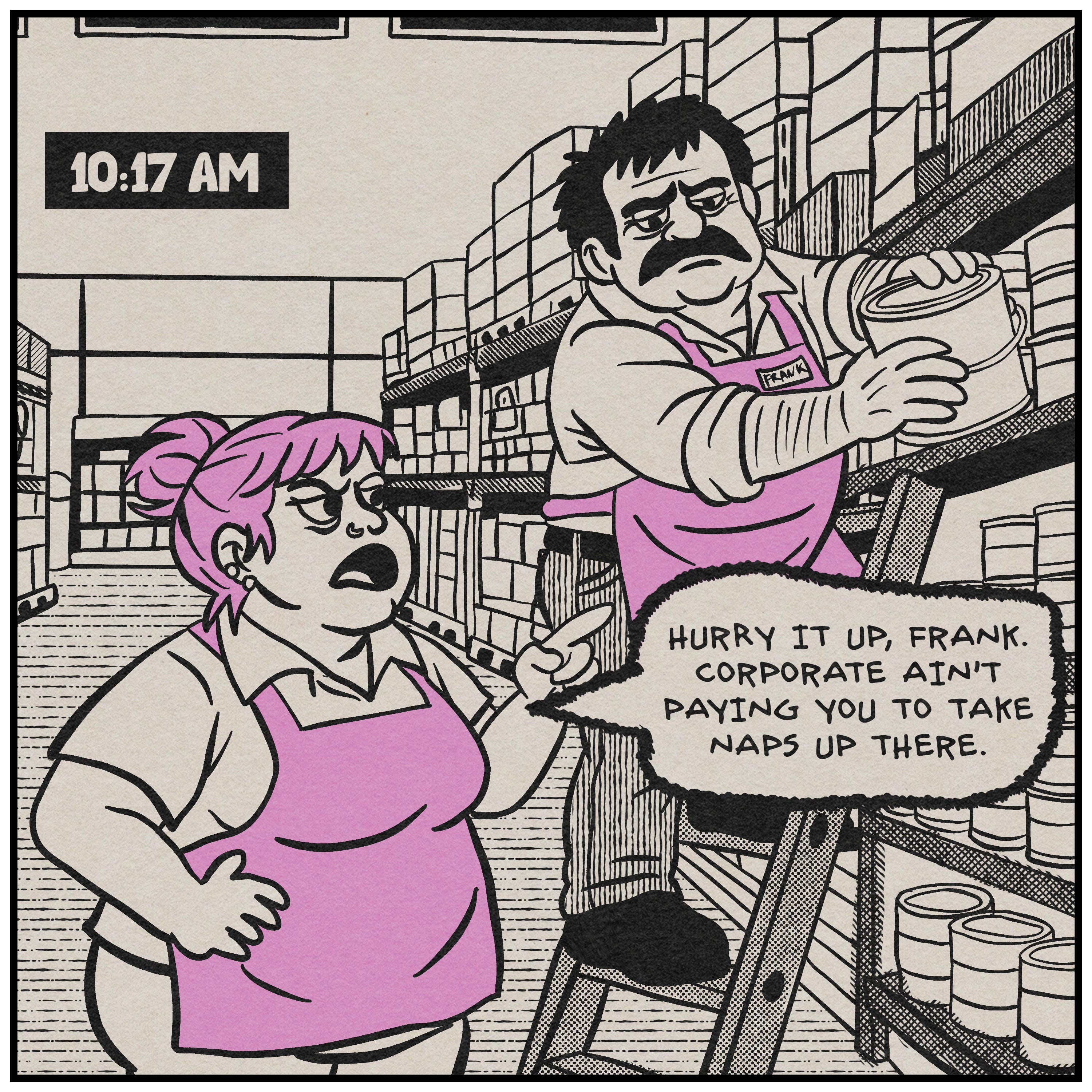
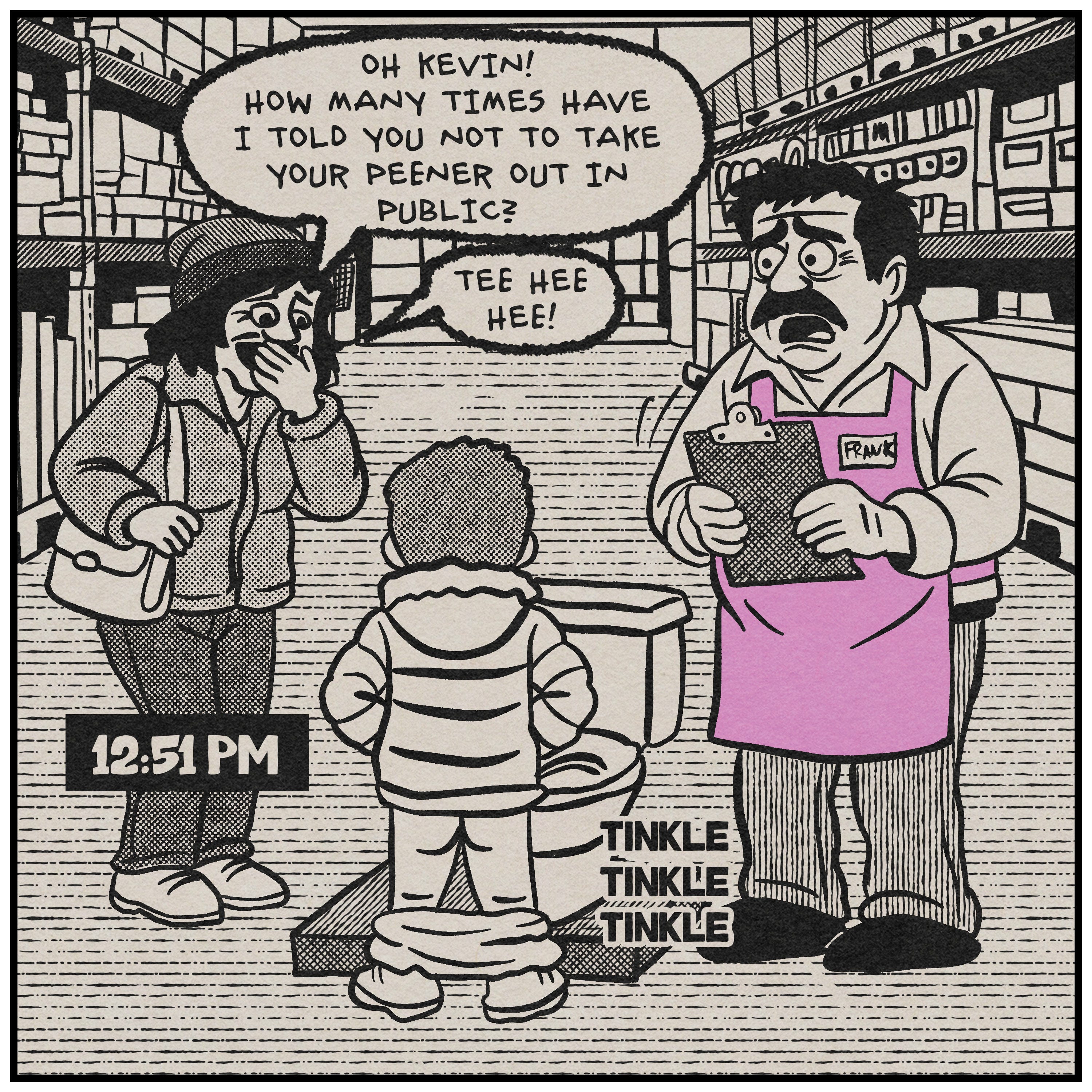
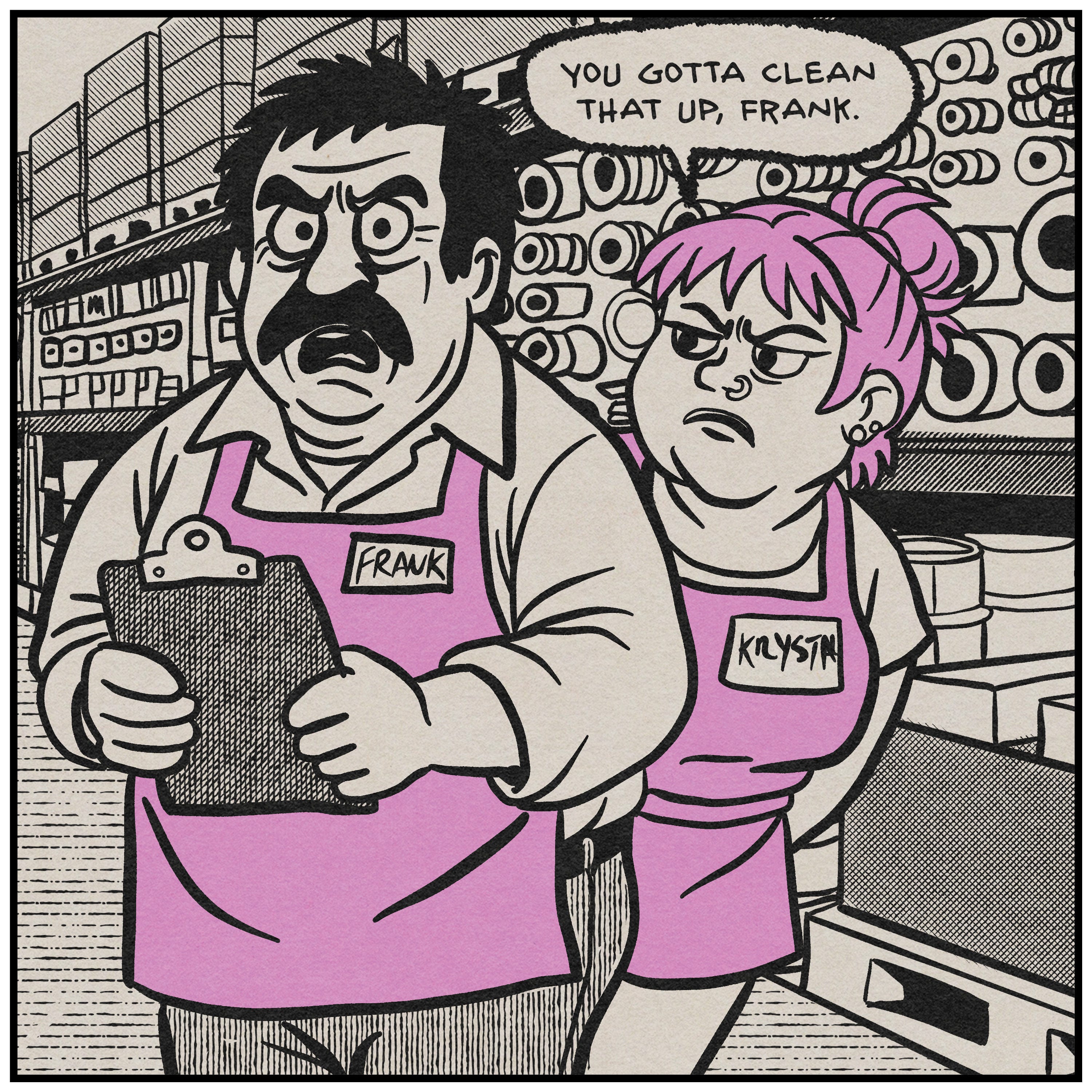
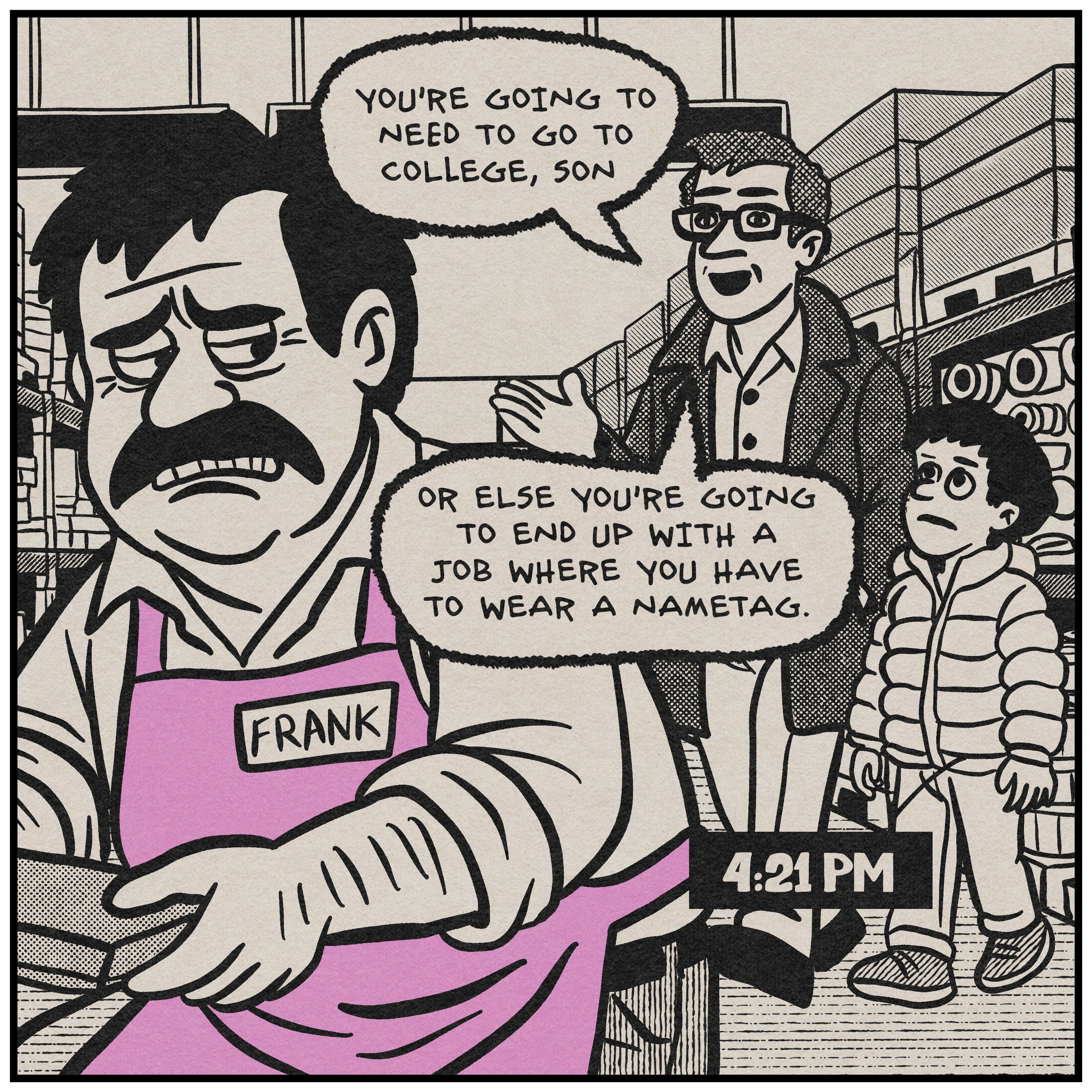
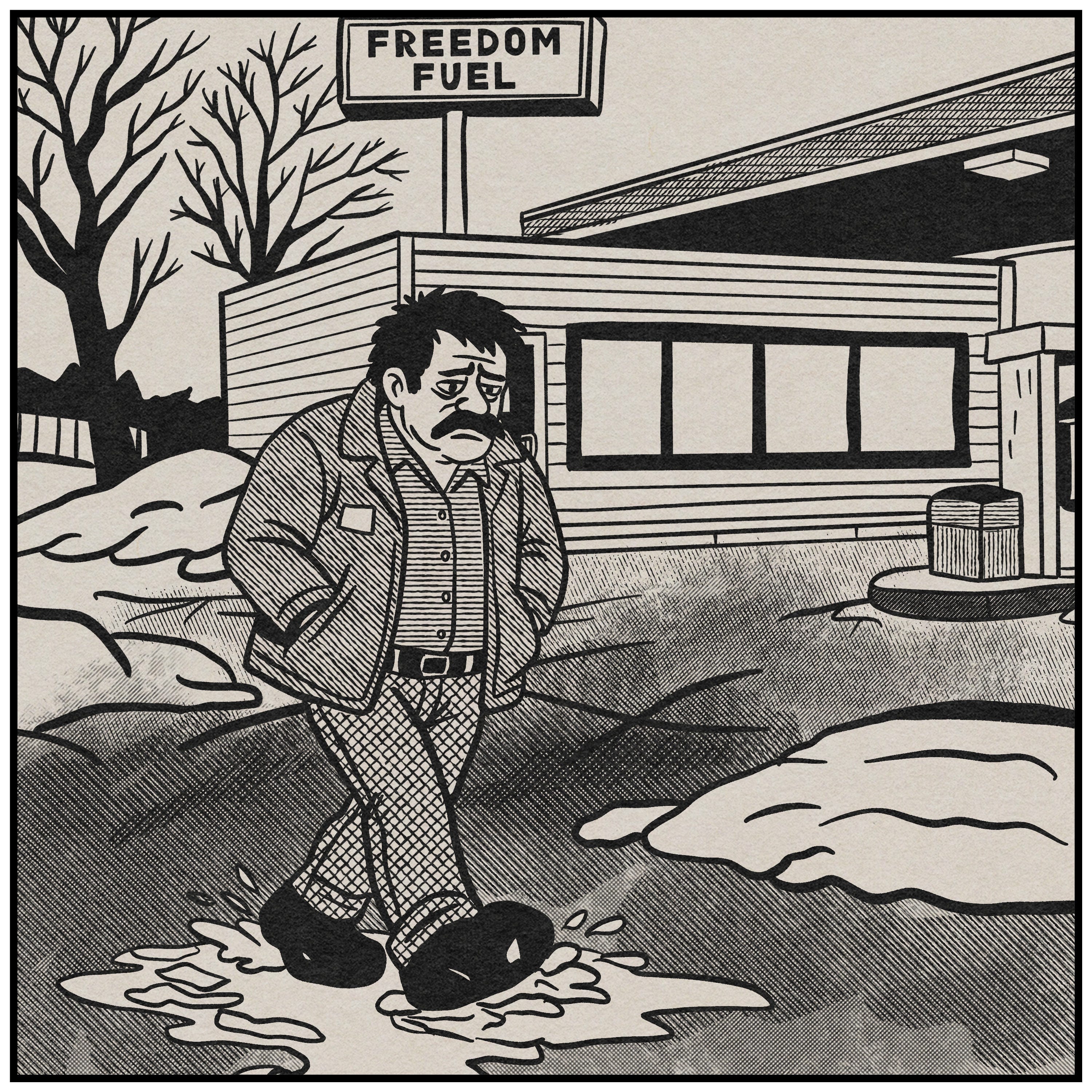
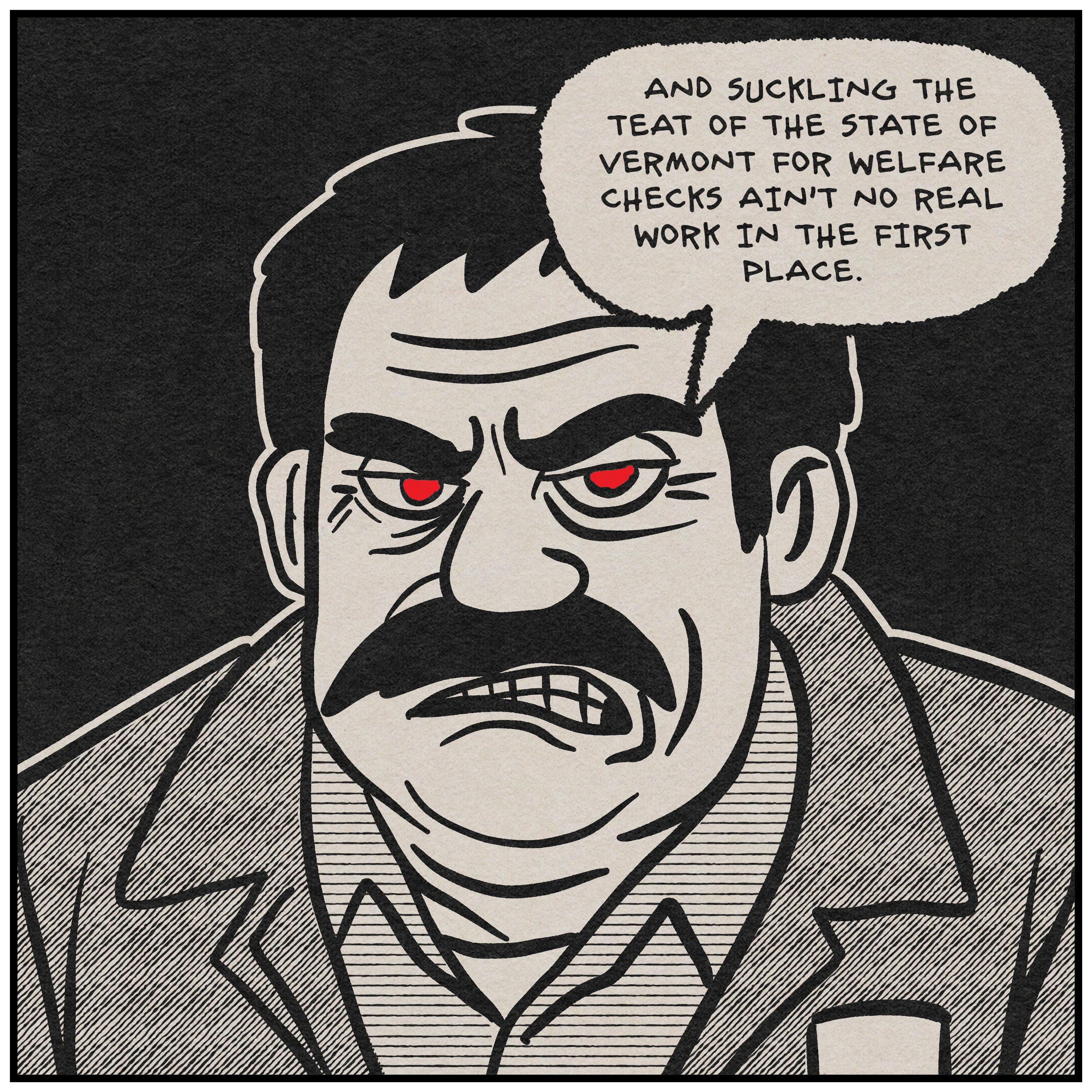
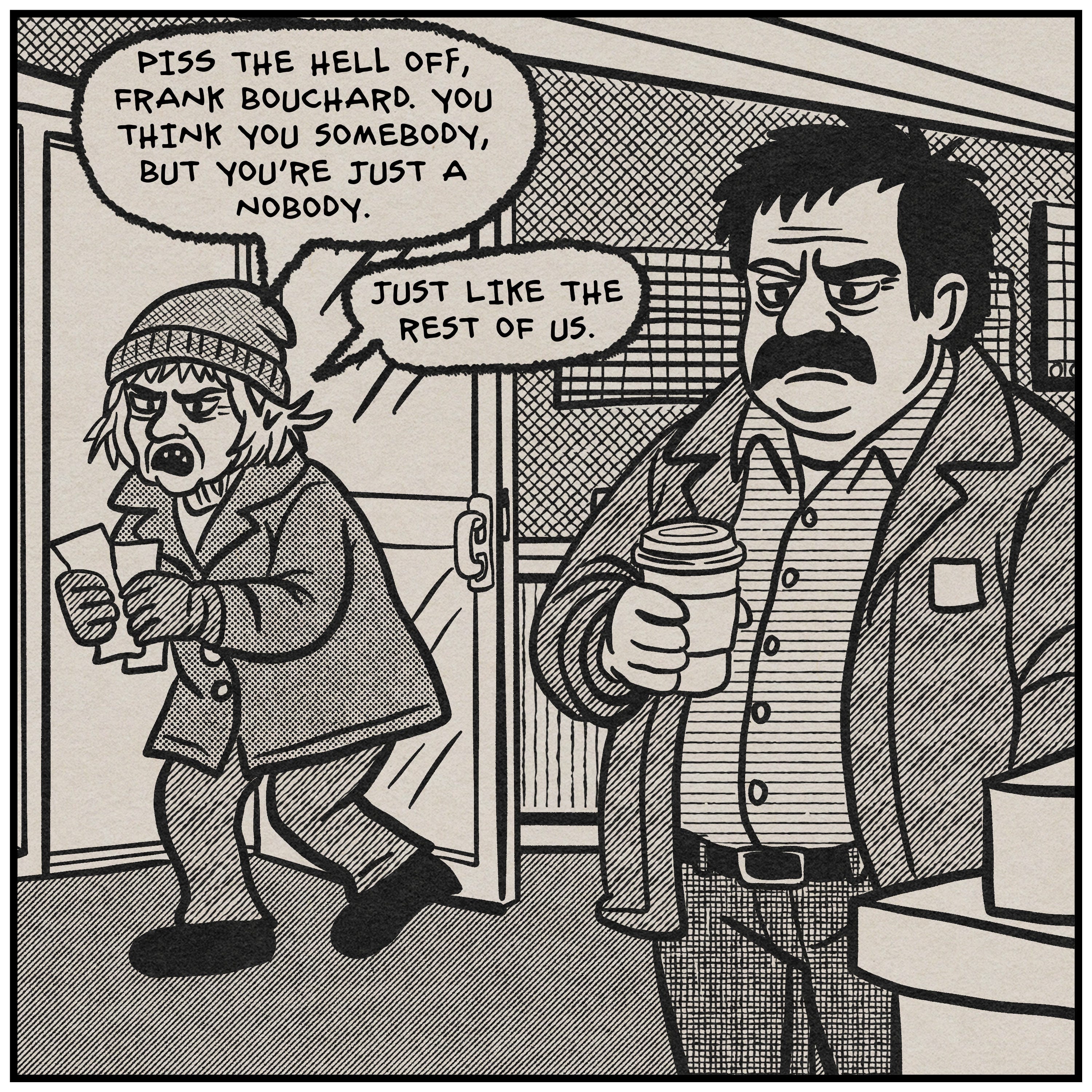
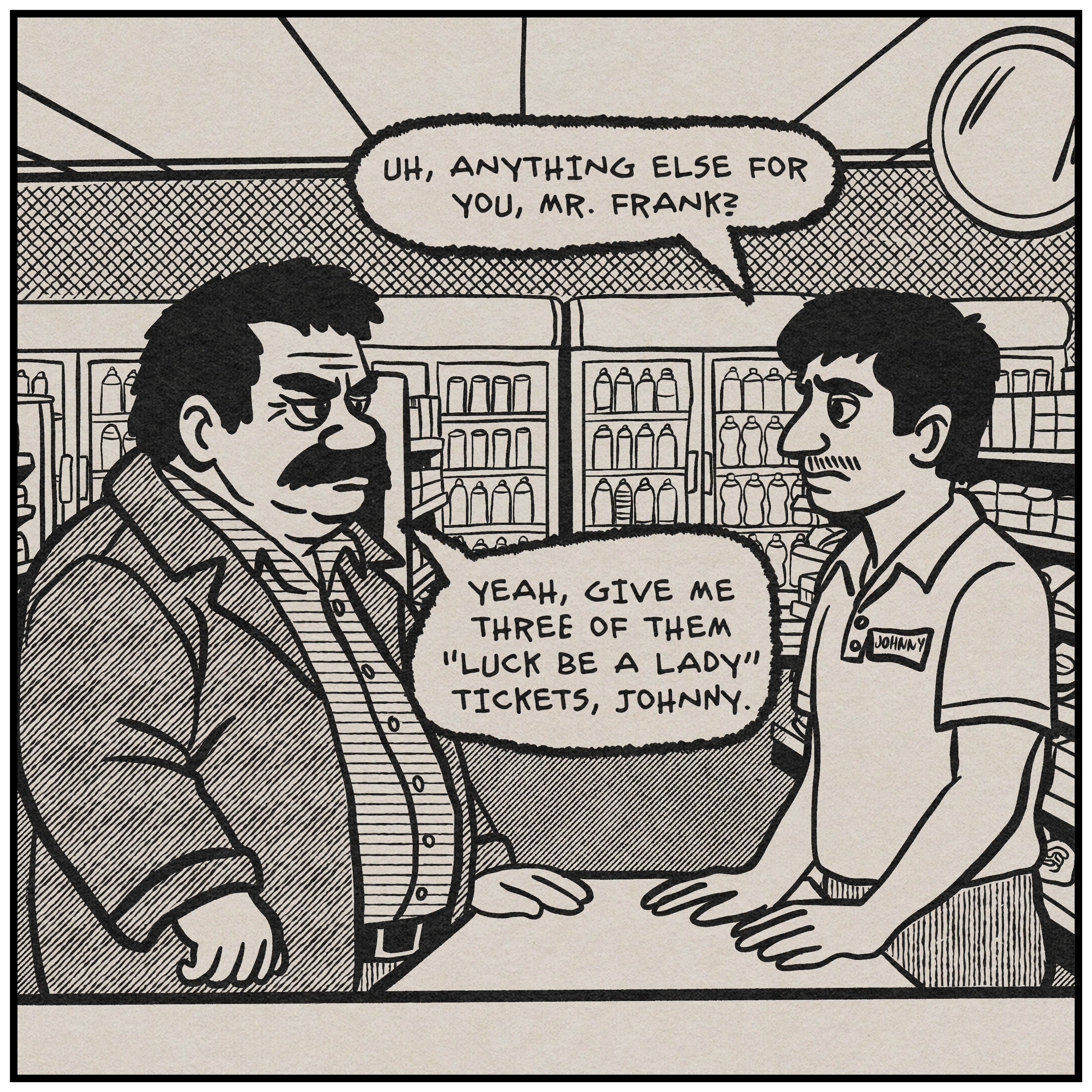
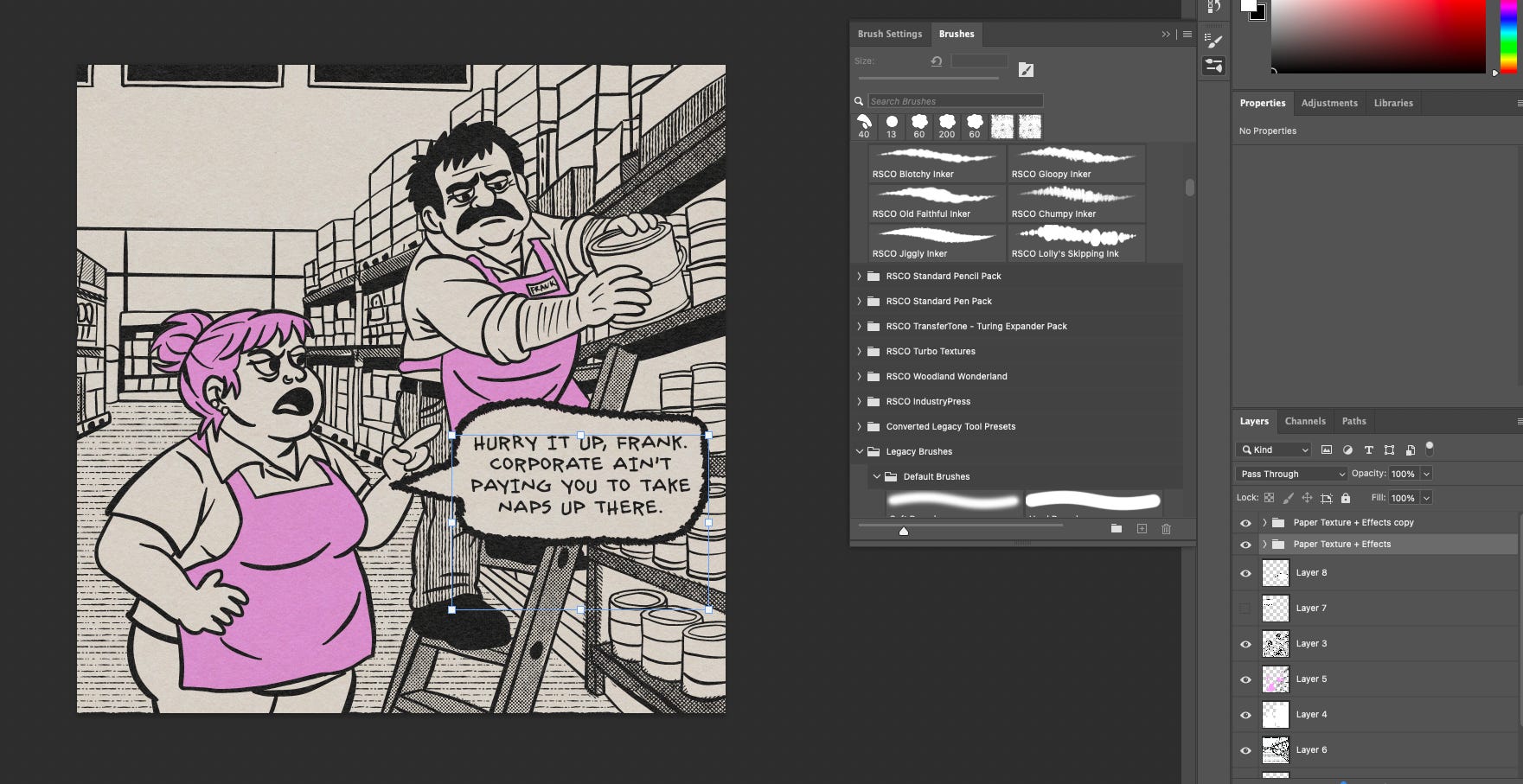
The book’s protagonist is a man named Frank Bouchard. He’s 45. He used to be a machinist with his own shop. He now stocks shelves at a big-box hardware store. His ex-wife does not speak to him. His son does not speak to him. His girlfriend can barely look at him. He runs a YouTube channel out of his garage, where he yells about NAFTA, immigrants, and the slow disappearance of the American man. A few thousand people watch.
Frank is loathsome. But he’s also not a monster. He is very recognizable. If you do not know a guy like Frank personally, you know one through a brother-in-law or from one of those podcasts your uncle keeps sending with no comment. He is a regular guy who got left behind. And that guy has a whole heck of a lot of anger and resentment about that fact.
I know that this is not an unexplored space. The territory has been mapped in detail over the past few years. Outrage media, dopamine loops, and grievance entrepreneurs are the well-understood forces that can take a man’s rage and humiliation and turn it all into attention, dollars, and violence.
Political violence is monstrous. But the cheapest thing we all can do is call the man who did it a monster and move on. Monsters let everyone watching walk away with their politics intact and their understanding of their own neighborhood untouched.
The Vermont town where the story takes place is called Saint Boniface. It’s invented, and it isn’t. Anyone who’s lived in a rural American town that lost its lifeblood will recognize the bones. This is also why the Hortman assassination shook me into writing in the first place. The federal-assassination shape of political violence — the kind we used to study in textbooks, Lincoln and McKinley and the Kennedys — has been quietly miniaturized. It’s a state legislator now. It’s a school board chair. It’s a county judge. The violence has now come down from the marble steps and is showing up at the mudroom door. It’s showing up in places that look painfully ordinary. Places like Saint Boniface.
Frank’s grievances are real. His shop did close. His wages did fall. His town did get hollowed out. The system around him is real, too. What gets produced when those two things meet is what the book is about.
POSTSCRIPTUM
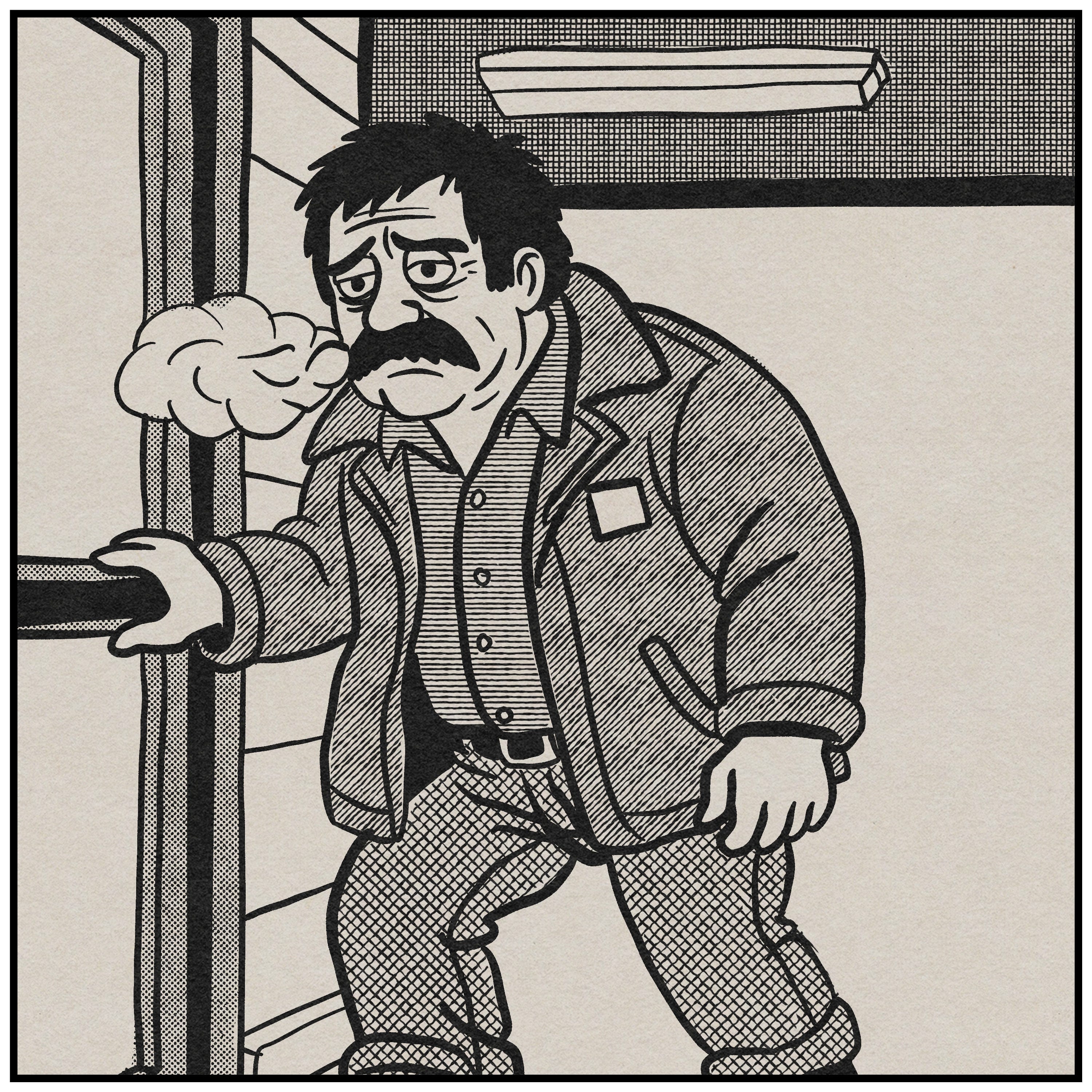
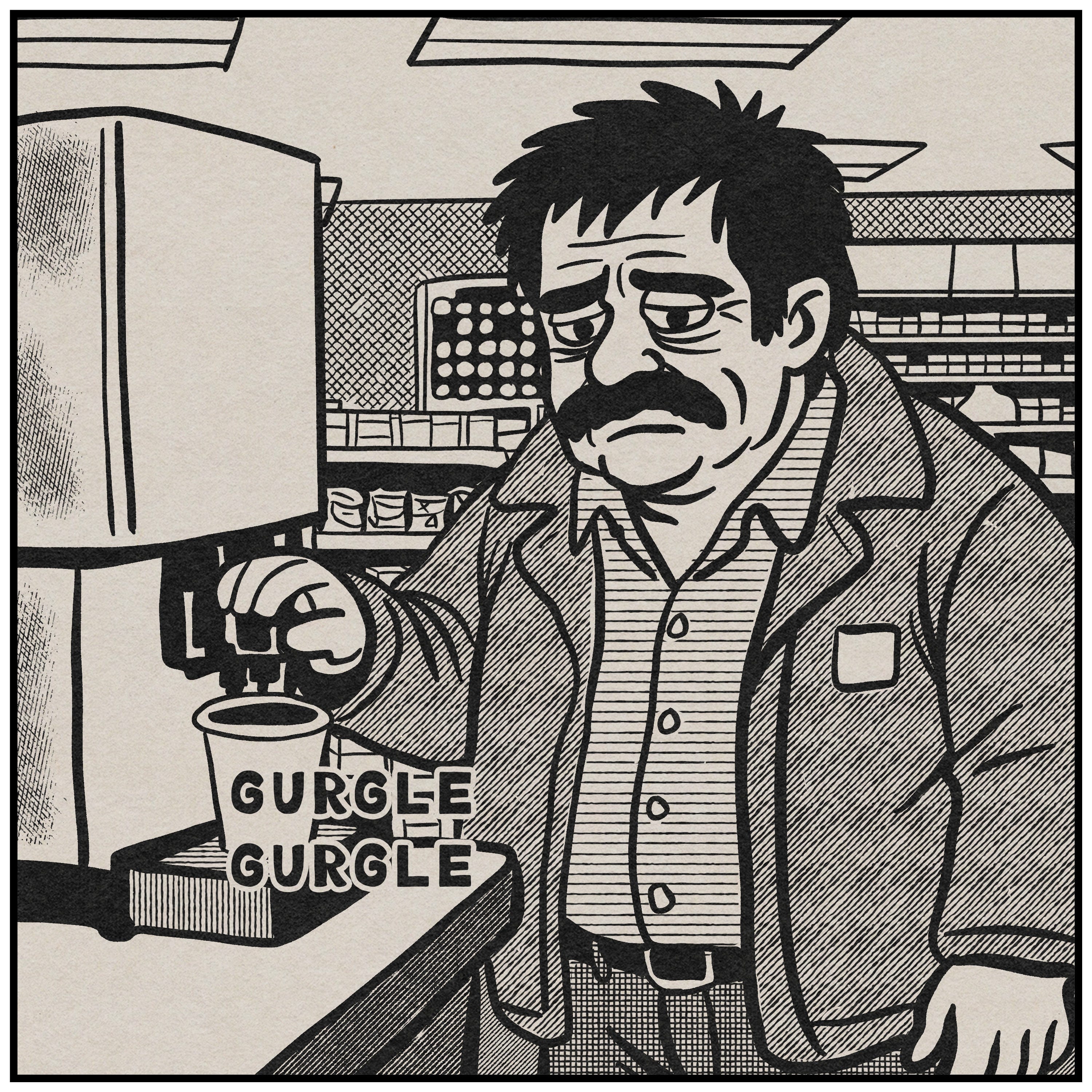
A quick note on the comic itself. The fifteen panels you read today aren’t going to be exactly what shows up in the actual Powder Keg graphic novel when the book lands. Think of it as a remixed version. I did it this way partly because if I just dropped the scene as it runs in the book, it would make a lot less sense out of context, and certain things would be easy to misinterpret without the rest of the story around them. If I keep doing these excerpts, I’ll probably keep handling them like this. Which makes them their own alternate version of the graphic novel, running parallel to the real thing. That’s actually sort of fun to think about.
I’ve also started work on a new video series about Vermont politics. Specifically, I’ve been digging into who will run for governor up here this fall. It’s been a lot of fun. I’ve made some new friends in the process, and I’m learning a whole lot more about the state of Vermont along the way. The first piece should drop in the next couple of weeks.
Big week on the farm, too. Ron Swanson — the duck who thinks she’s a goose — just hatched out her own ducklings. She’s got five of them. Watching her and her little crew wander the farm has been about as adorable as it gets around here.
Ariel, my favorite cow, also had a calf this week. A little heifer. She needs a name that starts with the letter B. If anybody has a good one, drop it in the comments.
I really do want to hear what you guys think about Powder Keg. Would you like to see previews here regularly? My instinct is something like once a month — a single excerpt, a few panels, no continuous storyline, no obligation to follow along. You’d never quite see the whole thing. You’d just get the temperature of where it is. If that’s something you’d actually open in your inbox, say so. If not, also say so.
Beatrice (I always adored Beatrice Arthur)
I would love to read more excerpts. As for the new heifer baby.. Bonita! :)