
Every System Eventually Eats Its Own Children
The kids didn't leave because of housing costs. It's more fundamental than that.

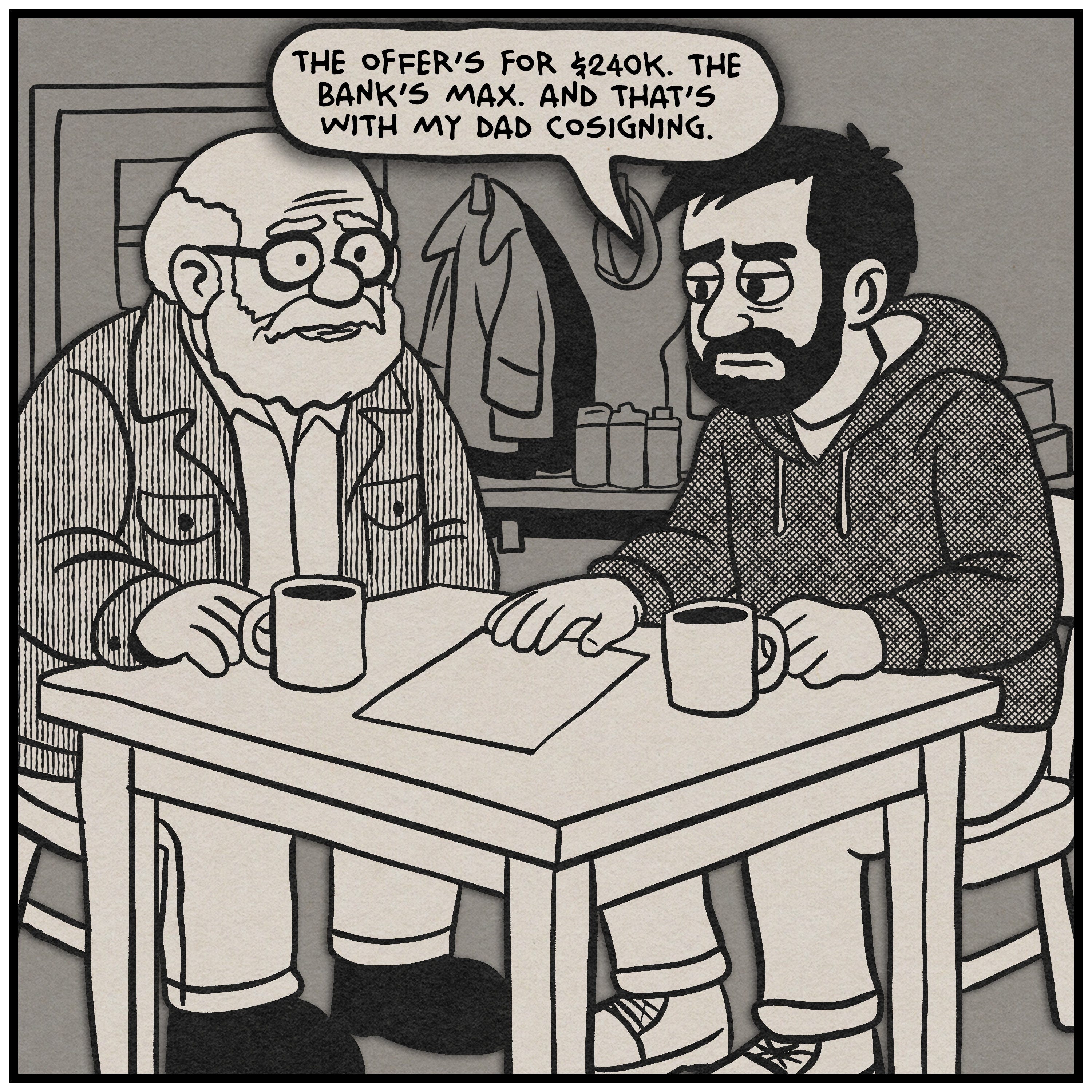
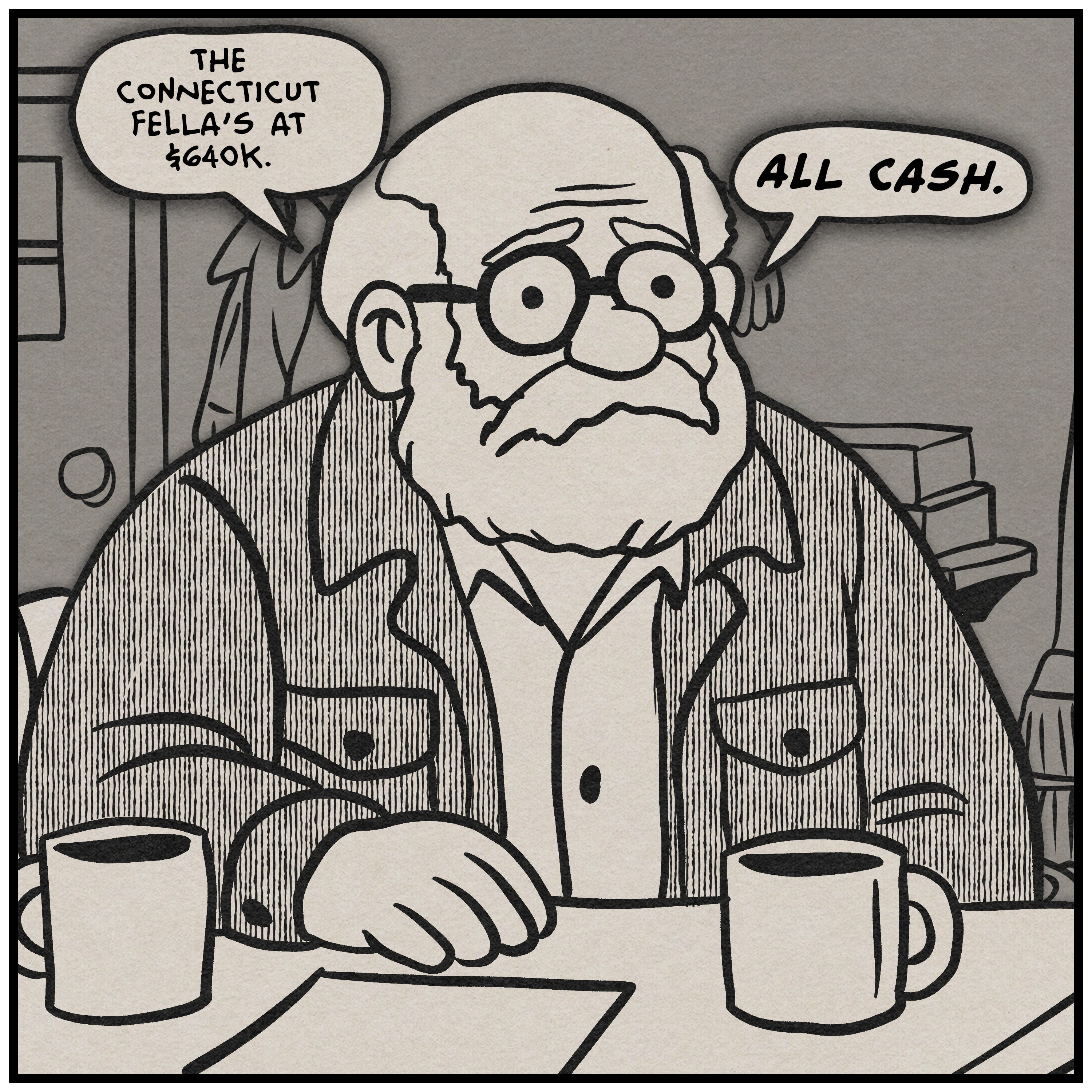
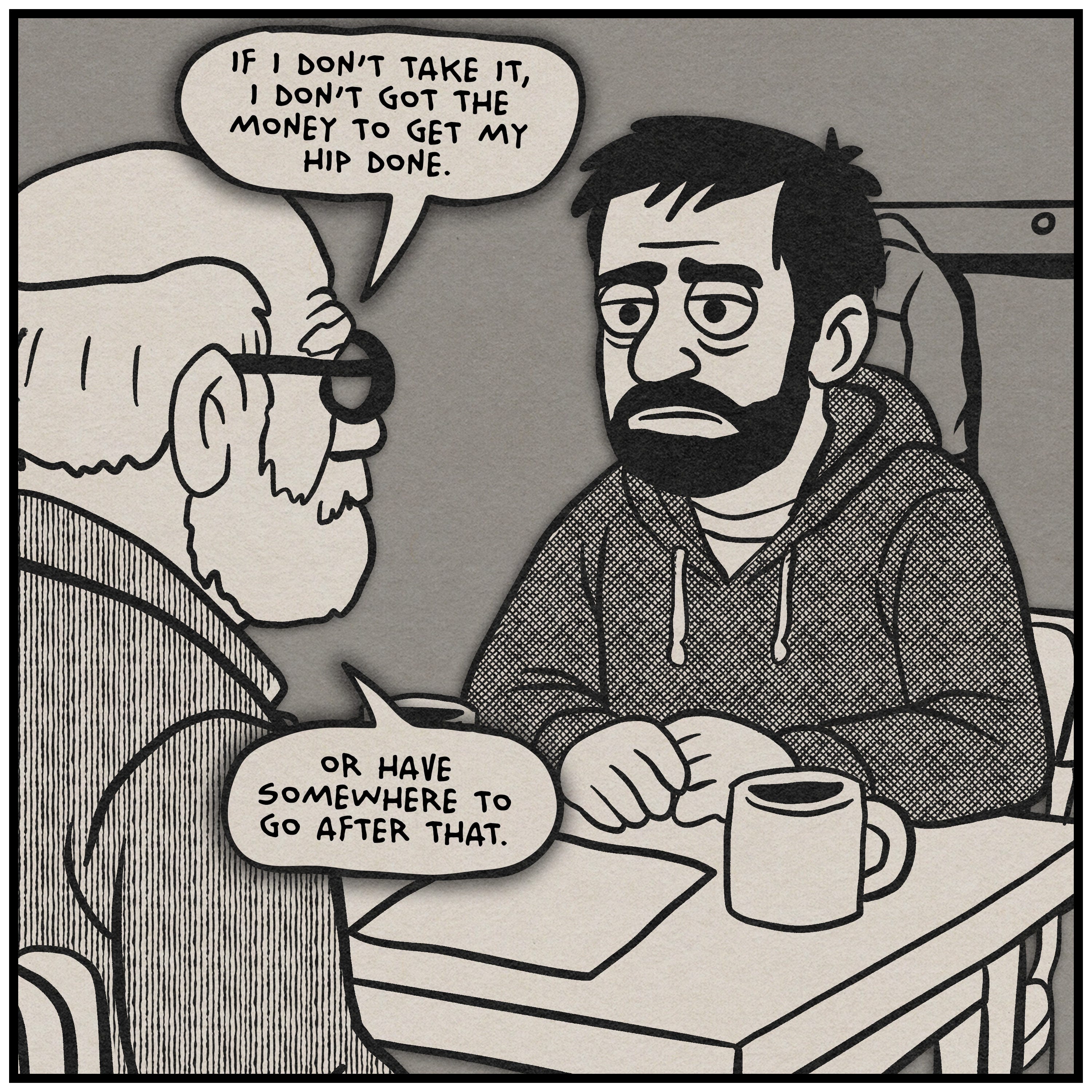
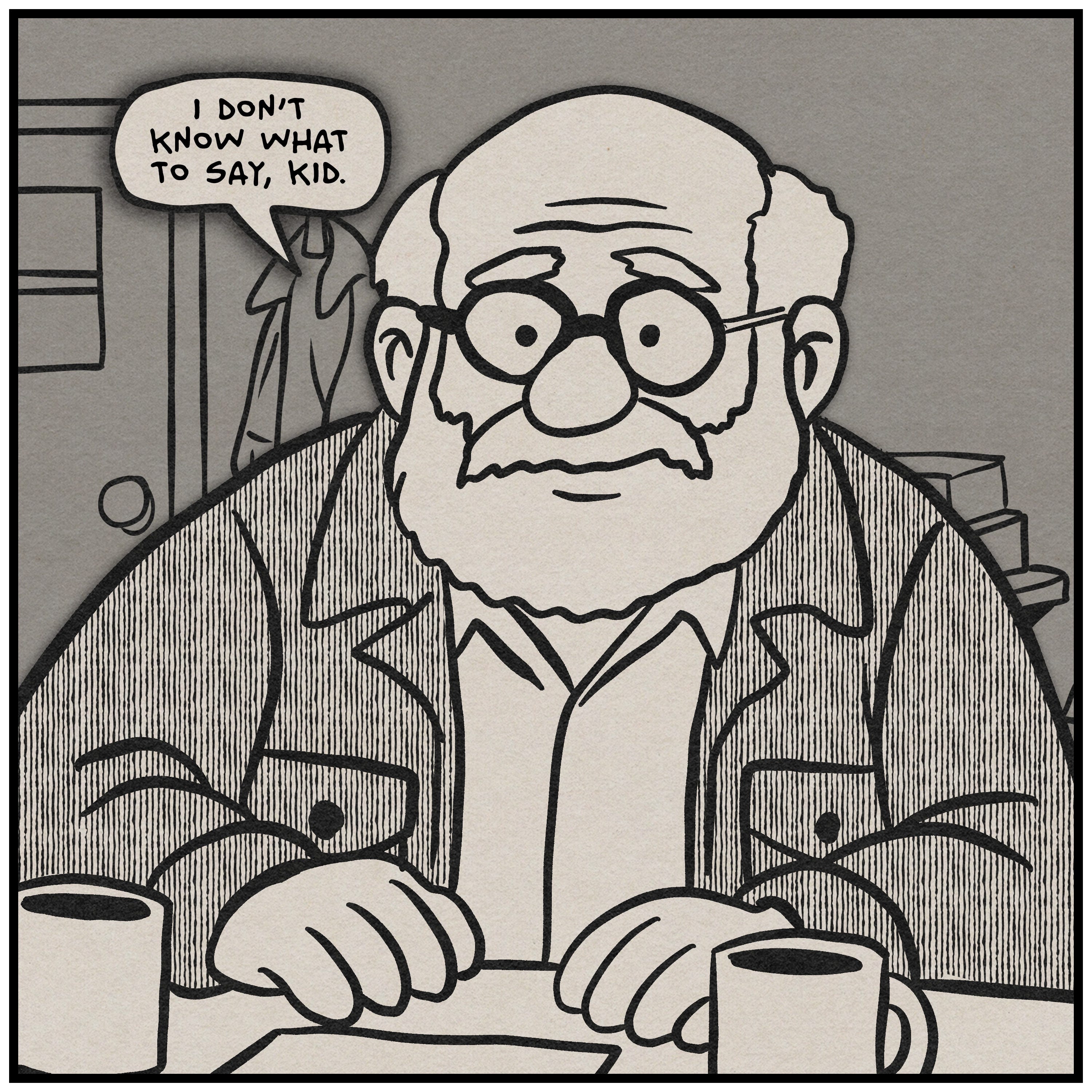
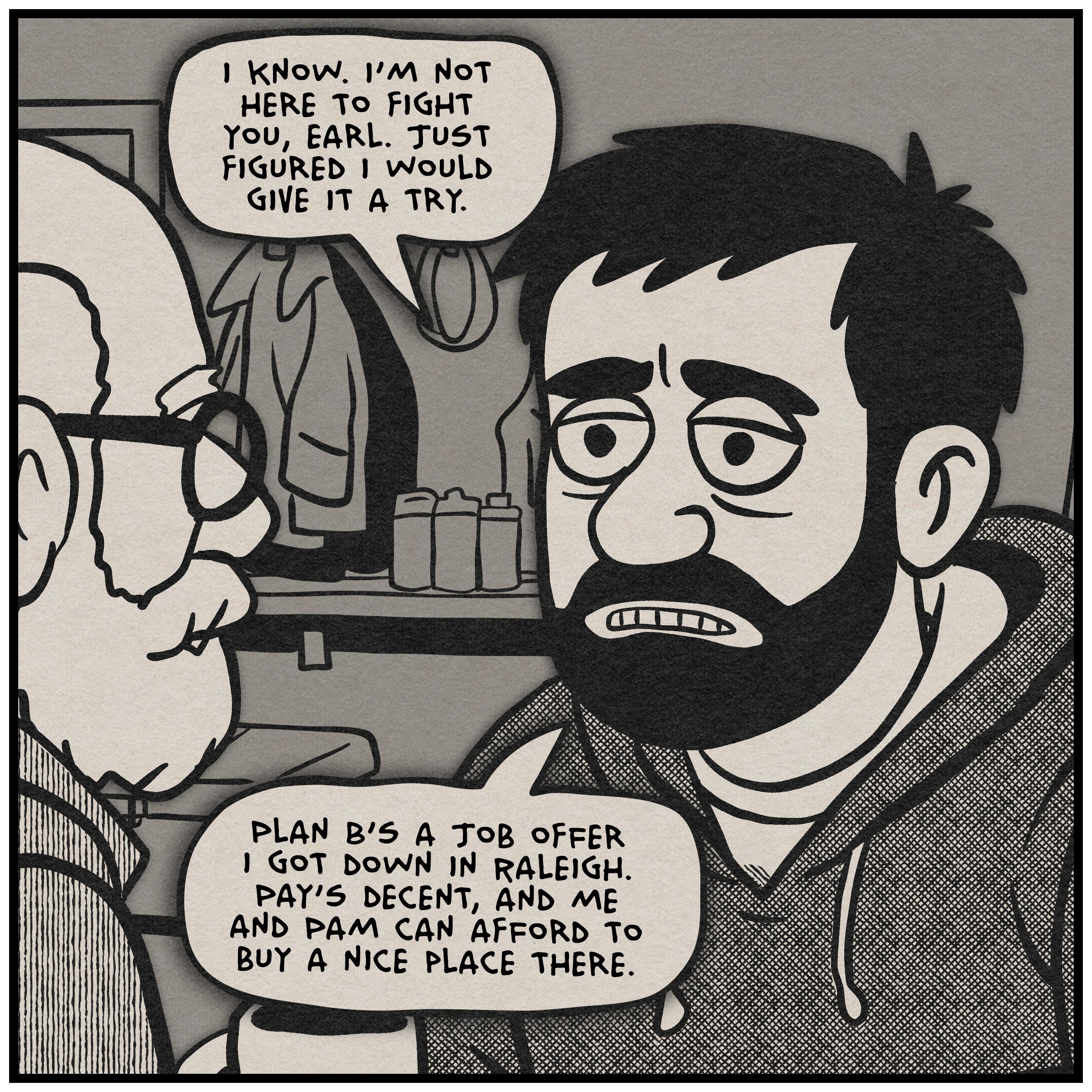
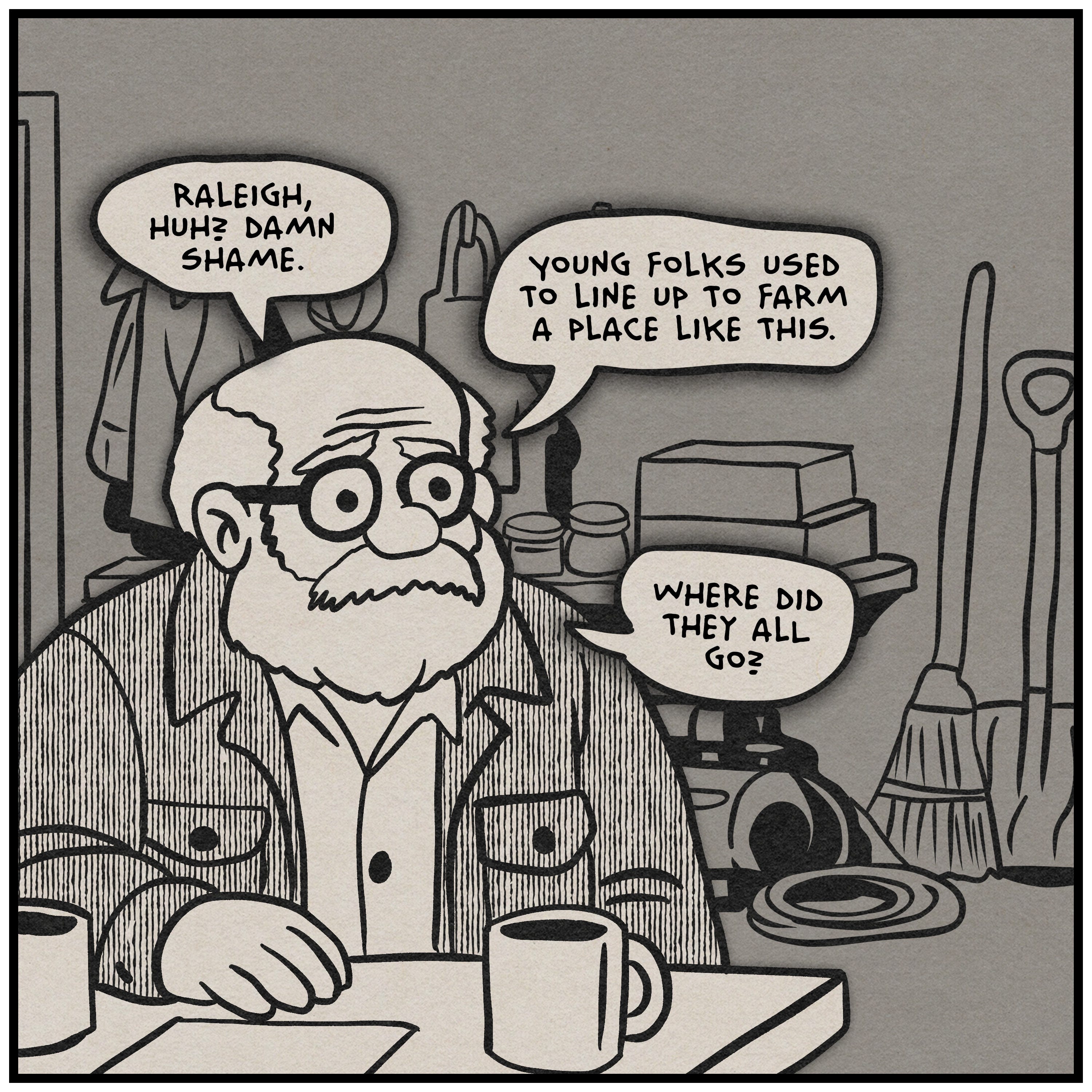
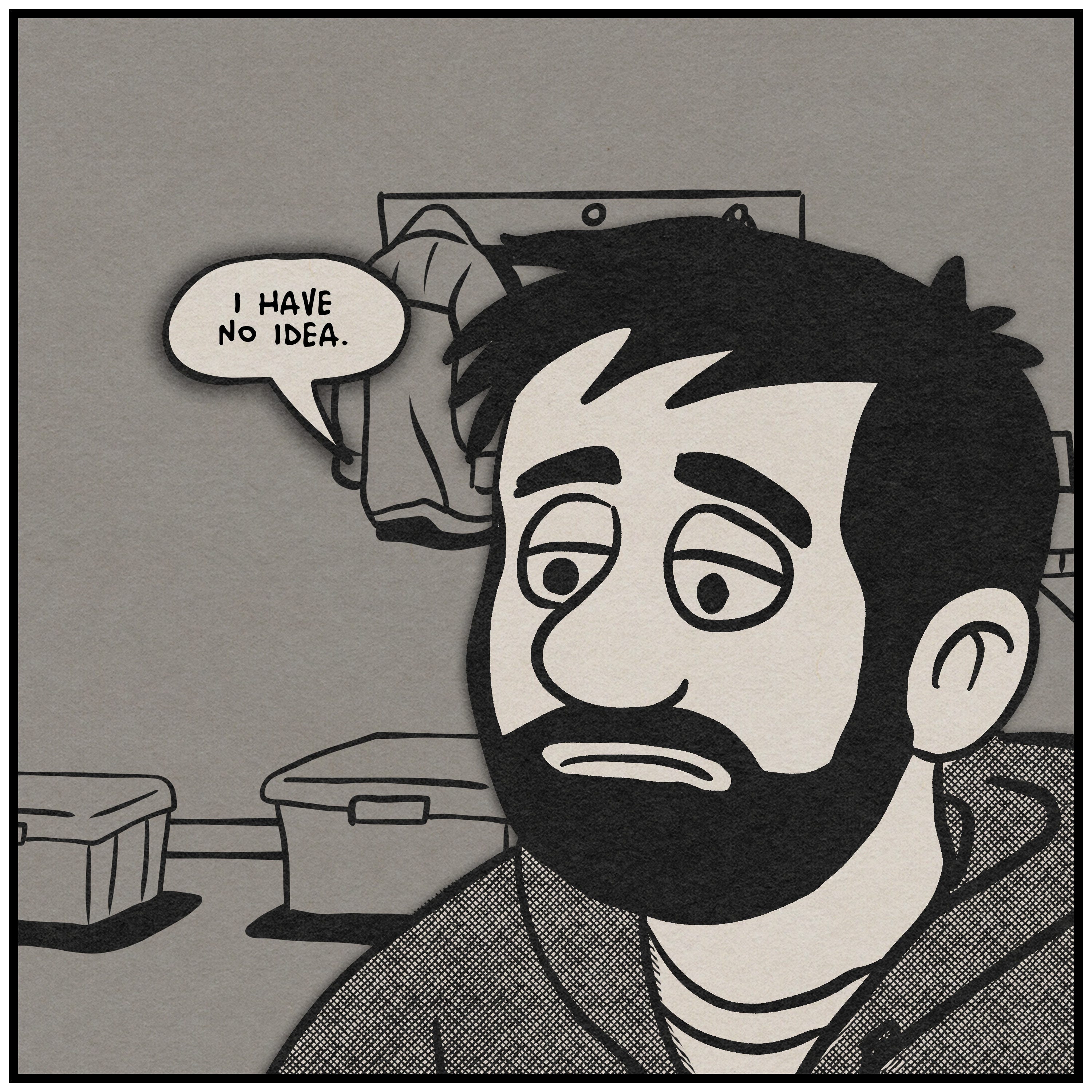
One of my nephews has been staying at the farm this past week. It’s one of my favorite rituals of the summer. Each of my sister’s boys comes up to stay for a bit of it. One at a time, they get pulled out of their suburban life and dropped into the middle of nowhere. They do farm chores because I make them. They enjoy making YouTube videos with me because that’s what kids these days seem to want to do when they grow up. We go on a day trip or two. We hang out on the porch. And we read our comic books every night before bed. It’s pretty great.
The other day, my nephew asked me what my plans were for retirement. What would I do when I got too old to work the farm? I told him the truth: I don’t know. This is my dream life. Most people retire to do something they like more than what they’ve been doing, and I’m already doing that thing. He thought about that for a second, and then he said, “Well, if you ever need help around the farm, I’d stay here. I’d take your job if you retired.”
The earnest look in his eyes melted my heart. It also stuck with me for days. And it was only this morning that I figured out why.
There’s a real question sitting inside that kid’s offer. By the time he’s old enough to mean it, what are the odds the world actually lets him take me up on it?
The prospects for each new generation of Americans, pretty much from millennials on down, are worse than their parents’ were. For most of American history, that was not the case. Each generation had a better shot than the one before it, all the way up to the baby boomers, where it was clearly true. With Gen X, it got ambiguous. With Millennials, it got precarious. By the time you get to Gen Z, they look kind of doomed. And pour one out for poor Gen Alpha — my nephews’ cohort. They might never even get in the game.
Homeownership is the cleanest place to see it play out in a quantifiable way. In 1950, a house cost roughly two and a half years of one median salary. Today, it’s closer to five years of two salaries. That’s not good.
A couple of years back, Scott Galloway, a human TED Talk with a supplement code, was banging this drum and calling it generational theft. There’s a strong case for the label. But I keep tripping over the word theft. A theft needs a thief. So who is it? I’ve spent a lot of time trying to answer that question, and every answer I’ve come up with has eventually fallen apart. It’s easy to point at corporations. Or politicians. Or boomers. Or zoning boards. Or private equity. But no single party shoulders all of the blame.
What I keep landing on is something more human than a villain. When you build something successful, you want to protect that success. You want to keep things the way they are. Rules get written to protect a place — zoning codes, building standards, tax rules — because you want to keep the order, keep the structure, keep the thing you’ve built going. It’s a completely natural, perfectly human instinct, the same one that makes a man spend ten years restoring a classic car and then never hand the kid the keys. The problem is that protecting what you built is not always in the best interest of what comes after you.
The older I get, the less this looks like a conspiracy and the more it looks like a habit.
A Random Walk in the Woods
Drive around the Northeast Kingdom and the forest looks ancient. It isn’t. Vermont has almost no true old growth left. Less than one percent. Old growth is the healthiest structure a forest can have. Old trees die. They fall. They punch holes in the canopy, and those pockets of light are exactly where the next generation gets its start. In an old forest, natural disturbance is the succession plan.
Most of the woods that surround my Vermont hill farm are about 150 years old because most of the woods began at exactly the same time. When the sheep farms failed and the fields went back to trees. A whole generation of trees established simultaneously, on free open ground, in full sunlight, with no competition, under conditions that probably won’t exist again.
There’s another parcel near me that got cut hard thirty or forty years ago and grew back in pine and aspen. For years, I called those junk trees, and I was wrong about that, too. Pioneer species filling a clear-cut is succession working. They are chapter one of an old-growth forest, and the grouse and woodcock are glad to have them. The actual sin on that lot happened before the regrowth. It’s a practice called high-grading: cut the best timber, leave the worst standing, and let the leftovers seed the next generation. Take the highest-value material out of the stand, and the stand doesn’t recover. It just keeps reproducing whatever the last guys didn’t want. Year after year, the stand slowly becomes a better and better producer of mediocrity.
And then there are the deer. Vermont’s deer population is big, established, and hungry. In a lot of our woods, the deer browse every oak and maple seedling down to a nub before it gets knee-high. You can cut all the light gaps you want. Nothing regenerates. Nobody is stealing those seedlings. The established herd just eats them.
Who is the rule for?
So when it comes to a society, I think you’ve got to ask the question a forester would ask a woodlot: who is this rule for? Is it making things easier for people starting out, or easier for people who are already established? Is it creating succession, or is it just letting everything pile up in a few key places?

Every few months, a meme goes around Facebook saying senior citizens shouldn’t have to pay property taxes. They’ve paid their dues, they’ve worked their careers, leave them be. I’d argue the opposite. The older and more established you get in a place, the more pressure there ought to be on what you’re holding, because absent some kind of turnover to the next generation, you get towns frozen in amber. And you’ve seen those towns. They’re the ones bemoaning that all the kids moved away. Vermont has some of the worst brain drain in the country, and when people wonder why, the answer they usually reach for is housing costs. It’s more fundamental than that. The structure and the rules that folks who’ve been here fifty years rely on to keep things orderly are, over and over, the very things that make it harder for somebody just starting out.
And we’re watching a brand new version of this unfold right now with what AI is doing to white-collar work. For example, if you’re a senior marketing professional, you can probably still find a job. In theory, tools like generative AI make you more efficient, more productive, more powerful, because they handle the grunt work for you. But the grunt work was how we all got started.
When I was a teenager in the late 1900s, a local video production company hired me to create video graphics for about nine bucks an hour. It was more money than I could make bagging groceries, but more importantly, that job taught me important career skills that I still use today. The work wasn’t glamorous. I was making cheesy lower thirds and simple animations that looked dated before they ever aired. But while I was cranking out primitive graphics, I was also learning how to edit, how to structure a story, and the cultural basics of how to function in an office.
Today, jobs like that have gone away. The readily available tools and technology make it financially silly to pay someone to do work that can be automated in a fraction of the time.
Every time we automate another layer of beginner work, we make the people already inside the profession more productive. We also quietly pull the ladder up another rung. Individually, every hiring decision makes perfect sense. Collectively, you wake up one morning and realize there aren’t any apprentices anymore. That’s the future high-value timber vanishing, one hiring decision at a time.
And that’s how successful systems begin eating their own children. Not all at once. One perfectly reasonable decision at a time.
How to Stop Eating Children
But I also have to look in the mirror, right? My wife and I don’t have kids. We are childless by choice. I don’t regret the decision, but I do feel a healthy dose of guilt every time the anemic enrollment numbers come out for our little elementary school here in Peacham. Had life zigged instead of zagged, there’d probably be a middle-schooler or a high-schooler with my last name sitting in one of those classrooms.
I bought this place because I fell in love with it. Every year I stay here, it becomes a little more valuable. And along with that increased value, the odds get a little longer that somebody my nephew’s age will be able to afford to buy something like it. That’s not because I’m doing anything wrong. I’m just one of the established ones now.
What must a person do to avoid eating their young? I don’t know.
The best I’ve got is one question: Who is the rule for? And when the answer is embarrassing, I know I need to do better.
My nephew goes back home to Suburbia this weekend. In twenty-ish years, he’ll be roughly the age I was when I first started dreaming about a farm. And I’ll be of the age where I’ll probably still be farming, but also seriously figuring out how to dial it back a bit.
Maybe by then he’ll have forgotten that conversation entirely. Or maybe one afternoon he’ll look across this pasture and decide he still wants the job. I hope, if that day comes, the biggest obstacle isn’t me.
Postscriptum
Yeah, it’s been a fun week here on the farm with my nephew. We also had more new baby birds and a lot of hot farm days.
The cover from this week’s comic was recycled from a previous comic issue. A dude’s got to economize somehow…
I’m still working on a documentary about Vermont, Republicans, and media bias. You can expect the next few Substack posts to circle that topic.
I was able to give a 40 acre farm away, and provide some funding and a full time job to the recipient.
Because I've been fortunate. And this way I get something more valuable to me than money.
Hi Morgan,
The issue is the false narrative of the country needing any sort of inflation to grow... This country's economy grew just fine before 1970, and the inflation rate was basically zero.
Since then, people can no longer afford things due to the increase in costs to "keep up with inflation" and the lack of commensurate growth in their salaries...
How do we fix it? Rip it all up and reset?? I don't know... But not having untaxed Billionaires and Trillionaires taking from the system while giving nothing back might be a start... Schools could be funded.. Home and farm prices could maybe go down... Dunno... There just has to be a way to make life equitable and fair, and actually be able to live in this nation...
Be well, Sir... Always look forward to my twice weekly fix of wonderful animals and views...