
This Map Changed How I See Climate Politics
The old divide between climate believers and climate deniers misses the fight that actually matters now.

The Map I Built After a Climate Conference Told Me to Feed My Cows Kelp
A few years ago, I left a climate conference with a gross little thought lodged in my head: I was the only sane person there.
This is a bad thought. This is the thought you have right before you become the guy at the selectboard meeting with a laminated binder and a private theory about culverts. But I had it anyway.
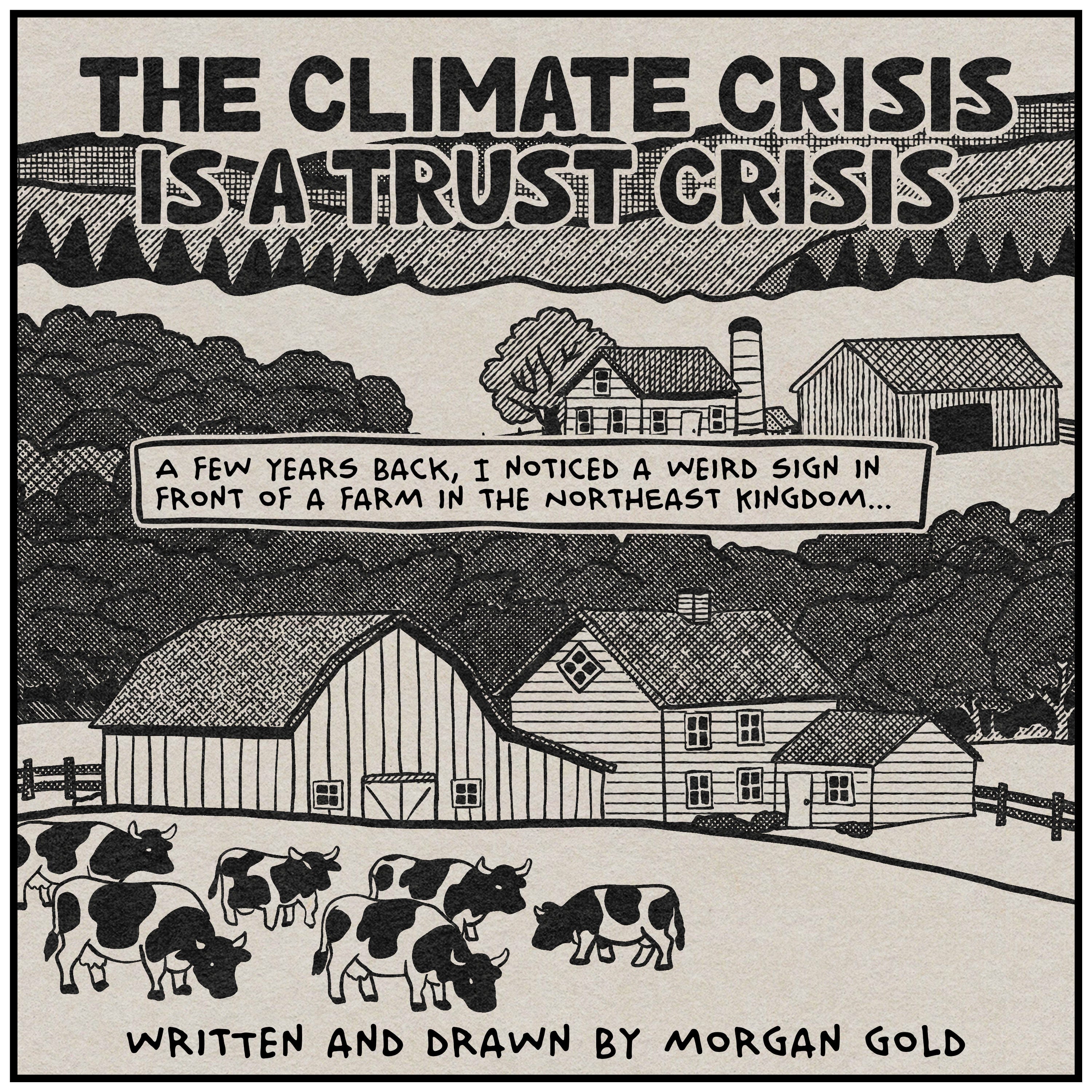
YouTube had invited me to its first-ever Creator Climate Summit. I’d been making videos about regenerative grazing, which is a fancy way of saying I move cattle around my farm in a way that makes the grass, soil, birds, bugs, and carbon cycle work better than they did before. The cows move every day. The grass comes back with deeper roots. The land holds more life. Gold Shaw Farm is better land than it was when I got here, and I have the soil tests to prove it.
So when YouTube invited me down to New York, I figured that these would be my people. My climate-aware, science-trusting, all-of-us pulling in the same direction, people.
Climate people. Science people. People who understood that the same problem could have ten different solutions depending on soil, slope, weather, money, distance, infrastructure, and whether the person doing the work had slept in the past week.
Then they kept telling me to feed my cows kelp.
There was a study out at the time, and the study was solid: kelp in the feed cuts methane emissions from cattle. What the study didn’t account for was where my kelp would have to come from to get to a barn in northeastern Vermont. The stuff has to be harvested off some coastline, dried, processed into an additive, and trucked across the country to be sold to me with money I do not have, so I can feed it to cattle who are currently standing outside on grass that grew there for free, in a system already pulling carbon out of the air without anyone’s help. By the time that seaweed is harvested, dried, processed, packaged, shipped to northeastern Vermont, and fed to cattle already harvesting their own grass, the climate math starts looking a lot less clean. The pasture works worse because the cattle are eating less of it. I’d be paying real money to produce a worse climate outcome and calling it climate-conscious.
I had this conversation about ten times in two days. The methane study is correct. But feeding kelp to my cattle would have been objectively stupid. And I couldn’t get those two sentences to land at the same time in the head of a single creator from a coastal city.
I made a video about the trip when I got home. Most of the comments on the video were people telling me that climate change was a globalist scam, and I was a fake farmer for wasting my time going to a climate change conference in New York City. After spending the previous few days hearing from folks that I was causing climate change by not feeding my cattle seaweed, the hoax people were weirdly refreshing.
They Aren’t Stupid
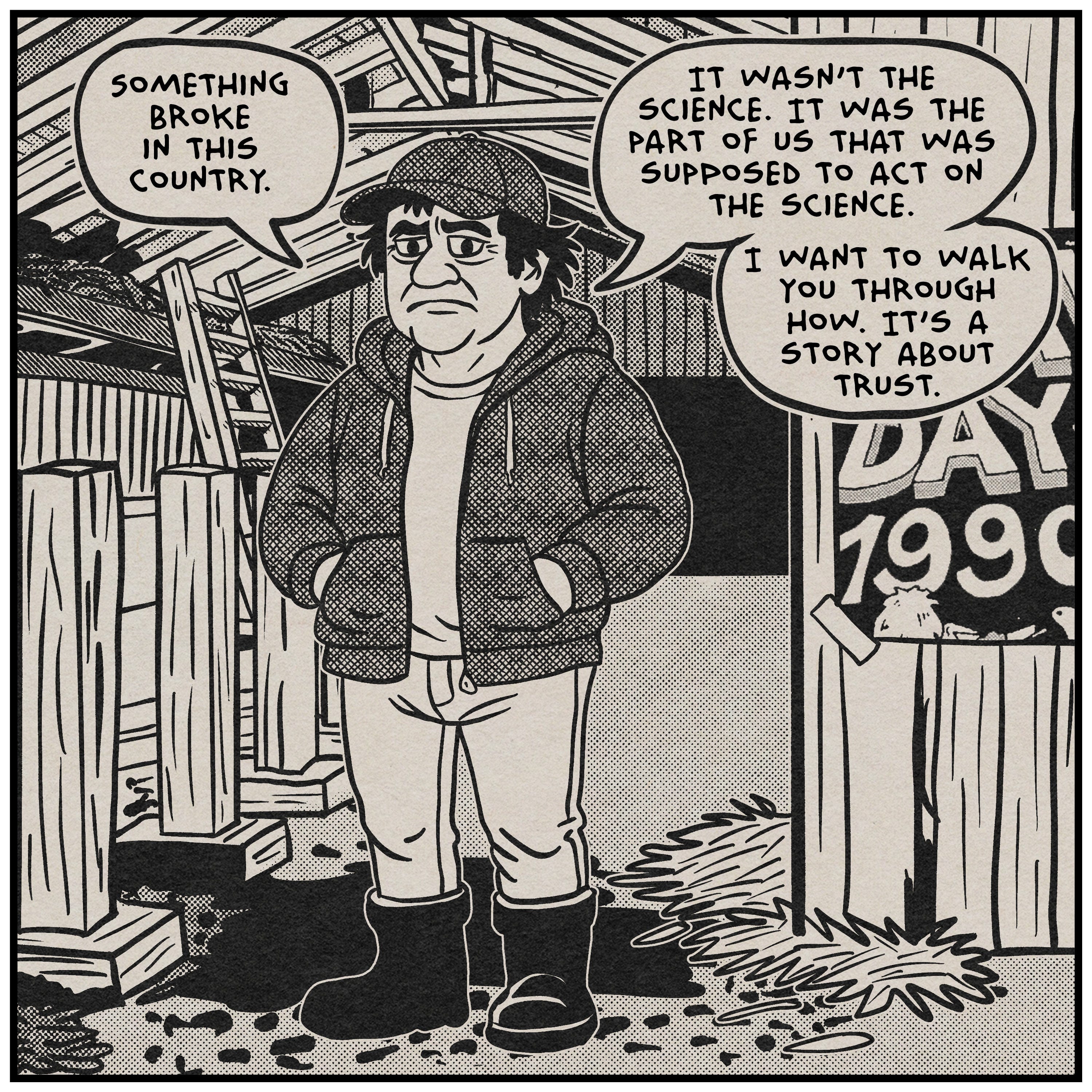
The kelp people weren’t wrong because they were stupid. They were trained, as I had been, to trust the studies, and the studies are mostly right, so trusting them is mostly the correct posture to take. The studies just didn’t account for the small farmer in a part of the country where almost every input has to be imported. When the person living the practice tries to explain it to the person reading the study, and the reader tells them they’re not taking the science seriously enough, you lose them. The climate movement has lost a lot of people that way and I don’t think it knows how many.
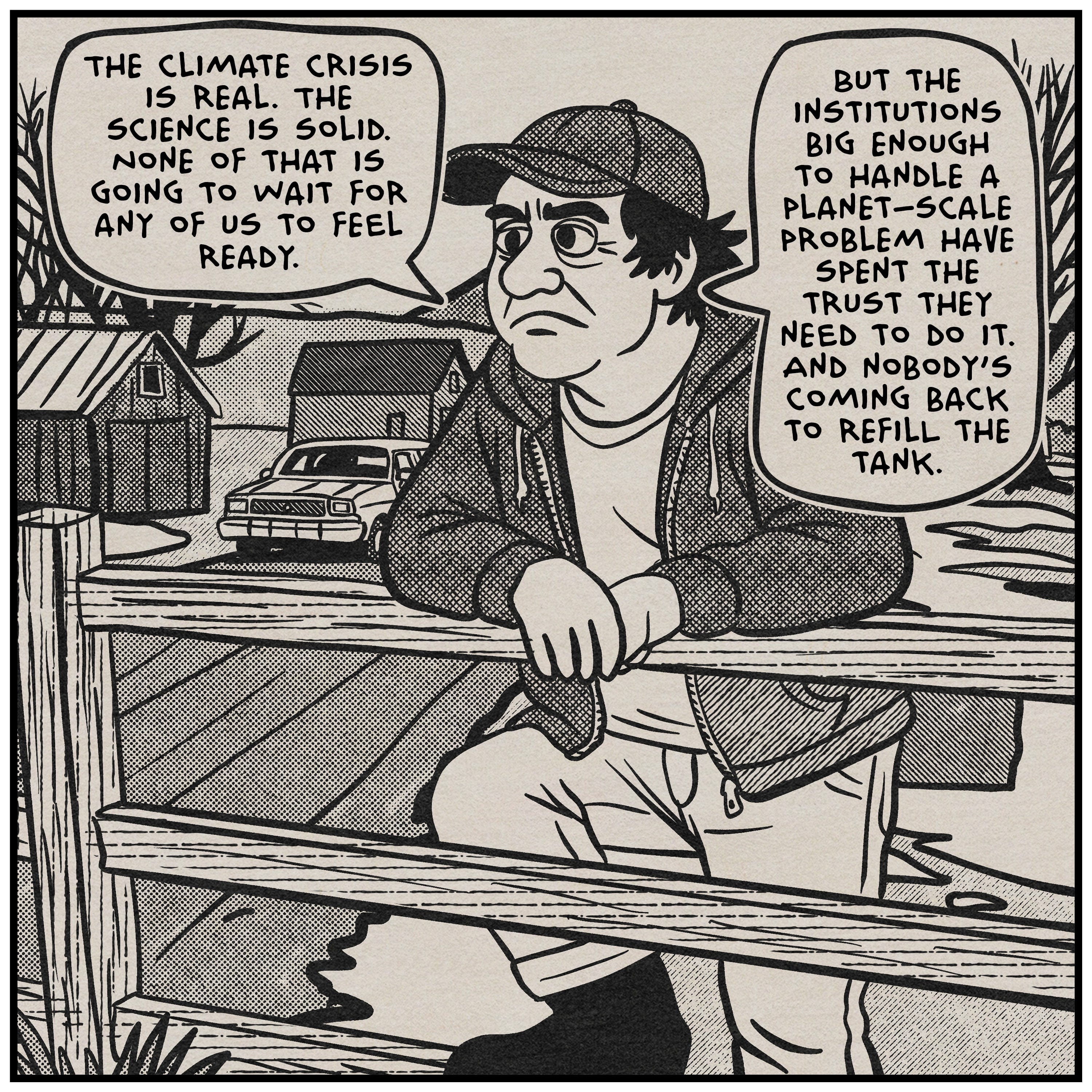
The hoax people weren’t wrong because they were stupid either. A lot of them are doing more for the actual environment than the kelp people are—big gardens, no Roundup, clean wells, heritage breeds, compost piles taller than I am. The reasons they’ll give you for any of it are sometimes wrong and occasionally bat poop crazy. Agenda 21 isn’t real. The contrails aren’t doing what you think they are. We, Jews, don’t poke holes in the ozone layer using our space lasers. But the ground does not care why you stopped spraying Roundup. The creek does not run cleaner only when the person protecting it has the correct theory of atmospheric carbon.
That was the problem. The map I was using to understand how people thought about climate change was as outdated as the Blockbuster Rewards card I still have tucked safely away in my wallet.
The old map says climate-conscious people go on one side and climate skeptics go on the other. My team, their team. Science people, denial people. Sensible people, lunatics. MSNBC, Facebook comment section, choose your weapon. The old map also said the people who didn’t care about climate change were either oil executives or the type of person who could talk for hours about the horrors of the inevitability of 15-minute cities.
So I drew a new map a few weeks ago on a piece of legal paper at the kitchen table.
The Environmental Trust Chart
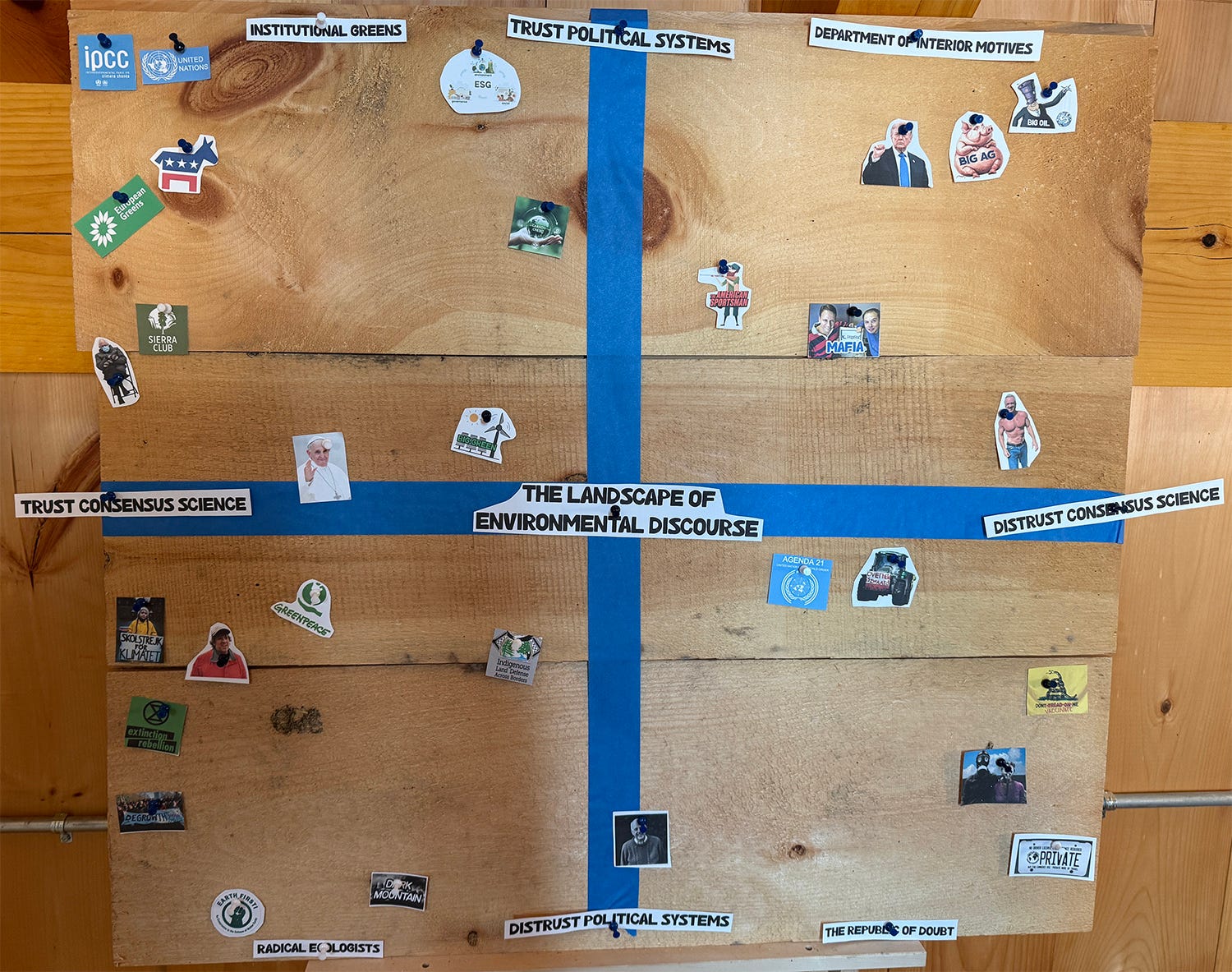
The chart starts with two axes. Both axes are based on trust.
The up-and-down axes question is whether you trust political institutions: lawmakers, agencies, political parties, regulators, courts, NGOs, grantmakers, VCs. They are the ugly but necessary machinery that turns money, panic, votes, and paperwork into rules, and creates sustainable, maintainable change.
The left and right axes ask whether you trust consensus science: peer-reviewed research, the IPCC, major academies, public health institutions, and the official bodies that say, “Here is what the evidence shows.” And when I say consensus science, I don’t mean all science. I mean collective, reasoned judgment of the vast majority of qualified experts regarding a specific topic. A credential is not a consensus. A person with a PhD on a podcast may be interesting, but that is not the same thing as the field’s collective judgment.
Those two questions give you four quadrants. You can plot anyone on it.
Top-left, trust both, is what most people picture when they hear the word environmentalist. Big greens, mainstream Democrats, ESG funds, the IPCC itself. This quadrant is easy to mock and deserves some of it. It can be smug, donor-brained, credential-drunk, and bizarrely confident that one more dashboard will fix the human condition. It has also delivered real wins. Bald eagles came back because of this quadrant. Acid rain got fought here. The ozone layer is healing because people in this quadrant did the boring, bureaucratic, science-backed work and won. Most of us have never lived in a country without those victories, which makes them easy to sneer at. That does not make the victories fake.
Bottom-left: trust the science, distrust the system. Greenpeace. Greta Thunberg. Extinction Rebellion. Earth First. Indigenous land defenders. Degrowth people. This quadrant believes the data. They are not confused about carbon. They are not choosing to favor the single outlier study over the countless studies that create the scientific consensus. The bottom-left folks have also looked at the institutions in charge and said, “No, these are not the bodies that will save us.” They are the ones willing to call the carbon credit marketplace a scam. They believe this not because they think the science is wrong, but because the machinery is captured, slow, compromised, timid, or dead.
Bottom-right, trust neither. This is the quadrant most liberals (like me!) write off as crazy: Agenda 21, the conspiratorial homesteading internet, sovereign-citizen ecology. That write-off misses the point that many of these people are doing environmental work on the ground. No Roundup, no seed oils, no industrial food. They’re refusing the agricultural-industrial complex on grounds an Earth First organizer would recognize, even if the language a homesteader would use to explain those grounds would horrify the organizer.
Top-right, distrust the science but trust the system, is the tricky one. This is Trump’s EPA, much of MAHA now that it has political power, parts of Big Oil, Big Ag, the PayPal Mafia, the other assorted oligarchs. They distrust nutrition science and pharmaceutical science, and at the same time, they’re asking the federal government to ban dyes, require labels, and regulate processed food out of supermarkets. They like to act anti-government, but they are perfectly happy to use the government’s toolset to pursue their goals. They want the hammer used to drive a different nail. Regulatory capture is their safeword.
New Maps Make Strange Bedfellows
The map shows you, once people are on it, that the interesting alliances are diagonal.
A Greenpeace activist in the bottom-left and a MAHA mom in the top-right do not want to sit at the same dinner table. They want the same Roundup ban.
Wendell Berry has been writing about the same Kentucky farm since the early 1960s. The guy is small-c conservative, pastoralist, the patron saint of staying put. Greta Thunberg, in some ways, is his opposite. She’s young, urban, and internationalist. On the map, they’re closer than you might think because they looked at the institutions in front of them and concluded those institutions weren’t going to be the ones to save anybody.
The fights you see on cable news are almost all adjacent-quadrant fights. Top-left versus top-right is the screaming match. Bottom-left versus bottom-right is the comments section under any food post that’s ever existed on the internet. The diagonals aren’t fights, because the people who would have them never end up in the same room.
Where Do I Fit In?
A few years back, if you’d asked me to chart myself, I would have probably placed myself somewhere in the middle of the upper left-hand quadrant, with all those other institutional green folks. But I’ve got to admit, over the last few years, I’ve started to drift downward. My belief in the science hasn’t changed all that much, but my faith in the institutions is eroding by the day.
When I think about the climate fight these days, I’m often reminded of that old Upton Sinclair quote, “It is difficult to get a man to understand something when his salary depends on his not understanding it.” Sinclair was writing about meatpackers. But the line also works for climate change. The oil executive’s salary depends on burning more oil. The carbon-credit broker’s salary depends on the credits having a viable marketplace. The climate-tech founder’s salary depends on his subsidy structure surviving the next election. The senator’s salary depends on whichever donor wrote the bigger check this quarter. Everyone’s got a salary in this fight, and almost nobody can see past it.
The green money critique isn’t climate science is wrong because money is involved. That’s a denial argument and it doesn’t work. The green money critique is that climate policy designed by people who profit from the policy will tend to look like the policy that profits them. That, as well as about a dozen other things I’ve written about in this newsletter, has pushed my institutional trust further and further downward.
But yeah, that’s how my climate change opinions have changed over the past couple of years. Your drift is going to look different from mine, and that’s the point of having a map.
What About You, My Friend?

There’s a quiz that goes with this essay. It puts you somewhere on the map, and some of you will be surprised where you land. I think that’s the most useful thing about the whole exercise.
The climate problem is real, large, and not going to wait for the world to align emotionally before we get started. We’re going to need most of the country pulling in roughly the same direction to handle what’s coming, and we won’t get there with a map that puts most of the country on the wrong team.
Find your quadrant. Then look at who is diagonal from you.
You may not share their worldview. But you share the same world. And we’re going to have to all work together to save it. (And yeah, that last line just made me throw up in my mouth a little bit, but I’m leaving it in there because it’s true.)
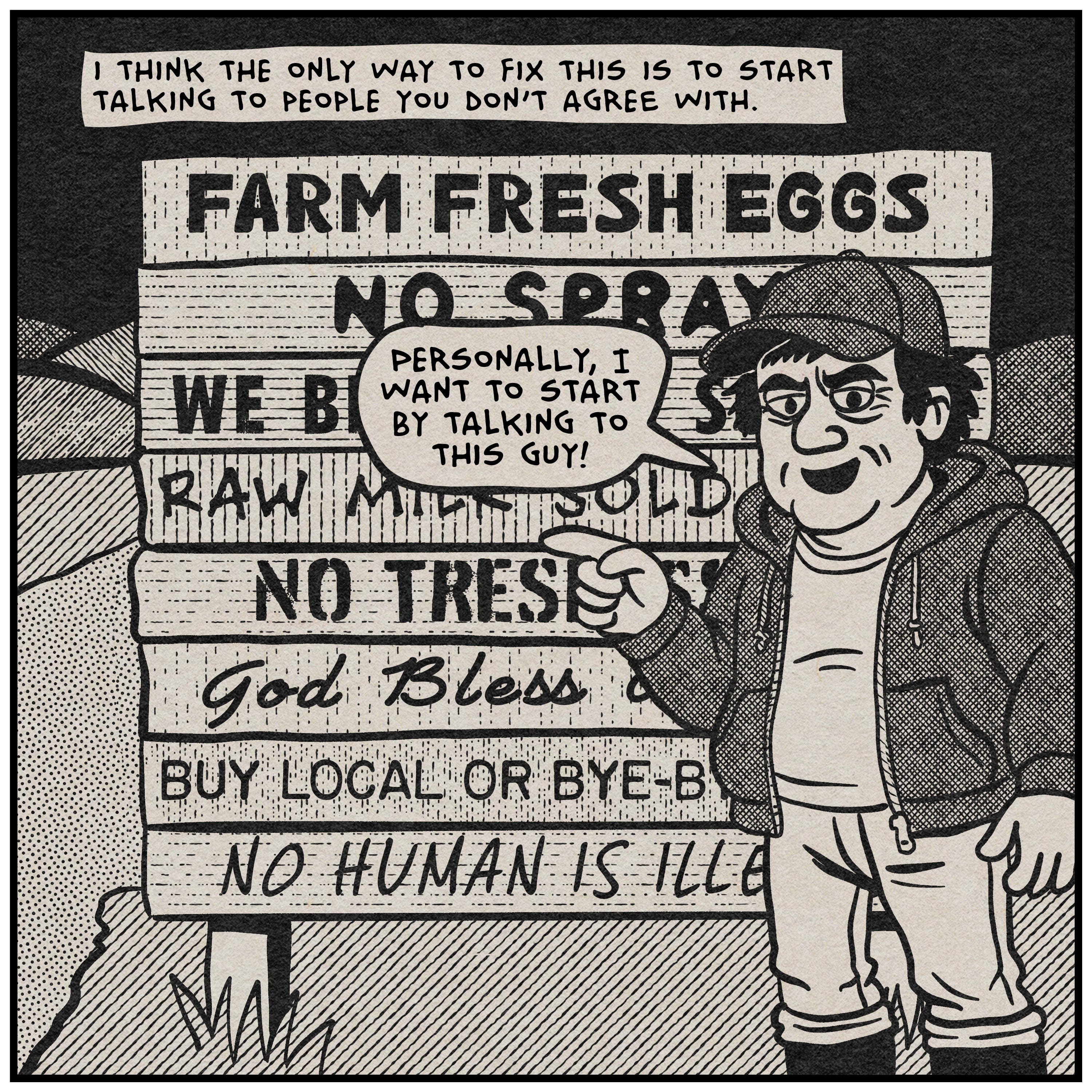
The old map made those people look like enemies. The new one at least lets you see them. The chart below shows how folks who read this essay scored. It updates every hour or so.
Postscriptum
I’m working on a video essay on this same topic. I’m still editing and building, but it should come out next week. To write this week’s essay, I edited the transcript of the rough cut of that video. What can I say? I’m wicked lazy.
The cattle are being moved out to pasture. I put the yearling heifers out last week. The moms are going this week. The boys are going next week. I won’t put the boys with the girls until a week or two after Father’s Day. You don’t want calves born in February.
I really hope the Map and Map Quiz I built for this week’s episode catches on. If you want to be awesome and help me out, please share it with your friends and family. See where they stack up.
I've always loved environment-related topics, so this essay really struck a chord with me.
Your kelp example is a great way to prove a point that a lot of people miss: Solutions are easy when you got the money. Rich people forget it (yay, affluenza), but for people who are actively struggling to different degrees, what seems like just a click away is actually unfeasible. It's the dilemma of the poor man's boots all over again, and as much as people with a green conscience want to help, they gotta made do with what they have. Granted, you're not just "making do", but you have a successful system.
It just comes to show that people have forgotten (or better said, refused to see) the real cause of all problems: Humanity. We're simply far too many, and there's no turning back. We've messed this up (just to keep it PG), and the people who HAVE the money for the solutions we need just want to hoard it all like dragons and see who has the biggest wiener, I mean, bank account.
Excited for this documentary (and please, show off the old Blockbuster Rewards card).
What I appreciate most about your articles, posts, and videos (and there's a lot to appreciate) is how nuanced you are. You hold the big picture and zoom into the nitty-gritty. You explore how these big issues actually land for real people across all these different quadrants.
It's a good reminder for all of us, myself included, to seek out people who don't share our worldview and figure out how we can come together to leave things a little better than we found them.