
Cul-de-Sac Nation: How the American Dream Became a Road to Nowhere
Why the housing crisis, the loneliness epidemic, and the collapse of trust are all downstream from the same dead-end street.

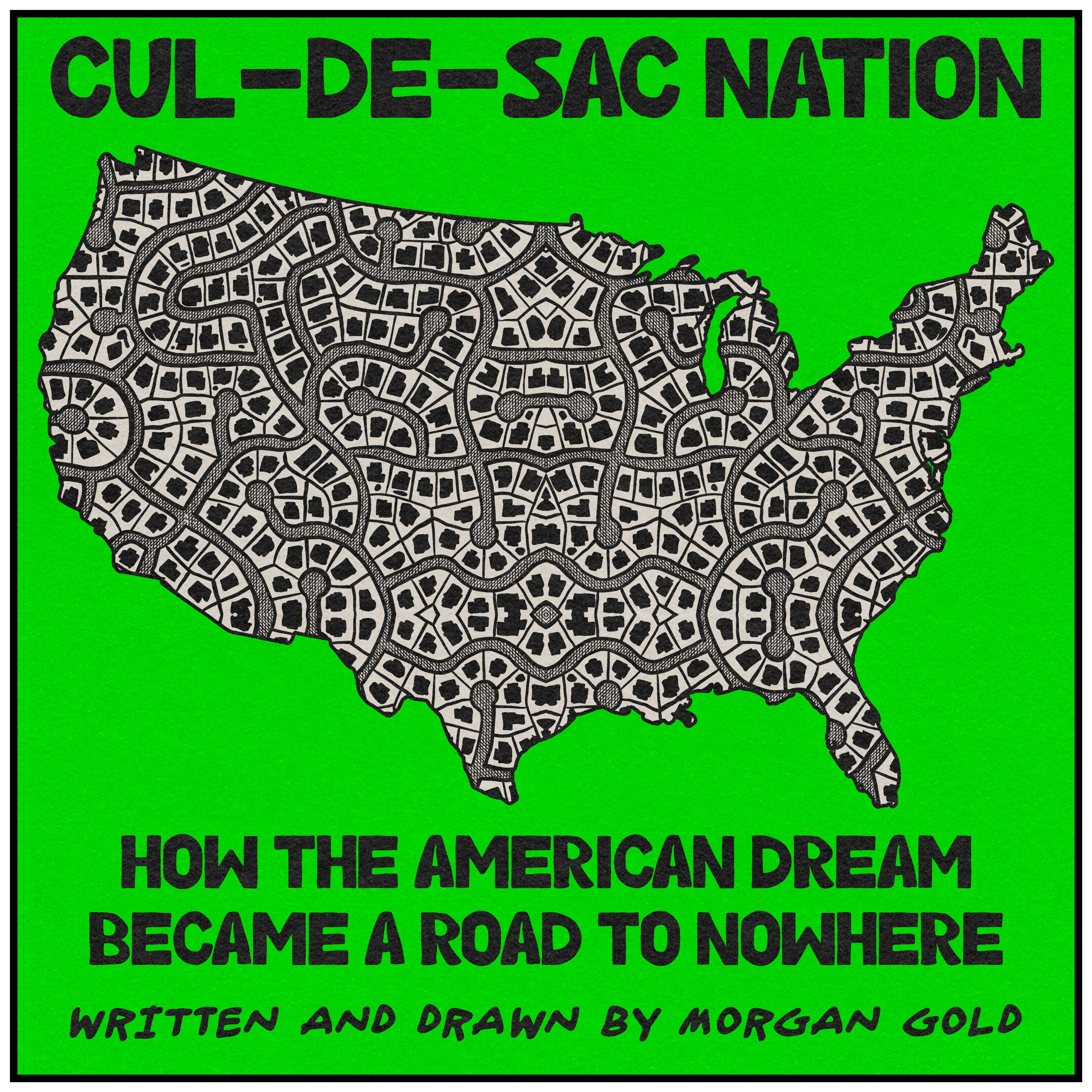
A truck I did not recognize turned up my driveway last Tuesday. Maine plates. The driver was an older man, maybe 70, probably looking for a farmstand he hadn’t visited in 20 years. I watched him from the front porch for the four seconds it took to register the trace of suspicion in my chest. It’s the same flicker any American with a deed to anything gets when an unfamiliar vehicle appears in a place it has no obvious reason to be.
Call that reflex what it is. Cul-de-Sac Nation. Not to be confused with the suburbs in general, Cul-de-Sac Nation is what happens when private homeownership becomes the main path to middle-class security. I, too, am a product of Cul-de-Sac Nation. I just live somewhere else now.
My road in rural Vermont does not end in a cul-de-sac. It keeps going. The closest cul-de-sac to my house is about an hour away. But I grew up surrounded by them. Suburban Connecticut, the postwar bargain in its purest form — single-family houses, two-car garages, lawns, mortgages, the works. Then 20 years of city apartments — Boston, Hartford, Brooklyn, DC — each a different version of the same arrangement dressed up as its opposite. Ten years ago, we bought the farm. The deed I hold is on a hillside, but the reflex that fired when the Maine plates turned up my driveway did not come from this hillside. I brought it with me.
How We Built the Road to Nowhere
For 20 years, the country has been trying to explain its various dysfunctions — housing unaffordability, the loneliness epidemic, the collapse of trust — as separate problems that happened to coincide at roughly the same time. They are less separate than the pundit class pretends. Most of them share a common upstream cause. The country organized its economy, its politics, and eventually its inner life around a road that goes nowhere. The rest is just a by-product.
A Cul-de-Sac Nation is what happens when a society organizes everything it has — capital, law, schooling, daily habit — around the assumption that the single-family house at the end of a dead-end street is the basic unit of the good life. We already live in that country. The move started more than 90 years ago.
Who gets financed?
1934. Franklin Roosevelt signed the National Housing Act. Before that law, the typical American mortgage was a short balloon loan that required roughly half the purchase price up front. The FHA created the American mortgage as most people still picture it today: long amortization, low down payment, federally insured. The modern American mortgage became the spinal cord of postwar homeownership, which itself was the backbone of the modern American Dream. It also drew the maps that decided who was allowed to finance one. Written into the FHA Underwriting Manual by name, redlining was deliberate.
Where can financed people live?
1956. Dwight Eisenhower signed the Federal Aid Highway Act, authorizing 41,000 miles of interstate. Whole blocks were condemned and bulldozed to make way for freeways that would carry commuters at high speed past the place those blocks used to be. Those same roads collapsed the time-cost of distance from the city center to the subdivision and made the postwar commuter suburb economically viable for the first time. The cul-de-sac, as a geometric form, was now affordable to pour by the mile.
How do owners protect the asset politically?
1978. California voters passed Proposition 13. The state’s homeowners discovered a thrilling new principle: the longer you had already owned something, the less you would owe for owning it. Property taxes were capped at acquisition value, not market value. Two identical houses on the same street could get the same fire protection, the same sewer lines, the same patched asphalt, and receive tax bills from different solar systems. The older owner paid a few hundred dollars a year. The newer owner paid many thousands. Same neighborhood, same consumption of community services. Different levels of civic contribution.
The financial impact of Proposition 13 was big, but the political lesson it taught the country was bigger. Proposition 13 taught the homeowners who passed it that taxes had stopped being the price of belonging to a society and had become a fee — a fee that could be engineered downward, carved away, minimized through sufficiently favorable rules, downstream impacts be damned. Two years later, Ronald Reagan brought that same idea into his presidential campaign and onto a national stage.
What happens when the asset is threatened?
2008. For the first time in a generation, the housing market did the thing it had been built to never do. Prices fell. Not a dip — a collapse. Roughly a quarter of national home value evaporated between 2006 and 2011. For about 18 months at the bottom of that fall, a starter home in most of the country was within reach of a household earning the median wage.
The federal response had a choice to make. It could let the prices find their floor and let a new generation buy in at a lower price. Or it could intervene to put a floor under the asset class itself and prevent too big a drop. The floor was a conscious choice.
TARP, the Fed’s first round of quantitative easing, the conservatorship of Fannie Mae and Freddie Mac, HAMP, HARP — every available instrument was used to hold the price of the asset class up. The banks were stabilized. The mortgage-backed securities were held aloft. Private equity walked in behind the foreclosure wave, bought entire blocks of cheap stock, and converted them into a permanent class of single-family rentals.
The bailouts did not save the people who were losing their houses. The goal of the bailouts was to stabilize asset prices and prevent more financial dominoes from toppling. The stabilized asset prices made it harder for new folks to move onto the cul-de-sac.
In 1981, the median age of a first-time American homebuyer was 29. In 2024, the median first-time American homebuyer was 38. That nine-year gap is the price of arriving after the door closed. Nine years of working life paid in rent rather than building equity. Nine years of compounding wealth flowing upward and backward, to the generation that already owned the asset, instead of forward to the one trying to buy in. The wealth-building mechanism the country has built its middle class on, for 90 years running, is now structurally closed to most Americans under 50.
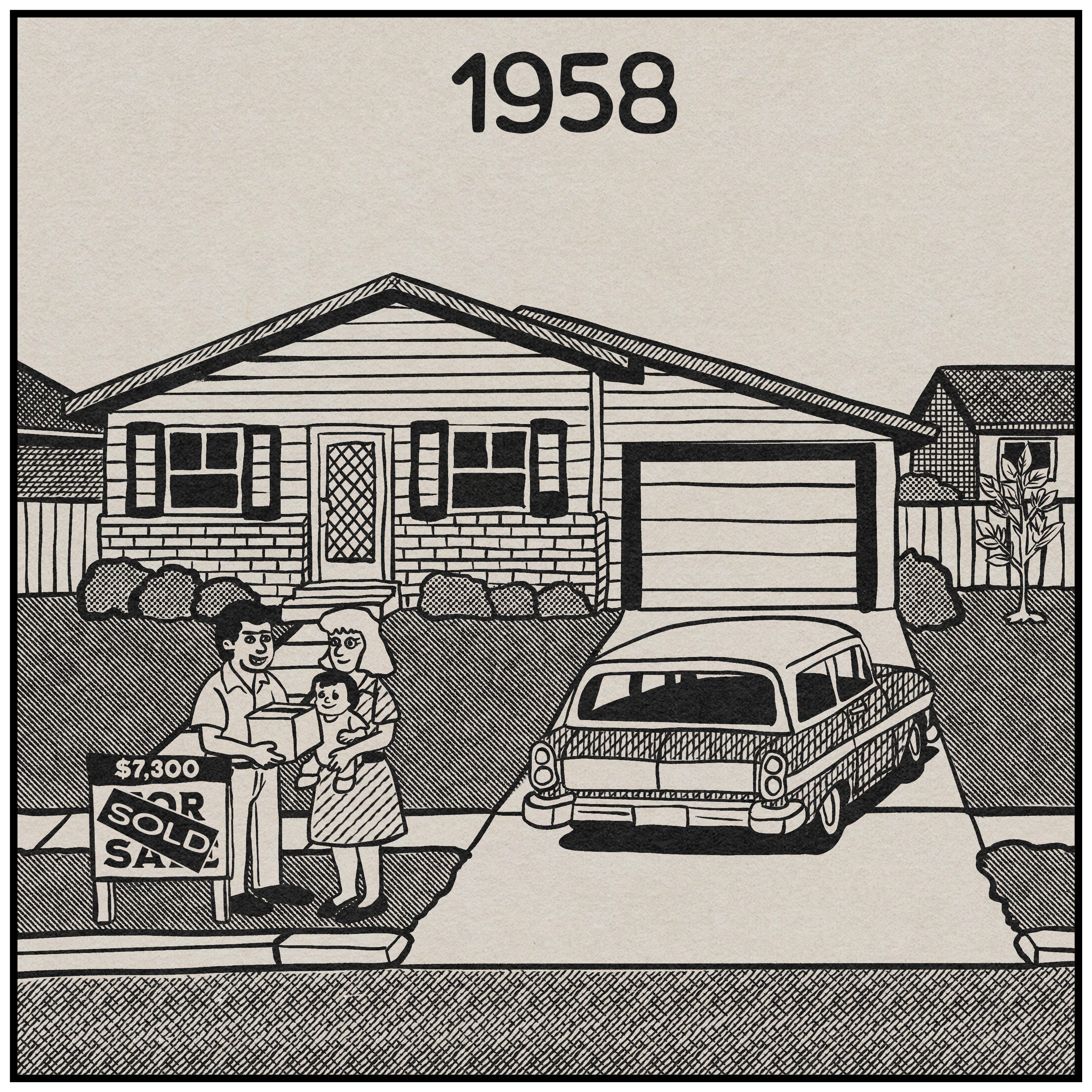
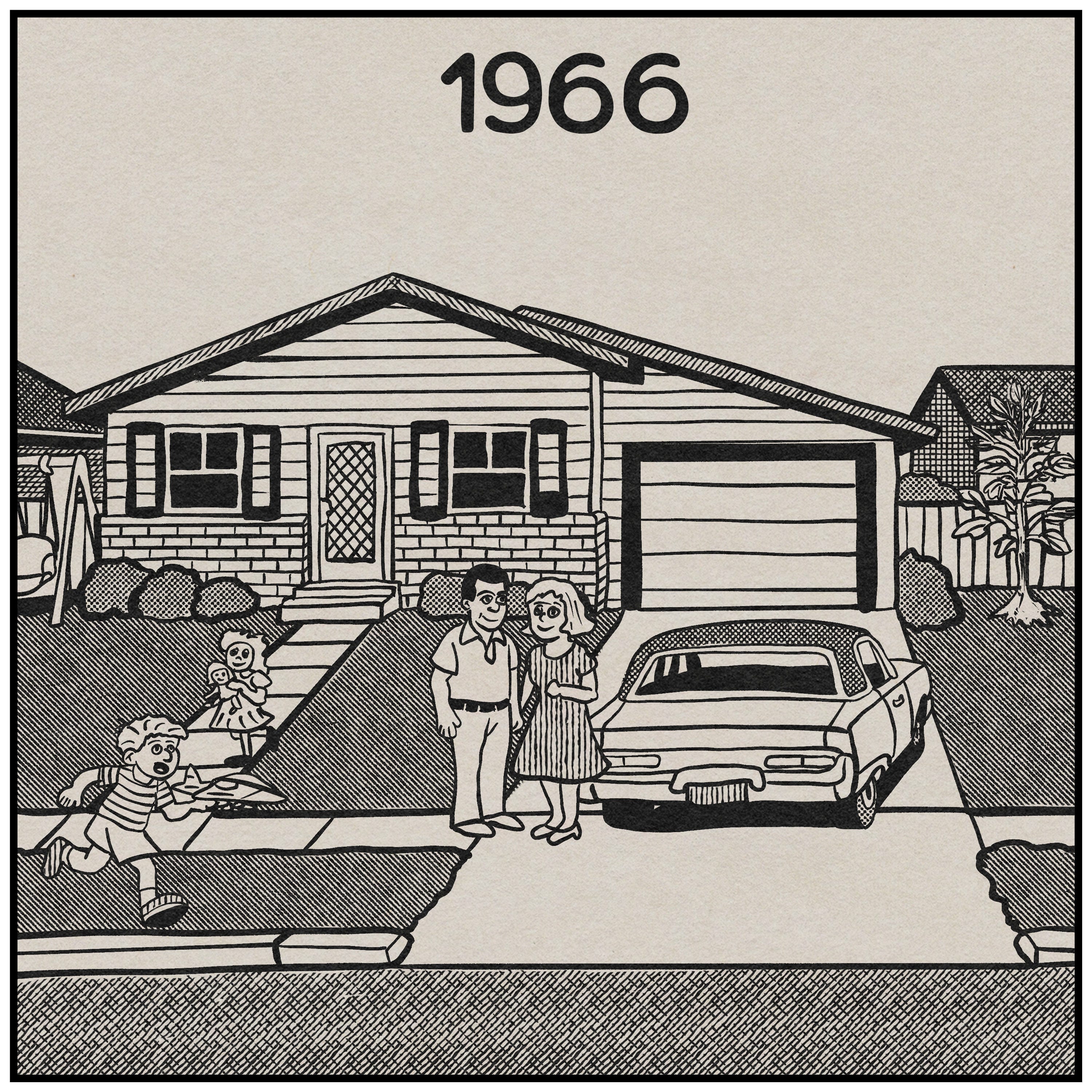
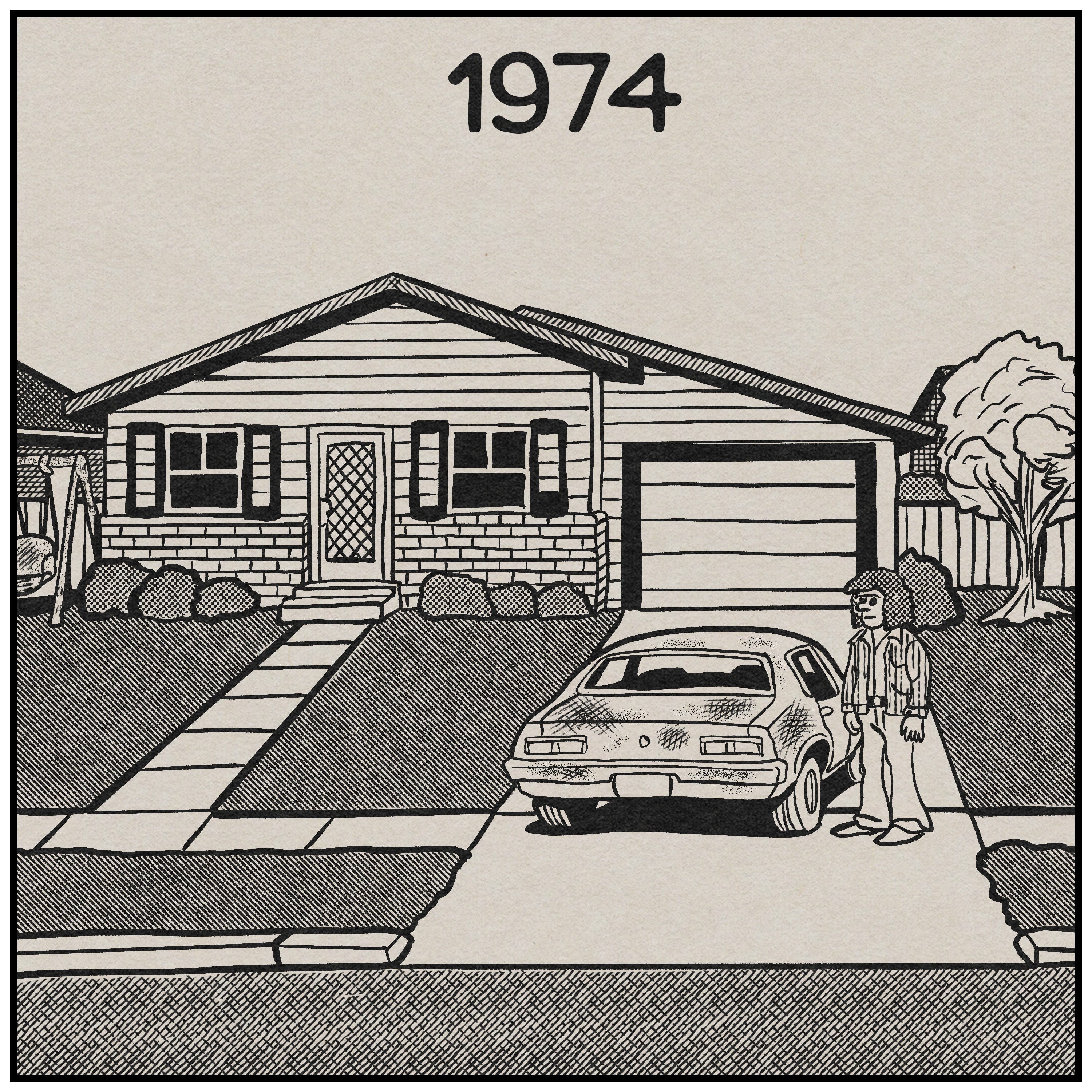
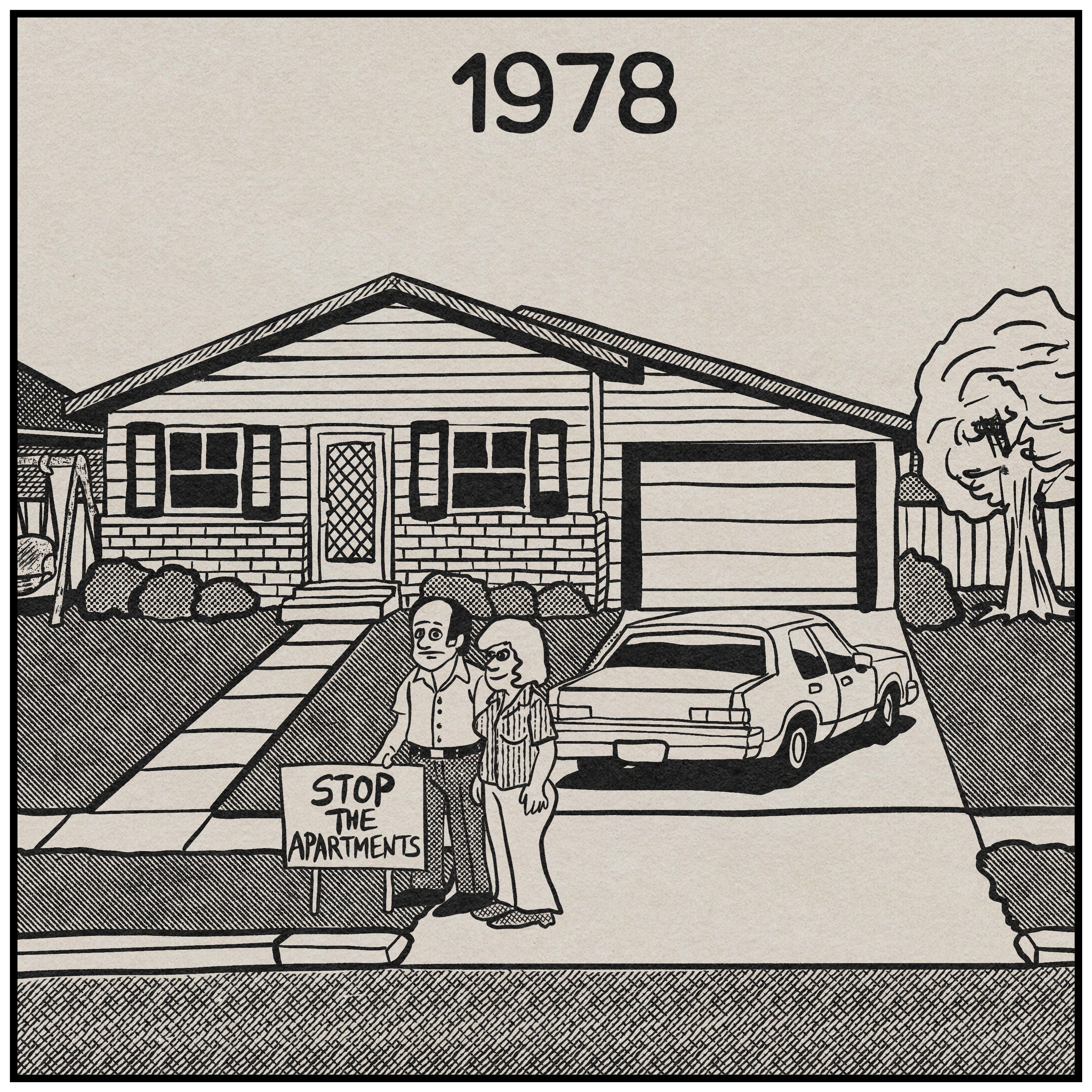
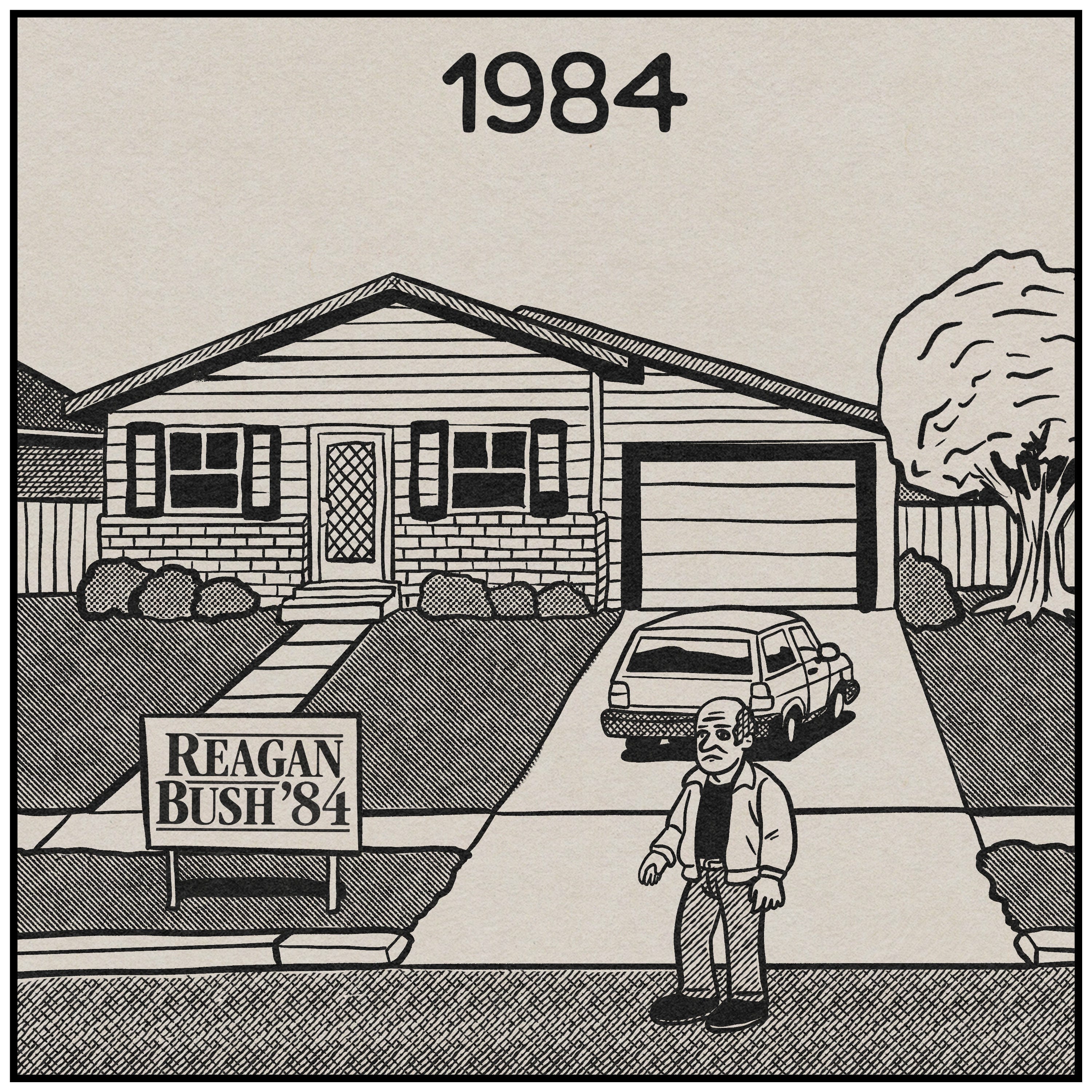
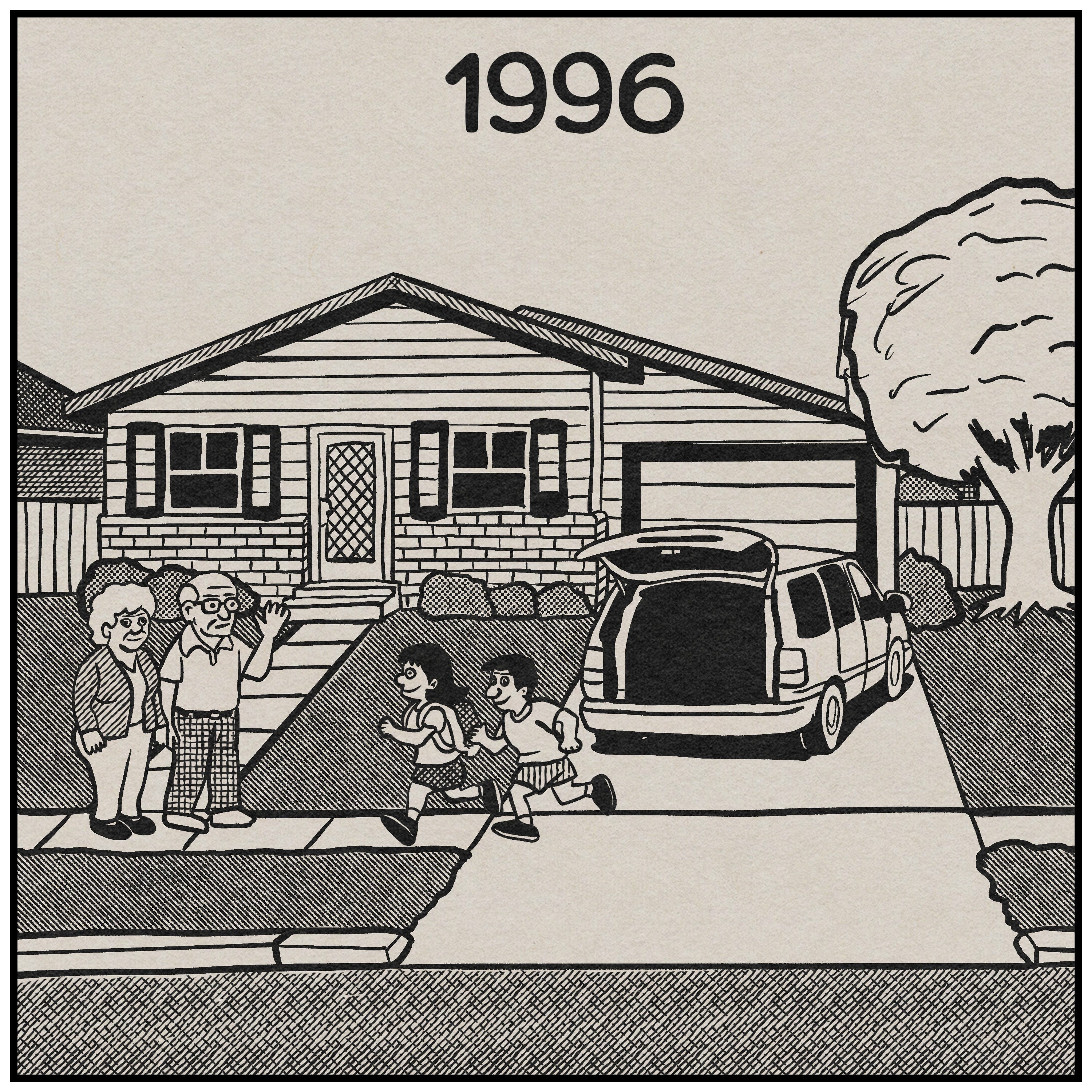
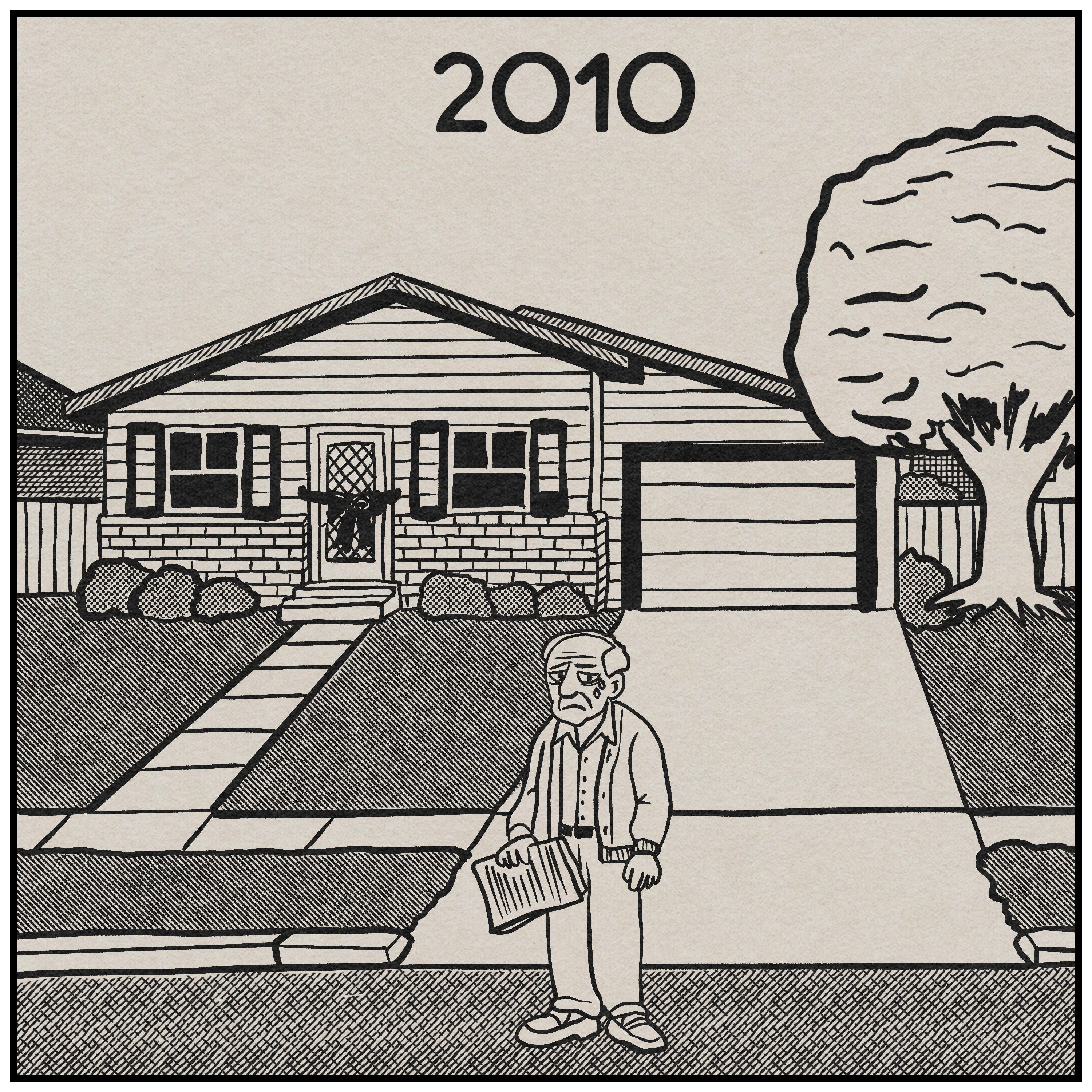
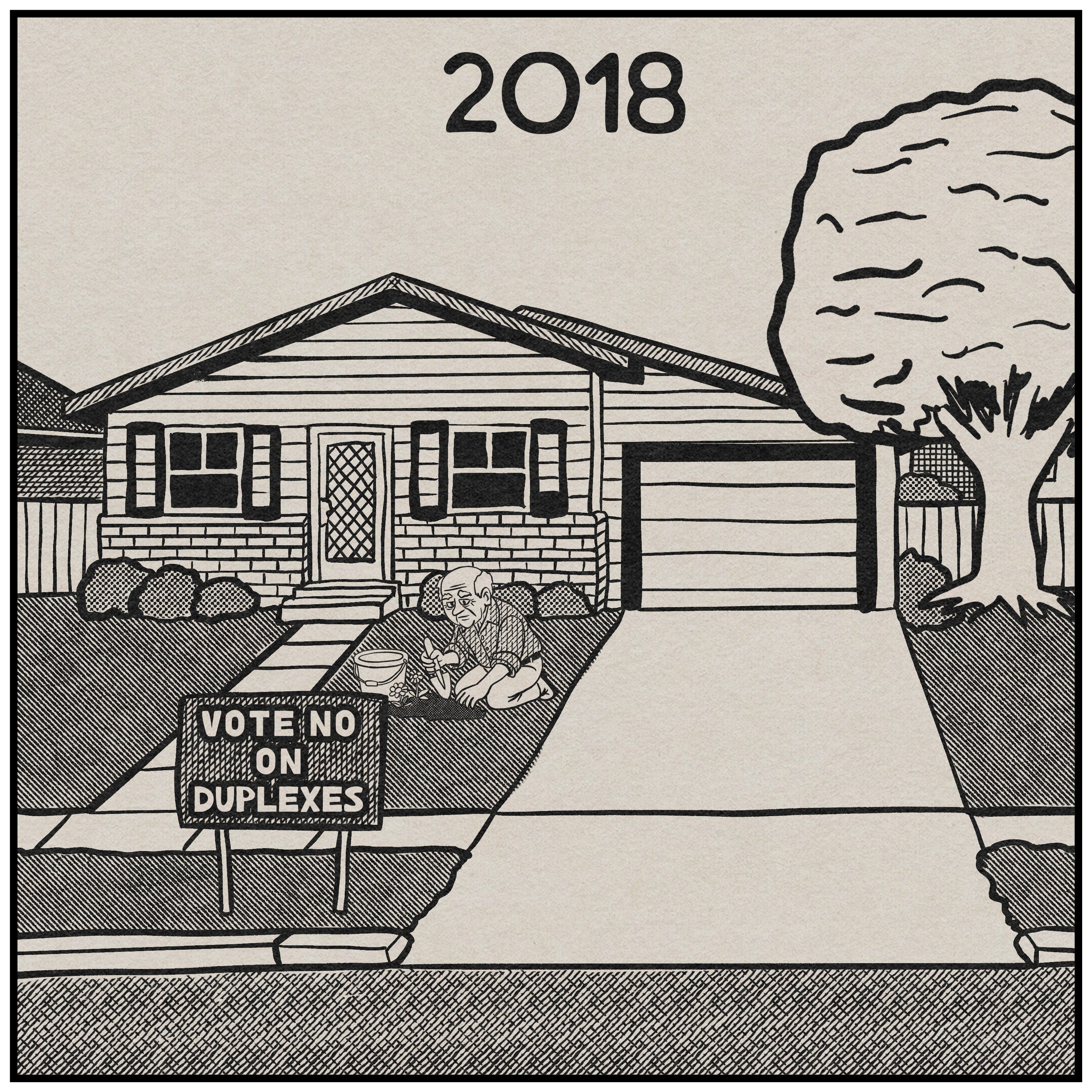
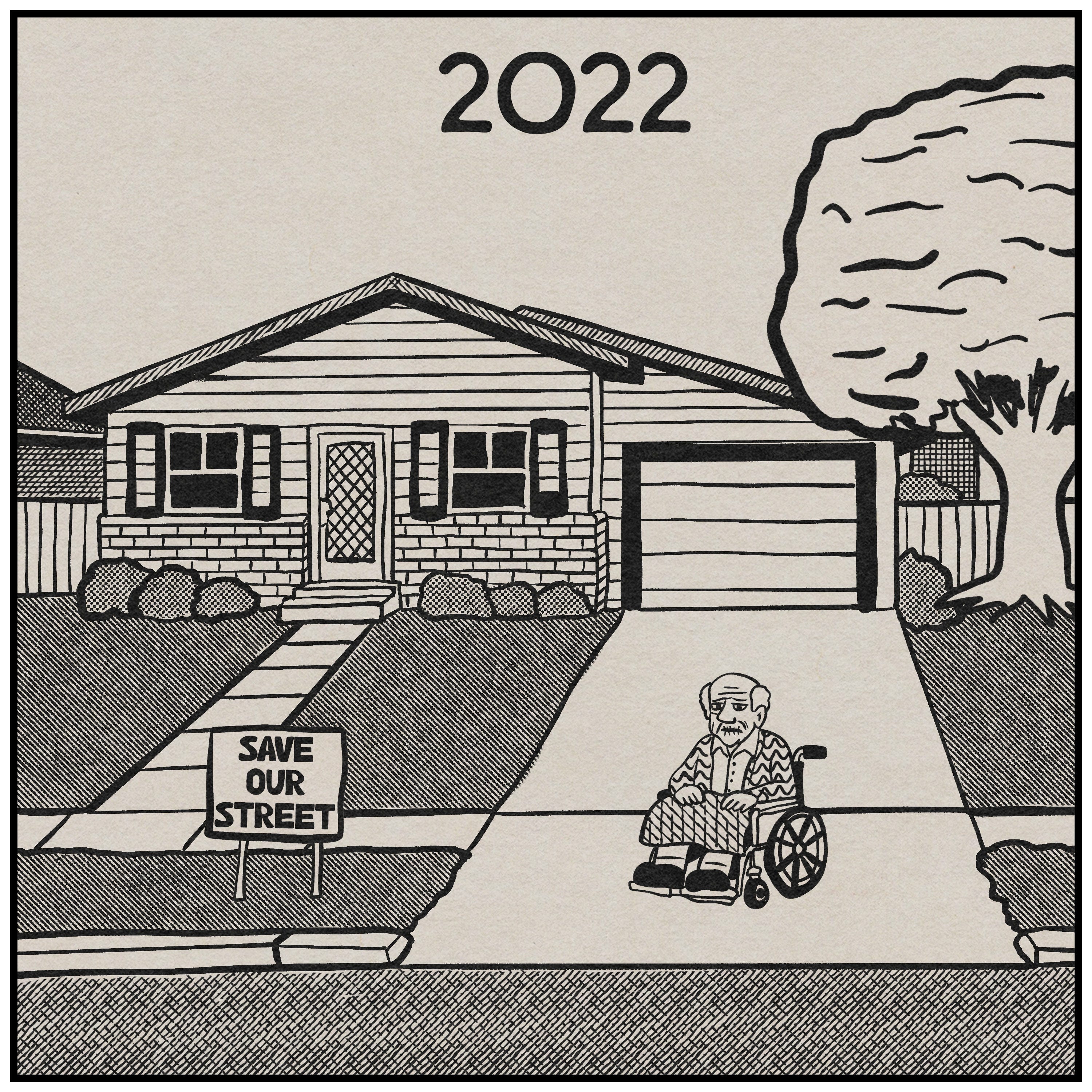
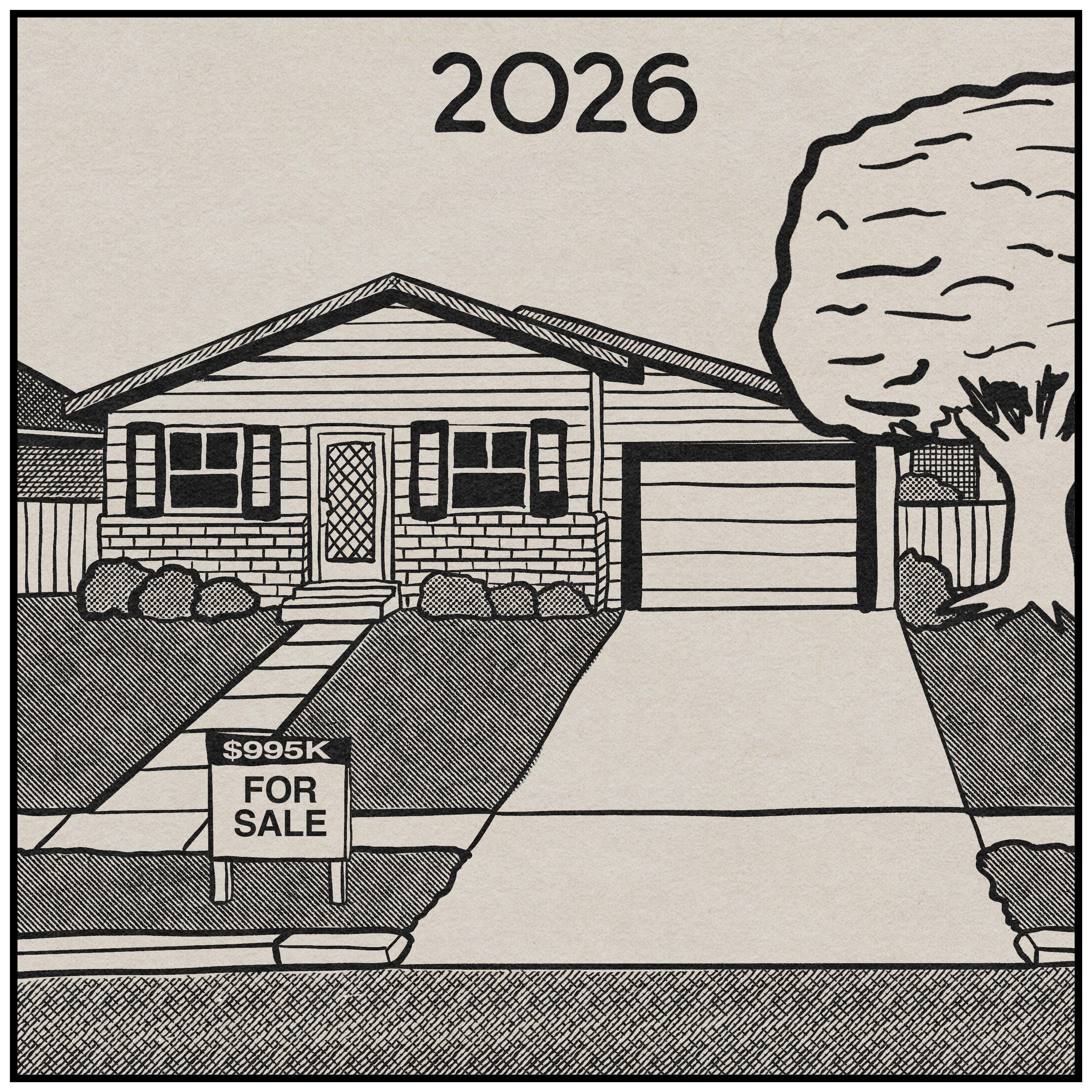
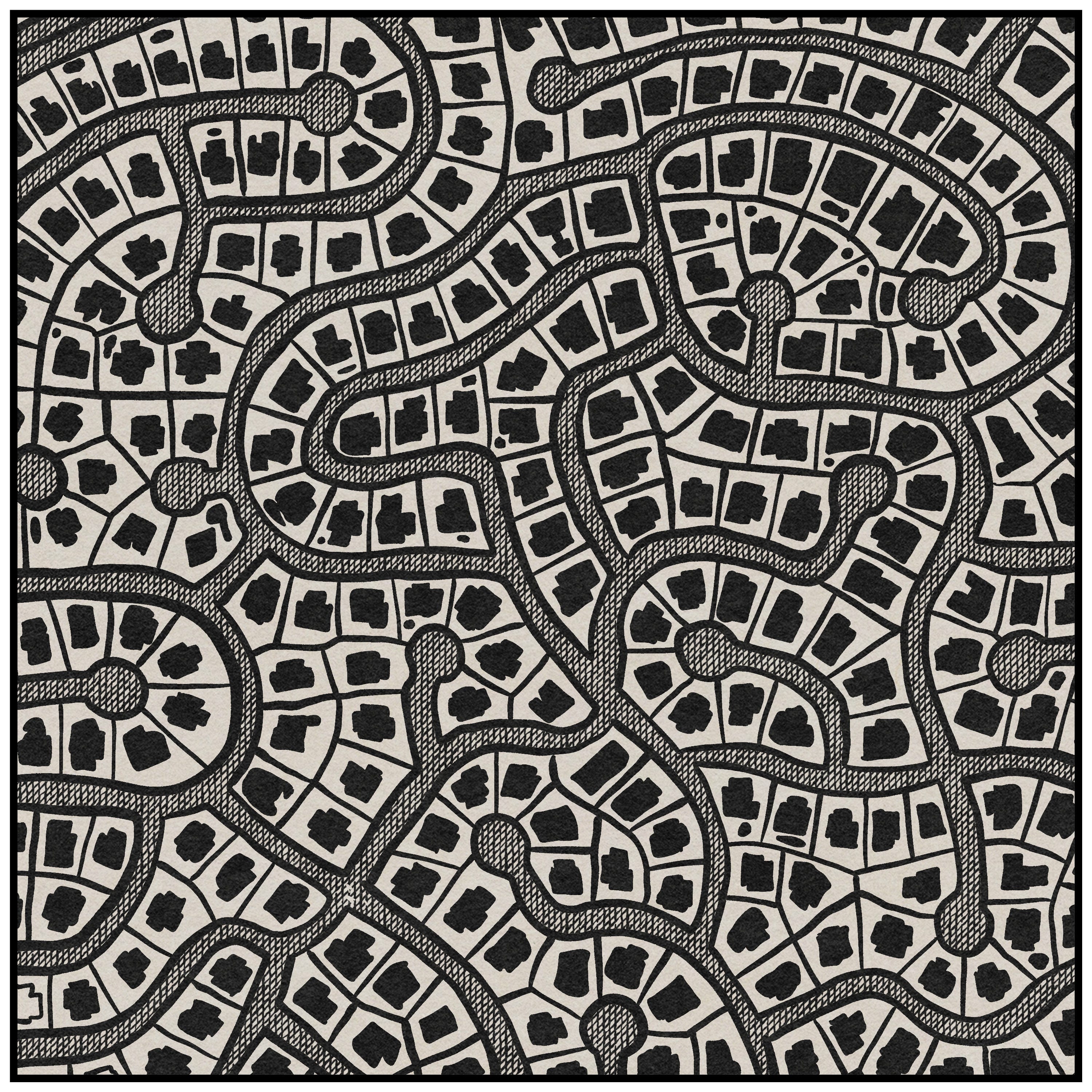
Architecture of Suspicion
Walk through any postwar American subdivision in the early evening and pay attention to the architecture.
Houses built in 1925 face outward. Front porch, narrow driveway, windows angled toward the street. They were designed on the assumption that someone might be walking past at any time and that this was a normal condition of life rather than a problem to manage. Houses built in 2005 face nothing in particular. The garage door is the largest single feature of the facade. The front door is small and set off to the side, often half-hidden. Sidewalks are optional, frequently omitted, and where they do exist, they tend to dead-end into a cul-de-sac that does not connect to a sidewalk on any other street.
If you stand on the curb in front of such a house, you are standing in a place no one is supposed to be standing in. The architecture is engineered to receive cars at speed and the people inside the cars. It is not engineered to receive a person on foot with time to look around. The casual pedestrian has been zoned out of the system.
This is the zoning regime that, by most estimates, governs roughly three-quarters of urban residential land in the United States. For most of the postwar era, that land has been legally reserved for detached single-family homes. Apartments, duplexes, courtyard buildings, townhouses — illegal, or functionally illegal, by municipal ordinance.
The enforcement mechanism is almost comically small potatoes. It happens at local planning commission meetings on weekday nights. Existing homeowners reliably object to anything that might alter the neighborhood’s character, which, in practice, usually means its scarcity.
Meanwhile, the federal government subsidizes the entire structure. The mortgage interest deduction and the capital gains exclusion on home sales cost the Treasury more than $60 billion in forgone revenue each year. Most of that money flows to households earning more than $200,000 annually.
The people who own the asset write the rules that protect the asset. Those rules make the asset more valuable. The rising value strengthens the political coalition organized around defending the rules. The path toward ownership is just people driving in circles around the cul-de-sac.
Digitizing the Dead End
A modern American can, without trying very hard, go several days without encountering a single person in the flesh. You can get takeout delivered. You can get the rest delivered too. Most daily friendships now run through a piece of glass in your pocket. The list gets longer every year. We tend to blame the smartphone, but we were Bowling Alone long before the phone became ubiquitous.
The pattern began when the country reorganized its physical landscape to minimize accidental contact between people — the subdivision, the garage, the private yard, the dead-end street. The smartphone simply digitized the cul-de-sac.
Ring doorbells mount cameras on the front of your house. They record every person who walks past. The Nextdoor app stitches the neighbors of your block into a forum that spends a big chunk of its bandwidth narrating which unfamiliar people are currently visible from which window. Stranger-danger unease is now a push notification.
It is not only surveillance that has been digitized. The errand has, too. A generation ago, getting dinner meant walking into a restaurant and being looked at by others doing the same. Buying a wrench meant standing in line behind a stranger. Those minor encounters were never the point of the errand, but they accumulated. DoorDash, Instacart, and the brown-box pipeline running out of every Amazon warehouse in the country have cleared them away. The work that used to involve some incidental human contact is now done by a gig-worker underclass that hands off a package on the porch and leaves before the door opens. I live on a dirt road in the Northeast Kingdom, and the Amazon truck still finds me once or twice a week. The friction the cul-de-sac removed from the neighborhood has now been removed from commerce itself.
We Are Cul-de-Sac Nation
Consider a Brooklyn progressive who bought her brownstone in 2009. She votes reliably for the most progressive candidate in every election. She has a small yard sign in the patch of dirt by her stoop listing her stated values. She went to the women’s marches and the climate marches. When the city proposed an affordable housing development two blocks from her brownstone, she organized her neighbors against it. Her stated reasons were about scale, infrastructure, and neighborhood character. The development was not built.
The deed she signed in 2009 has, in the 15 years since, become the largest asset she has ever owned and the only meaningful inheritance she will ever leave her children. New housing on her block would cap that appreciation for a decade. She did not have to think the thought consciously to vote in line with it. Her deed was doing the work for her.
She lives at the densest end of an American city. The asset politics found her anyway. She has internalized the cul-de-sac orientation completely while sincerely believing she is on the other side of the argument from those who hold it. She would never call herself a NIMBY. The word, to her, describes someone in Marin County or Westchester. She is the person who shows up to the planning meeting carrying a tote bag with a slogan silkscreened on the side.
Consider, in parallel, a retired couple in the kind of suburb the postwar arrangement built. They bought their house in 1981 for $63,000. Today it is worth $940,000 — about 15 times what they paid. They aren’t mustache-twirling villains. They raised children in that house, paid down the mortgage, mowed the lawn for forty years, lived an ordinary middle-class American life. The 15-fold appreciation, however, was not the product of their work. It was the product of 70 years of federally subsidized mortgages, exclusionary zoning, protected school districts, and organized political action to prevent any new house from being built within commuting distance. Their grown children cannot afford to live in the town where they were raised. Any policy that might put prices back within the children’s reach — apartments, density, transit, any of it — threatens both the couple’s net worth and the whole social arrangement they spent their adult lives inside. The second is what scares them more. They are going to vote against the apartment building. From where they are sitting, that vote is rational. They are doing exactly what the arrangement trained them to do.
The third case is the buyer who left the cul-de-sac for elsewhere. I’m that guy. I spent 20+ years working in the investment industry in cities such as New York and DC. In 2016, my wife and I bought a farm in Vermont’s Northeast Kingdom. More than 160 acres of land, a 4,000 square foot farmhouse, multiple barns — all for the low, low price of $350,000. We paid in cash. It seemed like a steal compared to the $850,000 rowhouse we were living in on 0.18 acres in Capitol Hill. That kind of transaction only works in one direction. A farmer in Vermont’s Northeast Kingdom could not have sold his land and bought my DC rowhouse.
What the Brooklyn brownstone owner shows is that the orientation attracts people whose stated values run counter to it. What the retired couple shows is that the arrangement produces rational defenders among people who behaved decently within it. My situation demonstrates how the arrangement does not stay where it was built. The capital it generates can travel and alter other real estate markets. I am a citizen of Cul-de-Sac Nation in good standing, currently residing somewhere the cul-de-sac will never reach.
The Politics of Life on the Cul-de-Sac
What if the suburbs were just where the country poured the foundation, and the rest of us have been building on it ever since?
The political conflict in present-day America is usually framed as left versus right, urban versus rural, college-educated versus not. Those framings catch real differences. They also obscure another difference beneath the surface: between the Americans who got inside the postwar bargain before the door was sealed in 2008, and the Americans who did not. The fight between left and right is loud and constant. The other fight — between everyone living on the cul-de-sac and those who don’t — gets less coverage and is, in the long run, more consequential.
The Cul-de-Sac Nation does not explain every American dysfunction. It doesn’t explain inflation, the various foreign-policy failures of the past 25 years, or the climate crisis as such, though it explains some of why the climate response in this country has been so politically painful. What it does explain is the texture of present-day American daily life — why the country feels lonelier than its population suggests it should, why ordinary acts of civic membership feel optional rather than required, why a generation of younger Americans cannot afford to live in the places they grew up, and why the people who do live in those places are organizing politically to keep them out. It is the common cause behind a set of symptoms we usually treat in isolation.
I still feel the suspicion flicker when a stranger turns up my driveway. I know the argument against the reflex. The argument hasn’t cured the reflex.
Next week, a strange vehicle with out-of-state plates will probably try to turn around in my driveway while I’m working on my front porch. I’ll look up from my drawing and feel that urge. Somewhere in my head, the cul-de-sac will tell me to keep glaring at them and let whoever it is figure out the road on their own. But I hope that the better part of me, the part that would rather live in a different country than the one we do right now, will tell me to walk out and help. Maybe offer them directions or something.
Postscriptum
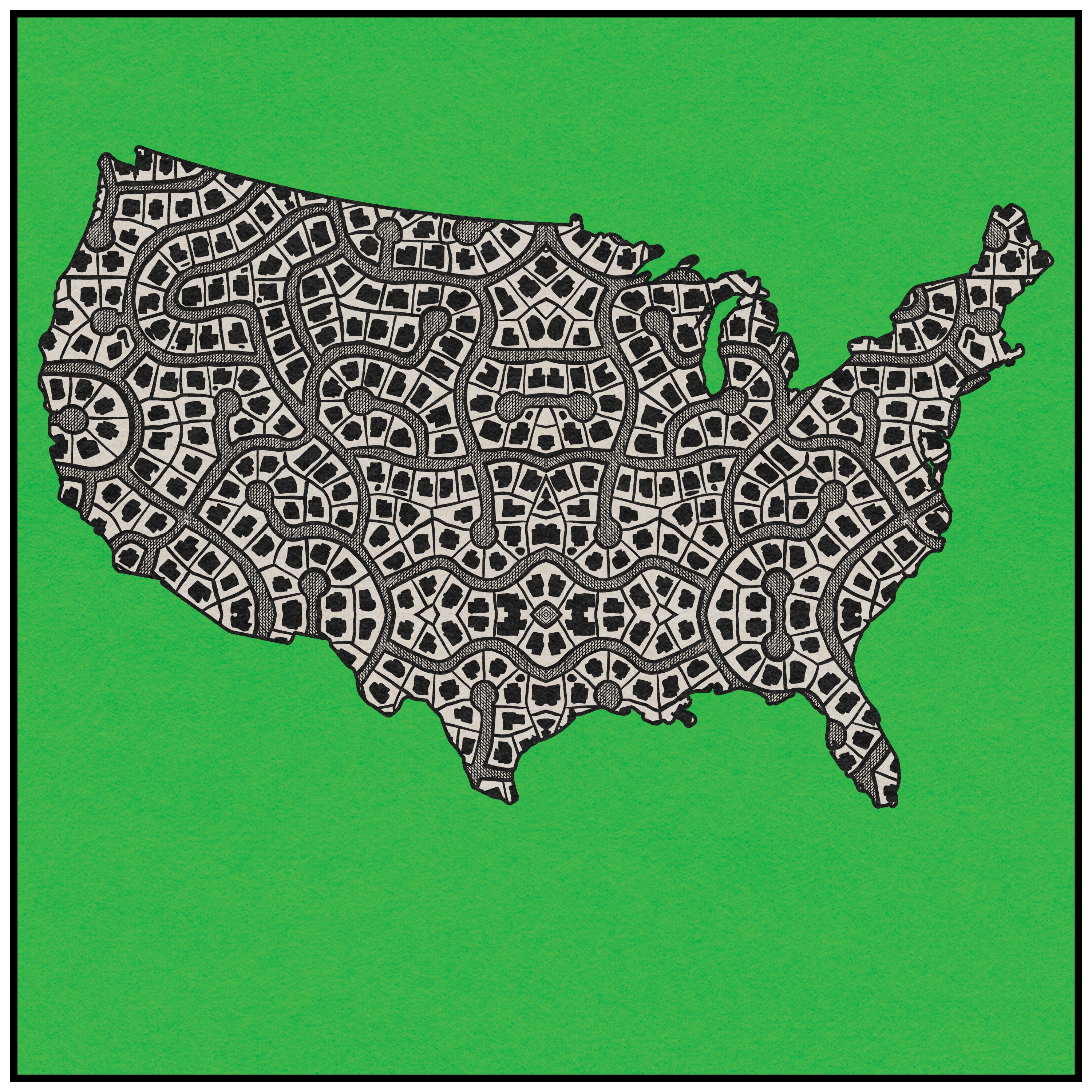
The idea for this week’s comic borrows from two different sources. The first is an obvious one. Robert Crumb’s “A Short History of America.” The second is probably less obvious but more important. As a kid, even before I could read, some of my favorite books were by the Japanese artist Mitsumasa Anno. I loved Anno’s Counting Book, Anno’s Journey, and all of his many books. The way he could tell a story without words, just through developing pictures and small visual discoveries, has stayed with me for decades. I tried to bring some of that feeling into this week’s comic.
All the cattle are out on pasture, which means the summer season has officially begun here on the farm. The change in season means a change in rhythm. It also means I’ve got to figure out how to fit these weekly essays and comics into days with less available time. I’m still working that out, so give me a little grace if there are some hiccups over the next couple of weeks. That said, I’m very happy summer is here on the farm.
This is really good Morgan
Again. I am impressed, educated, and again, frankly pissed. Your research and cohesive essay presents yet another national crisis for which nobody has a fix, nobody can stop, and nobody seems to care - the pissed part!
I am proud to say I’ve lived in almost every situation you described over my 77yrs., and STILL look for the sidewalks that I hope will give me the chance to meet the neighbors, while I wave at the cars passing by! Cul-de-sacs, long driveways, or acres can separate us ONLY if we let them. But you already knew that. -Pat O.