
Content Brain
The stories are true. The self-portrait they add up to isn't. How telling stories about yourself changes who you are.

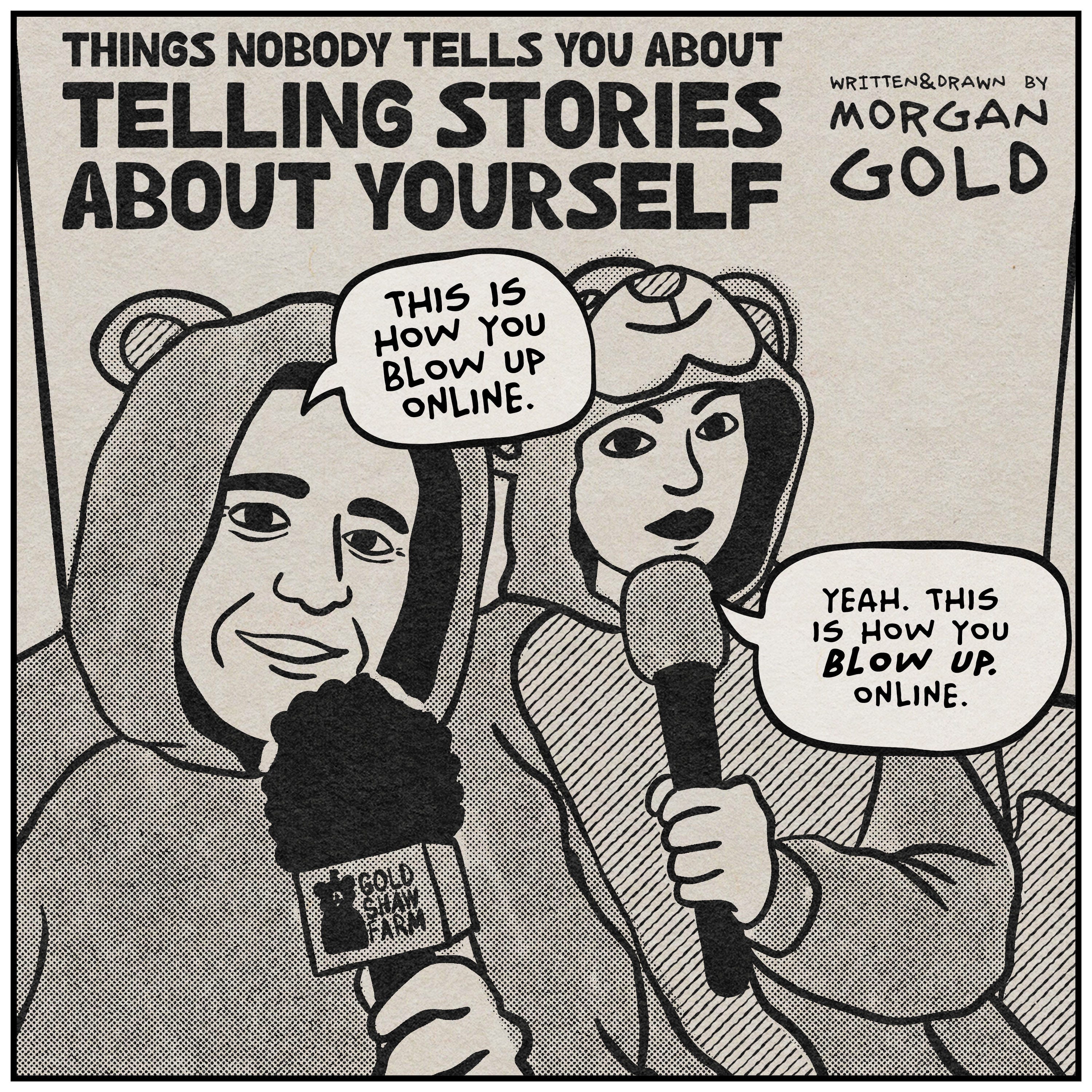
The moment you decide to share your life with an audience, something strange and irreversible happens. You split in two.
There’s the person living your life—making the decisions, feeling the feelings, absorbing the hours that are too ordinary or too ugly to ever be worth narrating. And then there’s the character—the edited, structured, rhetorically-tuned version of you that exists in the story you tell about it all after the fact.
At first, the gap between those two people feels tiny. Maybe even fun. You get to be the protagonist of your own story. You get to be interesting. But stories follow a structure that life does not, and forcing one onto the other quietly turns the person living the life into someone who has forgotten how to simply live.
I’ve been making content about my life for a few years now. Long enough that the cameras have stopped feeling like novelty and started feeling like everyday carry. No different than my phone, wallet or keys.
I was seven when I made my first proper comic book. Printer paper, ballpoint pen, panels drawn freehand on the floor of my bedroom. By high school, I was xeroxing mini-comics and distributing them to people who hadn’t asked for them. Long before I had language for it, I already had the impulse.
I tell you this because it explains something I didn’t understand about myself until I was well into middle age: I am unable to experience something without simultaneously wanting to shape it into a story. I suffer from content brain.
I look at raw life and immediately start asking what the structure is, where the tension lives, how to make a stranger care. It’s not a skill I developed. It’s more like a compulsion I’ve learned to use to my advantage.
The trouble is that compulsion has consequences. Every choice to shape is also a choice to cut. You decide what makes it in, which means you decide what gets left on the floor. And those decisions accumulate. Over time, they add up to a self-portrait made entirely from true things that is not the truth.
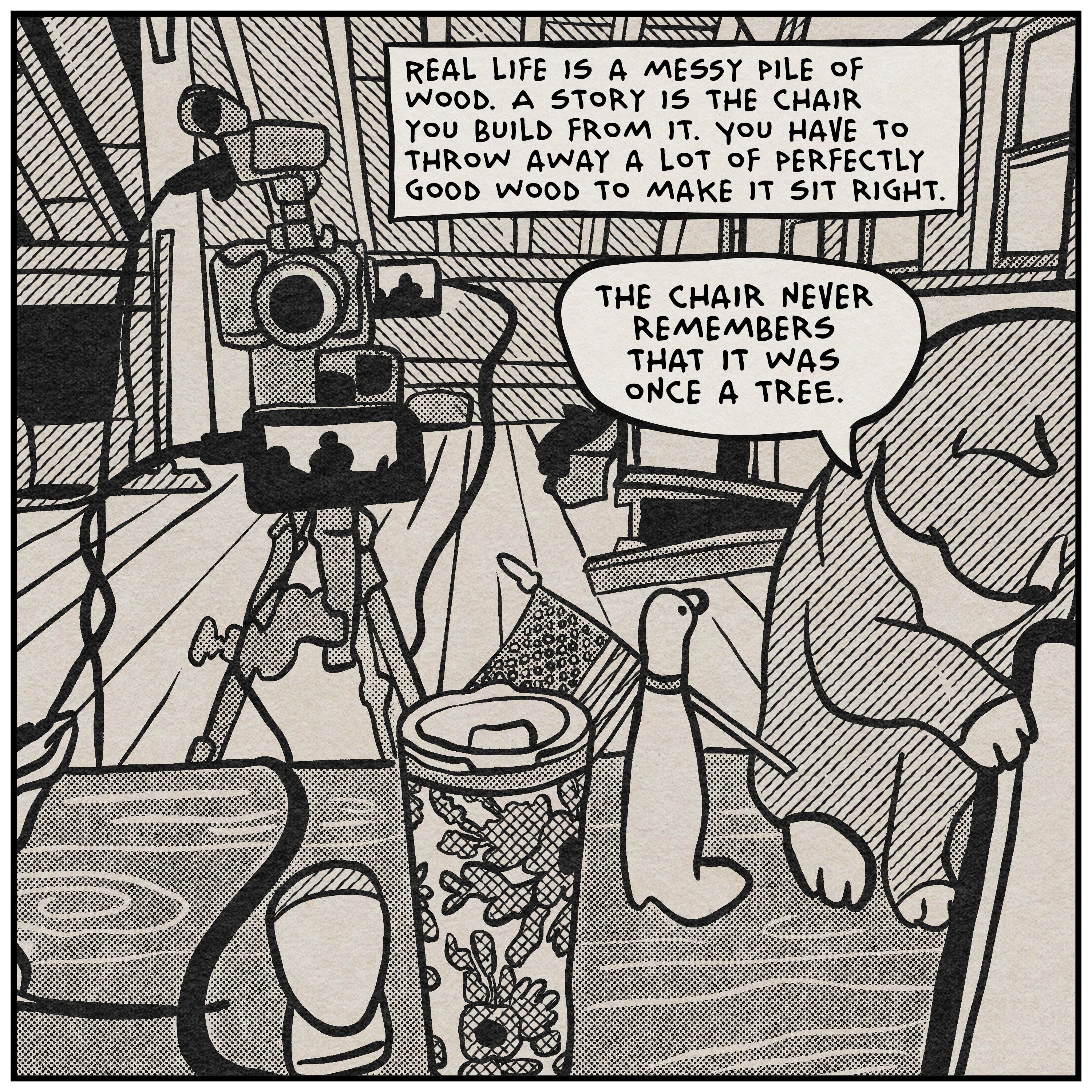
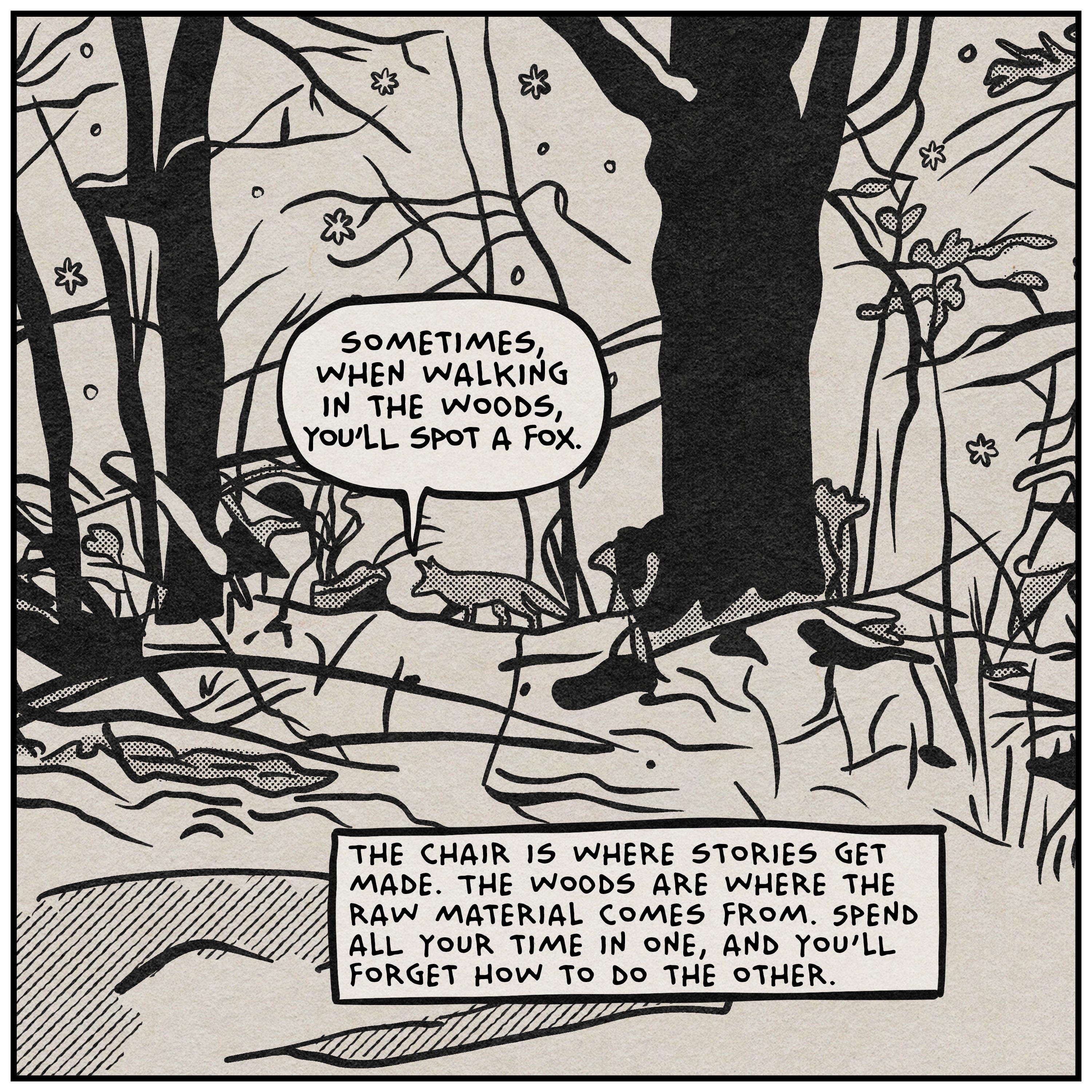
Storytelling means throwing away perfectly good wood. You start by looking for the shape of a chair within the mess of a forest. And from that mess of timber, you craft a chair that can support your weight. The tragedy of the craft is that the finished piece never remembers the living thing it used to be.
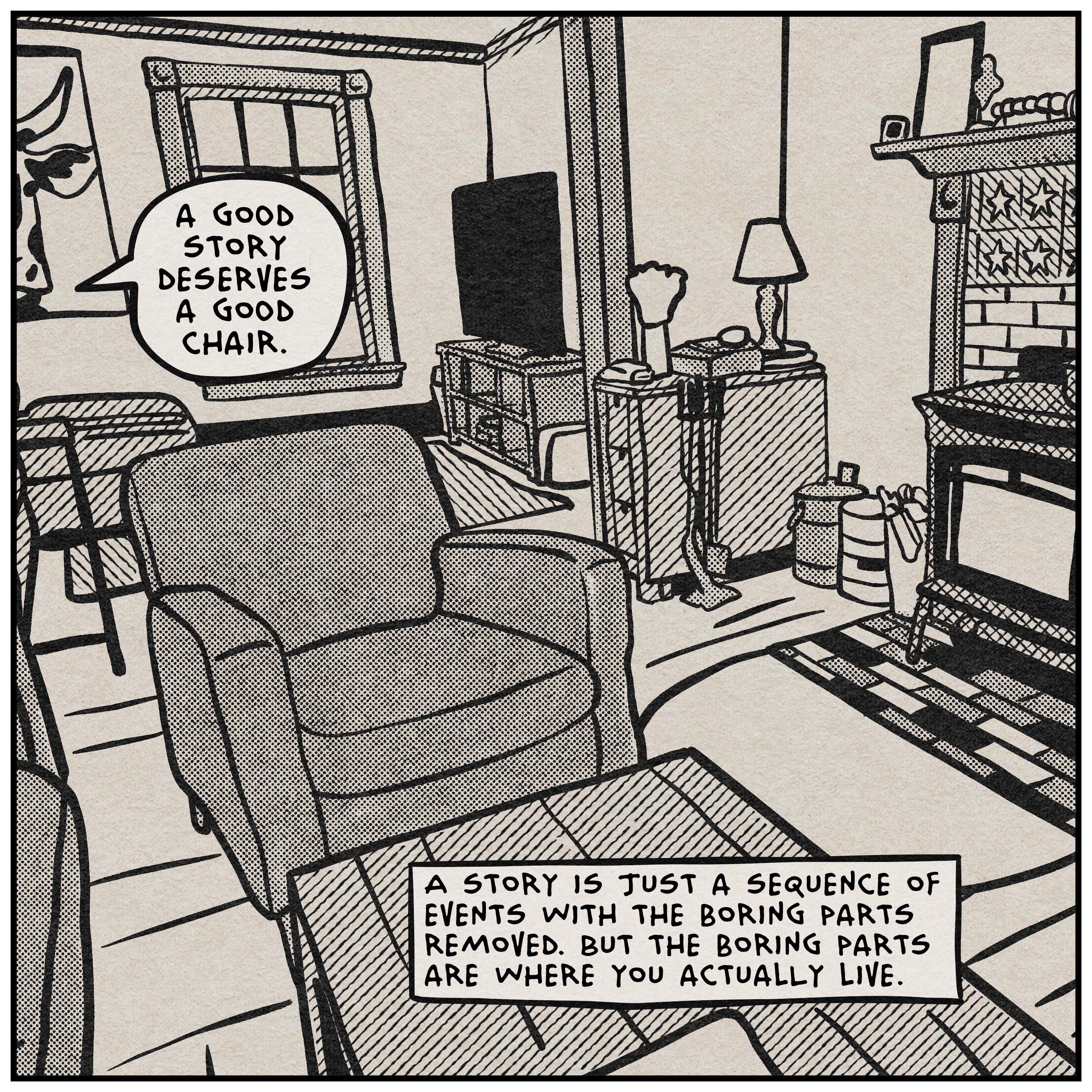
That is not an argument against telling the story. It’s an argument for the craft of storytelling.
People don’t need every detail of your entire day. They need the shape you can make from it.
They need the sentence that pulls a feeling out of private fog and places it somewhere another person can finally point and say: Yes! That. That is what I’ve been living in, too.
My first job out of art school was at a small video production company in Connecticut. I made corporate training videos for insurance companies. I spent months filming conference rooms and sexual harassment scenarios and the faces of people who did not want to be filmed.
The work was technically fine. Watchable, in the way that a safety video needs to be watchable rather than interesting. What I could not figure out how to manufacture, for all the technical competence in the world, was stakes. Nobody in a corporate training video is in genuine danger of anything other than dying of boredom.
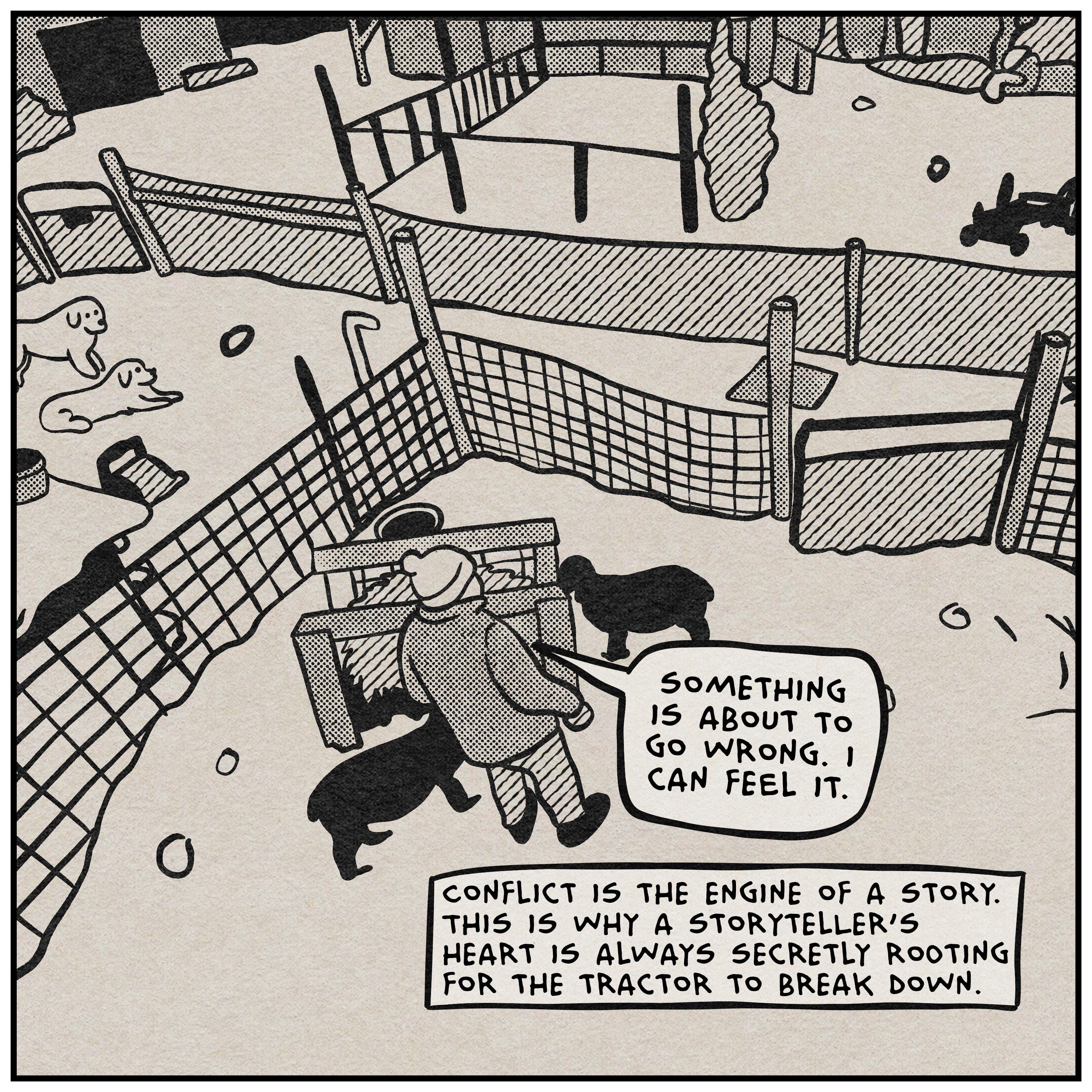
The advantage I have now that I didn’t have then is a life where the stakes are real and messy. Equipment breaks. Goats get sick. Bulls don’t cooperate. My best work isn’t manufactured because I don’t have to manufacture it. I just have to show up and document what’s already happening.
You don’t need to create conflict. You need to stop hiding the conflict that’s already there. The instinct to present a managed, resolved version of events is exactly the instinct to resist. The unresolved thing, the thing you’re still in the middle of—that’s where the magic lives.
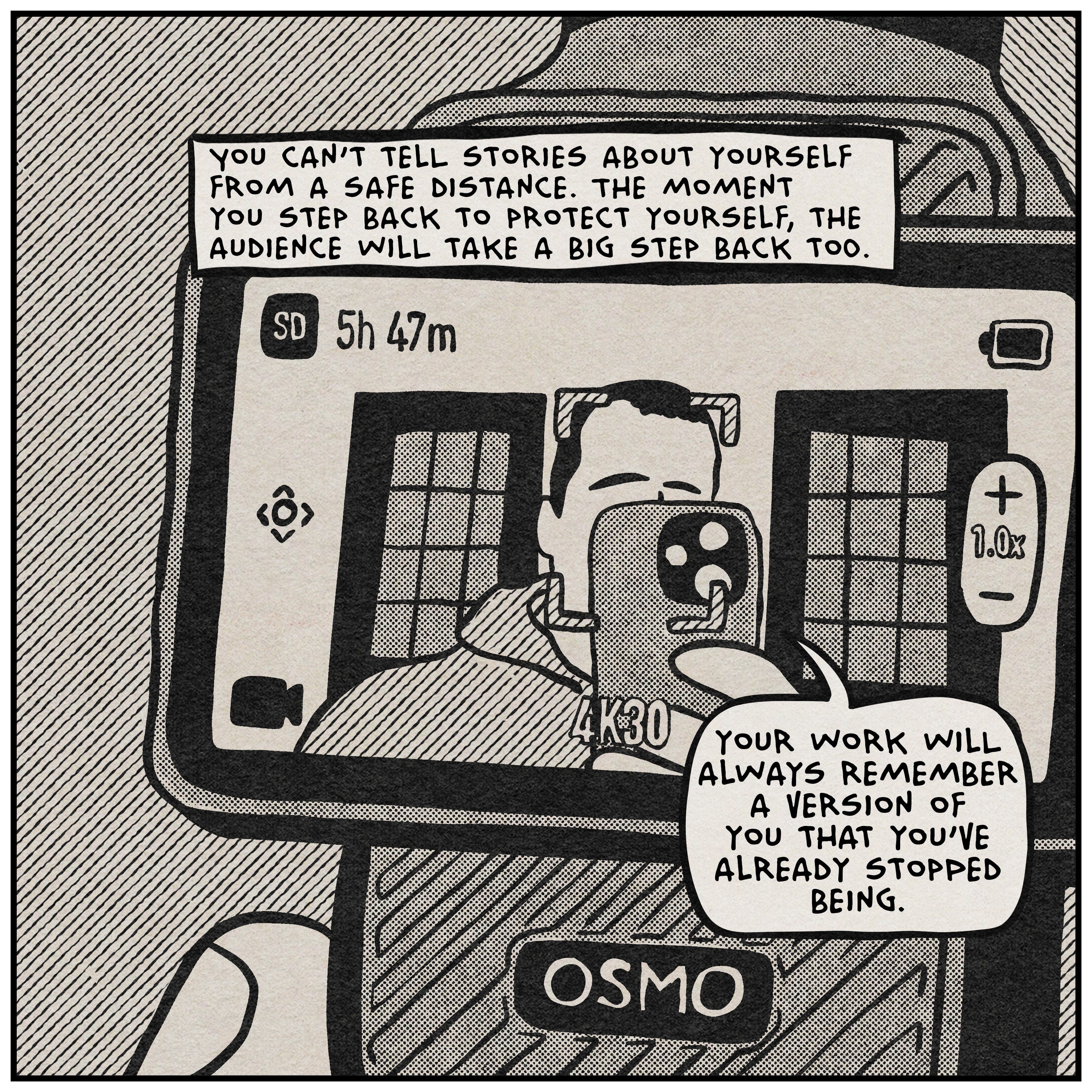
People often say that you should tell stories about your scars, not your wounds. And although that might sound like a rule about timing, it’s actually a rule about transformation.
The wound and the scar are not the same story. They share the same event, the same facts, the same sequence of what happened. But the wound is still trying to figure out if it will survive. The scar already knows. That knowledge changes everything—the shape of the telling, the details that matter, the thing it’s actually about. You cannot foreshadow something you’re in the middle of. Time isn’t just the thing that makes it safe to share. It’s what tells you what you’re sharing.
This is what makes a public archive strange to live inside. The versions of you preserved in old work reflect who you were after you’d already done the work of what you thought was understanding—the scar version, not the wound. But you don’t stop changing just because you found some clarity one time. You accumulate more experiences, more revisions, more distance from things you thought you’d fully reckoned with. The person who told that scar story three years ago understood something true. They just didn’t know everything that came after. Your audience, discovering old and new work in the same afternoon, has no way to feel that time gap. To them it’s all equally you. But for you, you’ve long since moved past that point.
The obligation, I think, is to keep becoming. Don’t let the archived version of you calcify into the definitive one. The work remembers who you were. That’s fine. What matters is whether you’ve actually changed, or just accumulated footage.
I’ve written speeches for CEOs. I’ve written scripts for quarterly investor earnings calls. I’ve written internal corporate memos engineered to make decisions that were already made sound like they were always inevitable. I spent years doing that type of work.
What happens when you spend long enough writing in other people’s voices is that the craft becomes fluent and completely unmoored from anything personal. You know exactly how to construct warmth, authority, the impression of self-awareness. (See what I did there?) You know which details do which work. What you risk losing track of is you. Somewhere in the middle of all that fluency, you question whether your voice is still your own. Your special snowflake of a voice hasn’t had much room to develop while you’ve been busy doing impressions of everyone else.
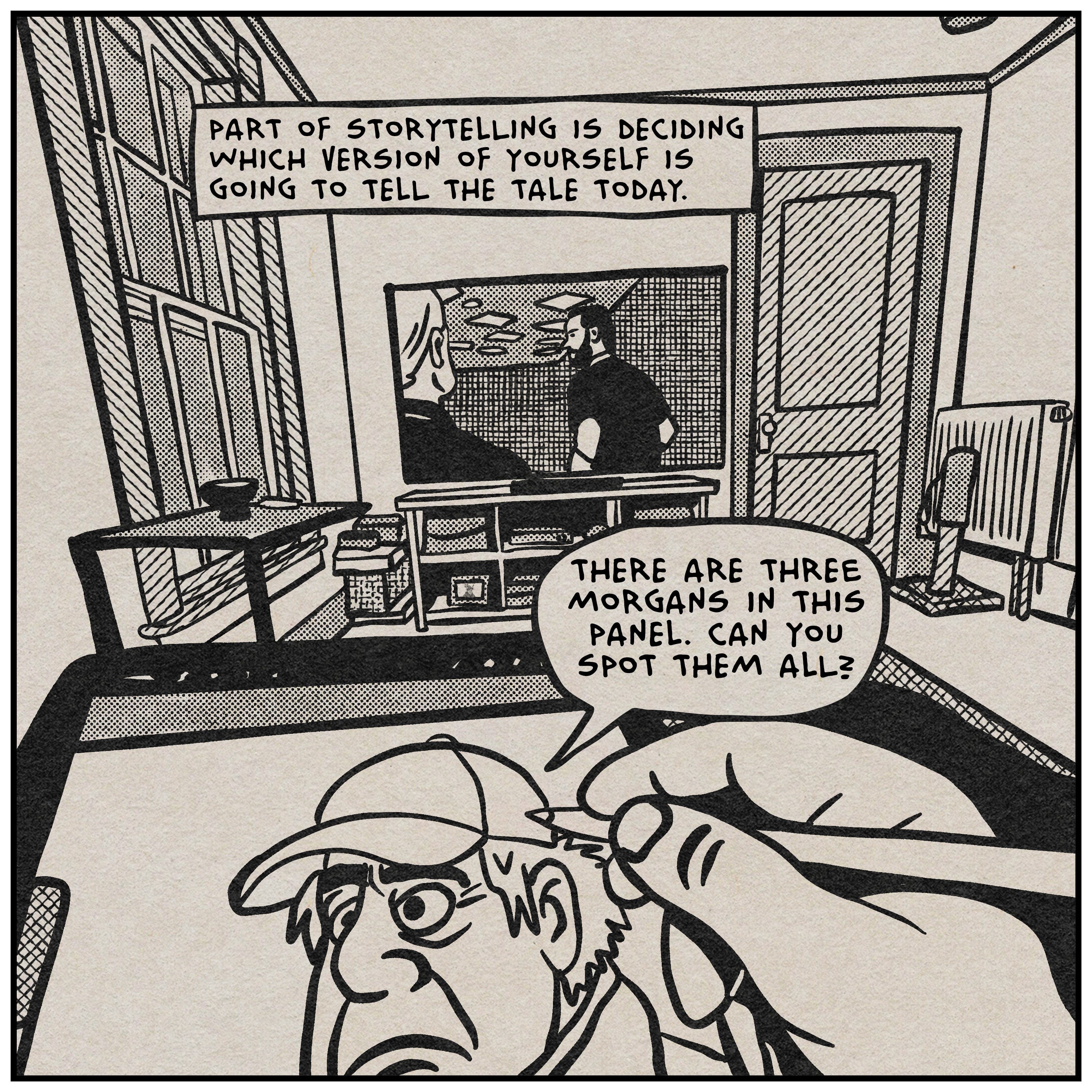
But once you do enough autobiographical work, the problem is no longer losing your voice. It is multiplying selves. You stop moving through the world as a single self. There is the self inside the moment. The self watching the moment. And the self already shaping it—finding the entry point, structuring the narrative arc, wondering what the payoff will be.
That third self is the craftsman. It’s genuinely useful. It’s also what makes it increasingly difficult to simply be somewhere without drafting it at the same time.
The craft has a problem. The problem is what the craft starts doing to the raw material.
Every story begins as something that happened to you. But once the shaping reflex gets fast enough, the sequence reverses. Things start happening for the story. You clock the tension in a situation before you’ve felt it. You find the structure before you know what you think. The experience gets processed before it’s finished. And eventually you look up and realize you’ve been running the sawmill so hard you’ve started feeding it trees before they’re even fully grown.
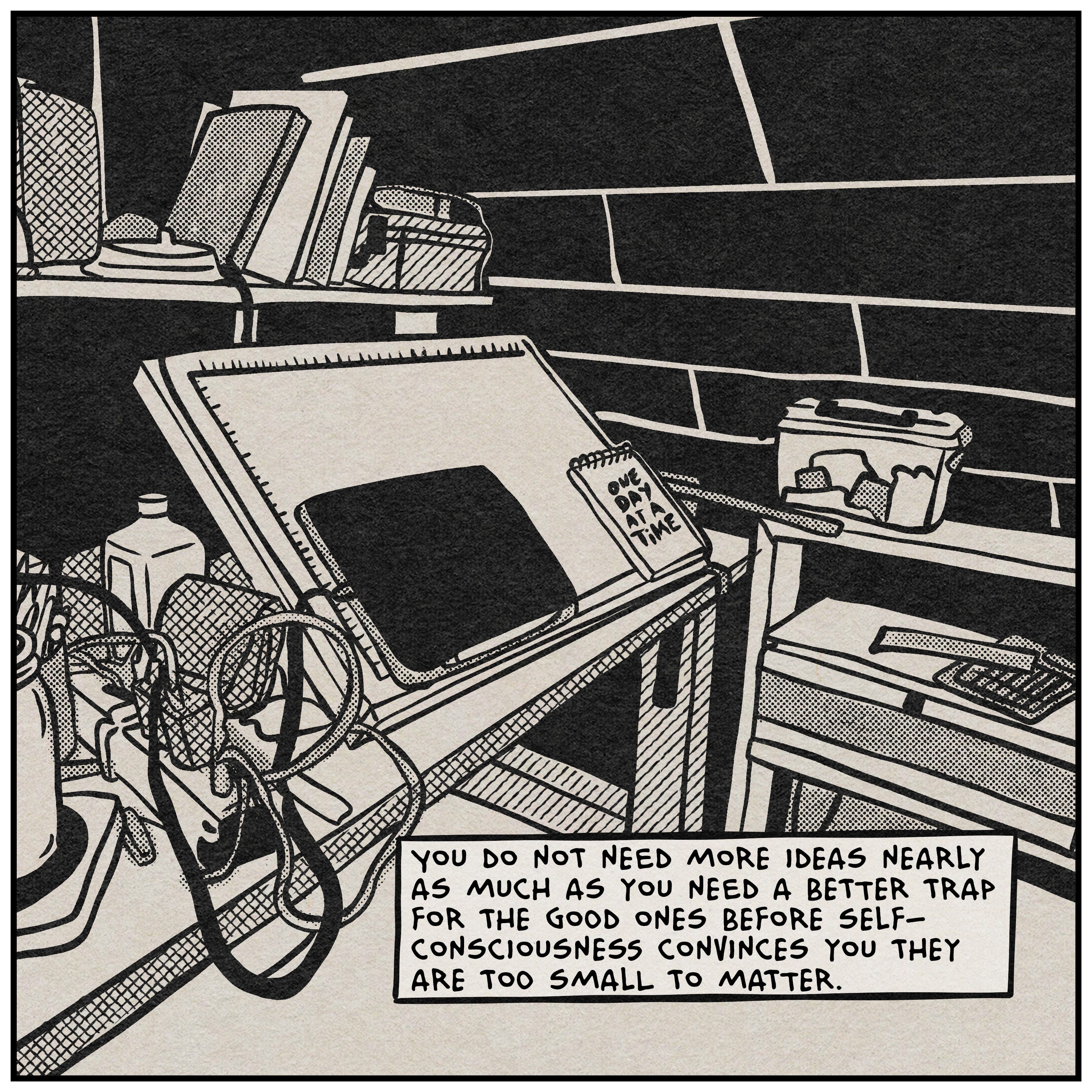
There’s a kind of creative silence that comes after the audience gets big enough. You’d think more attention generates more energy. What it actually generates is more self-consciousness. You stop having ideas the way you had them when nobody was watching—loosely, wastefully, without consequence. You start auditing them before they’re finished forming. Does this fit what I do? Is this what people come to me for? Will it underperform and leave me sitting with that number for a week?
The curation reflex starts colonizing the creation reflex. And that’s a serious problem. Creation needs to be stupid before it can be good. It needs the freedom to fail in private, to follow a bad idea far enough to find out what’s on the other side.
I keep a notebook in the barn because the barn does not feel like my office. The ideas that show up there still feel like thoughts instead of content. If you create regularly, find that room in your own life—the walk, the drive, the window of morning before the phone comes on. That’s not where you rest from the work. That’s where the work begins. Treat it accordingly.
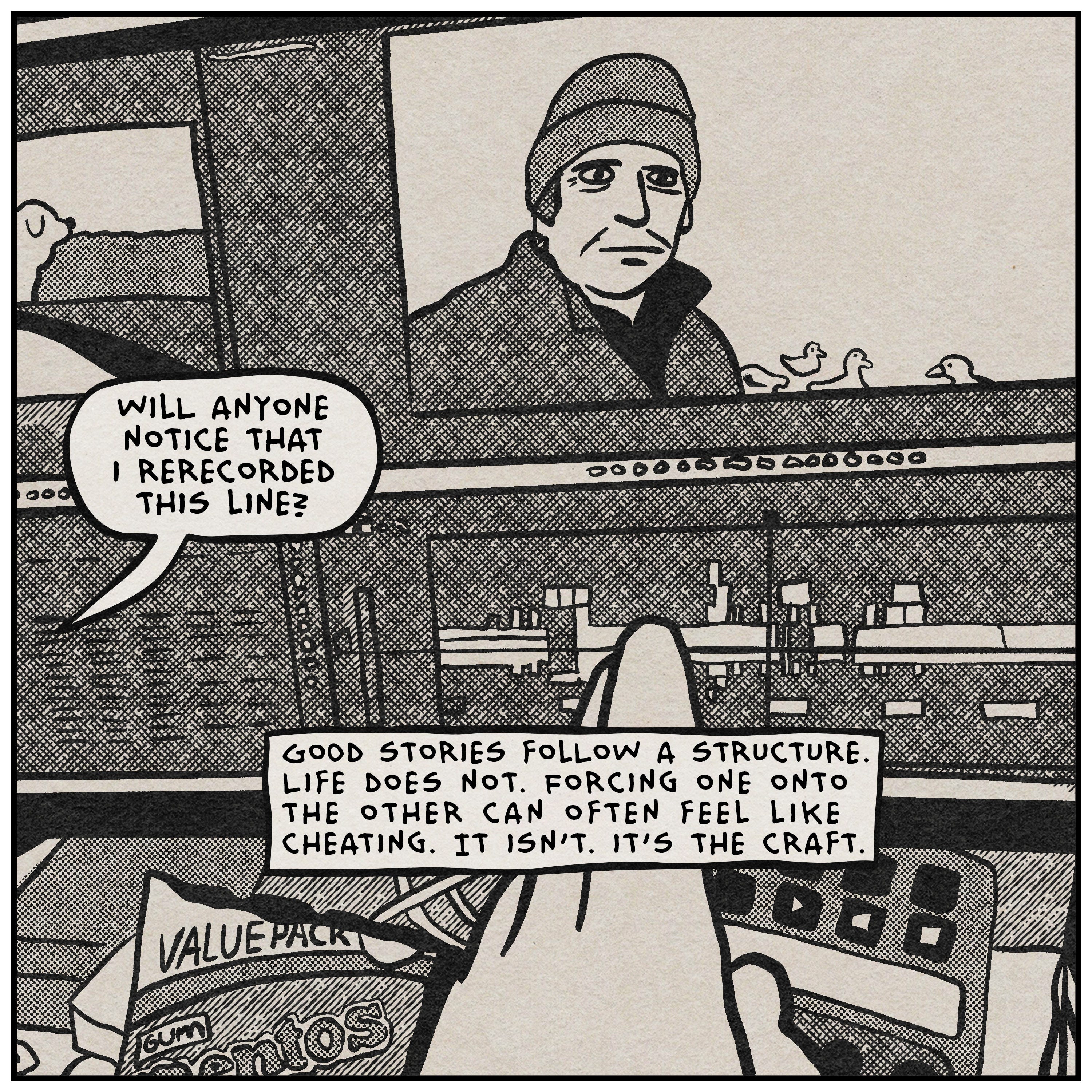
In college, I learned to edit with a splicer and tape. Actual physical cuts on actual film prints, made with my sweaty, Cheeto-stained fingers. And then I would tape the pieces of film back together with Scotch tape. Each cut was nearly permanent and difficult to undo. You chose your in and out points, and you committed. You couldn’t just go back. The permanence was the discipline.
Digital editing ruined that discipline for me. The infinite undo made me worse, not better. I’d cut the same sequence thirty different ways without committing to any of them, convinced that the right version was always one more try away. I was mistaking optionality for craft. They’re not the same. Craft means deciding. Optionality means delaying the decision.
Editing teaches you that story structure isn’t imposed on the material from outside. Story is found inside the material. Every real experience has a shape—something began, something happened, something changed. Your job isn’t to invent that arc. Your job is to find the arc. To find the arc, you’ve got to watch your own footage the way you’d watch footage that has nothing to do with you. No loyalty to how it felt. No investment in which part you thought was good. Just: where is the story in here, and what is blocking it?
The answer, almost always, is you. You’re protecting a moment that didn’t serve the story because you liked how it felt. The craft is mostly the willingness to murder those moments. Which is harder than it sounds, because that’s your real life you’re cutting.
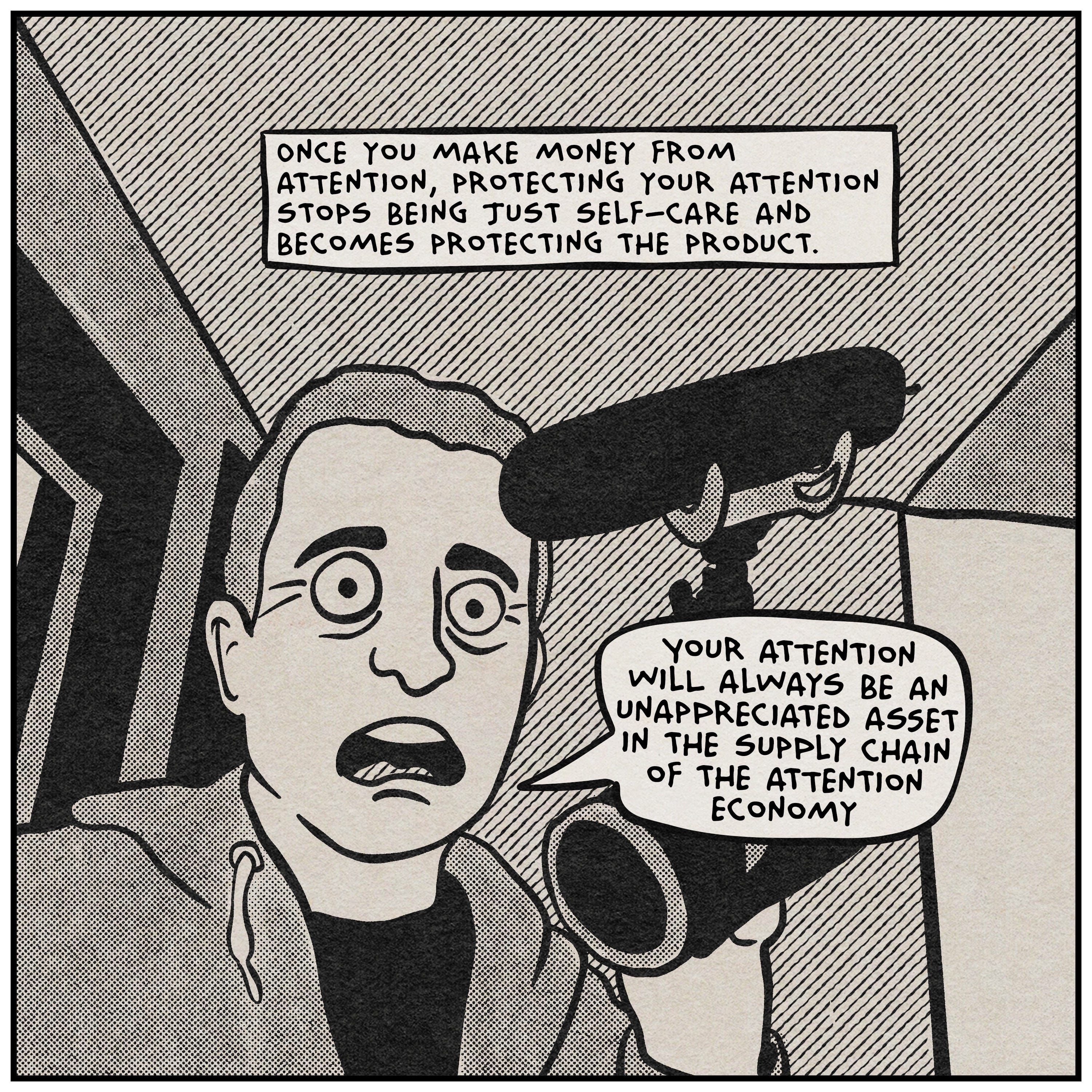
Things get more complicated the moment attention starts paying your rent. The part of you that you put inside your work stops being purely expressive and becomes functional as well. It has a job now.
That shift can make a person practical in ways that do not always feel noble. Boundaries stop sounding like vague self-help language and start sounding like maintenance. Rest is no longer just restorative. It becomes strategic. Focus becomes budgeted. The mind that once wandered freely through experience now has to survive being used.
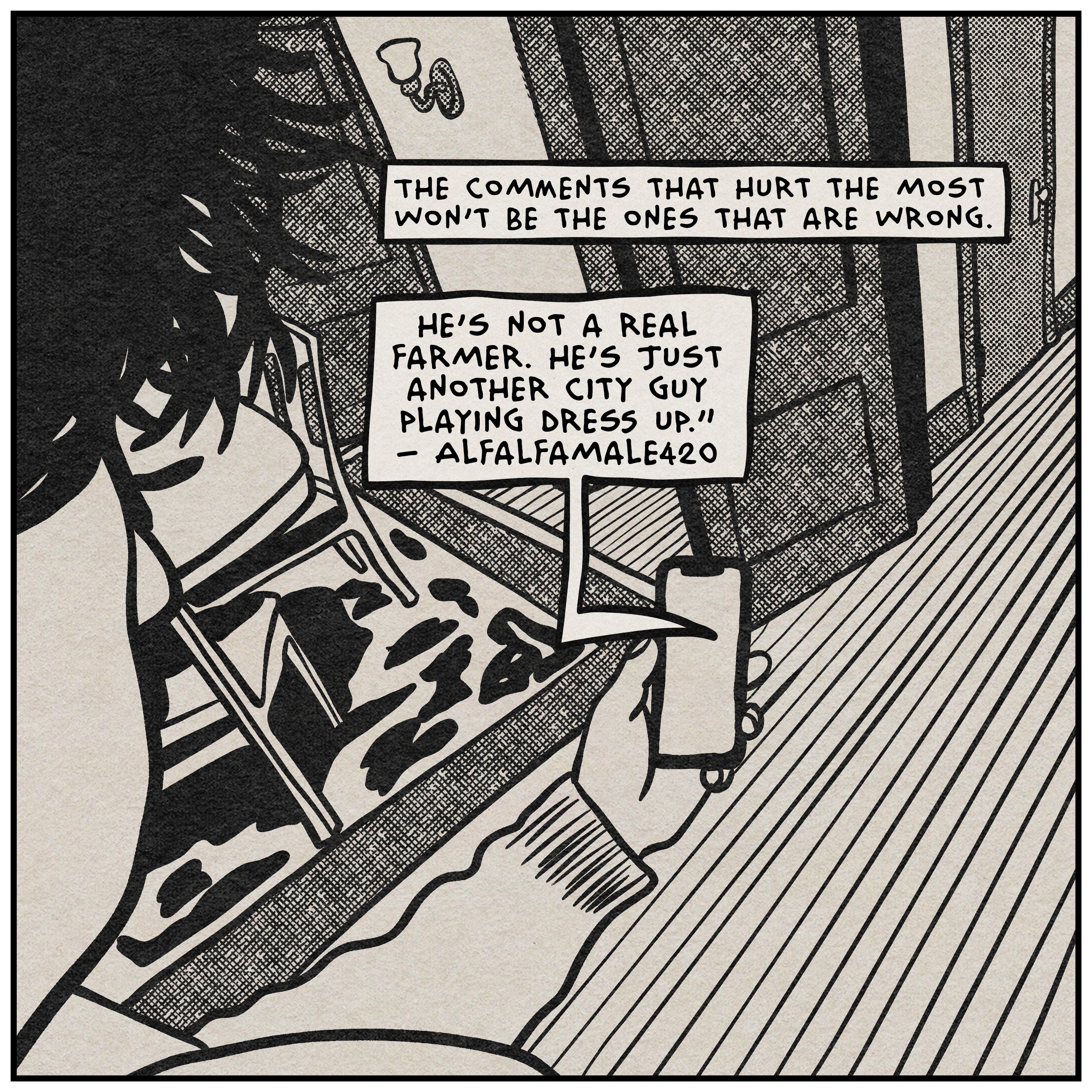
Every person who puts their life online develops, over time, a personal taxonomy of criticism. There’s the criticism that’s simply wrong—misreading your intent, misunderstanding your work, projecting something onto you that has nothing to do with you. That criticism is almost easy. You can dismiss it cleanly because it doesn’t find anything real to grab onto.
Then there’s the other kind. The comment that arrives and lands differently—not because it’s cruel, but because somewhere underneath the hostility or the reductiveness or the bad faith of the delivery, there is truth. A question you’ve been asking yourself in private. A tension you’ve been managing rather than resolving. A gap between who you’re presenting yourself to be and who you actually are that you hoped wasn’t visible from the outside.
You can’t dismiss that comment. You can argue with the framing. You can be legitimately angry about the tone. But the truth at the center of it sits there and doesn’t go away, because it was already there before the comment was ever posted. The comment just named it.
Get used to those comments. They are part of the price of admission. The temptation is to armor up against them, to get better at dismissing, to build the kind of confidence that doesn’t leave a surface for them to catch on. That’s the wrong instinct. The comment that stings because it’s true is, if you can stand to look at it clearly, the most useful piece of feedback you’ll ever receive. It’s telling you exactly where your work and your self-presentation haven’t yet caught up to each other. That’s not an attack. That’s a map.
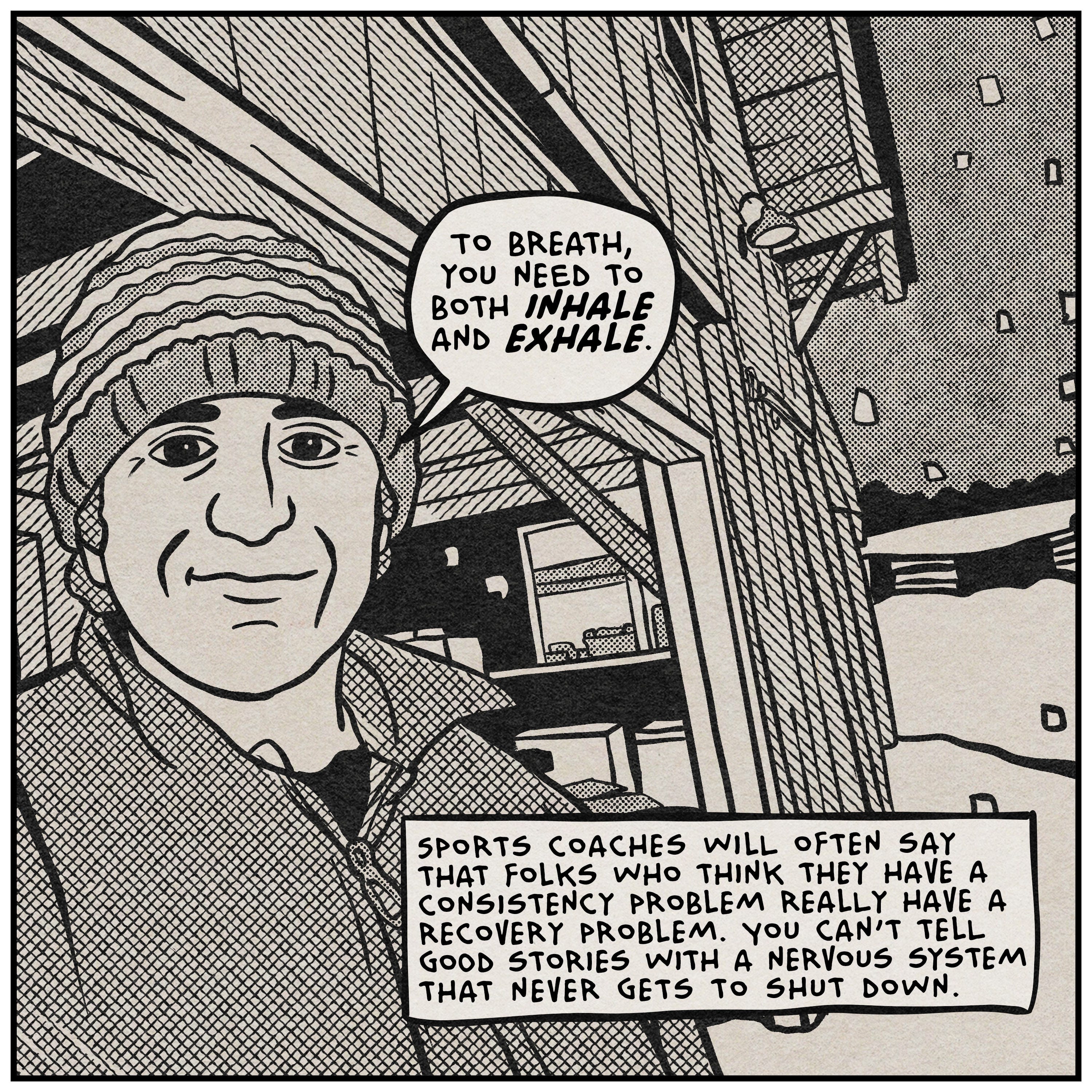
There is a math problem at the center of telling stories about yourself that nobody warns you about. Output requires input. The more you document, the more you consume your own raw material. And unlike most resources, you can’t import it from somewhere else. It has to come from your actual life: the unrepeatable hours of being a person moving through the world. You can’t stockpile it. You can’t manufacture it. You can only generate it by living in a way that isn’t entirely for audience consumption.
The creators I’ve watched burn out didn’t run out of ideas. They ran out of life that hadn’t already been turned into content. Every experience pre-digested before it finished happening. Every feeling assessed for its potential before it was fully felt. Eventually, the footage starts to look the same because the person shooting it stopped having anything new to draw from. They’d exhaled everything and forgotten to breathe in.
The undocumented hours aren’t the time you spend not working. They’re the work. They’re where the next thing comes from. Protect them like you’re a maremma.
Postscriptum
This essay has been sitting in my notebook for two or three years. It started as a single line I scribbled down after reading Rick Rubin’s book on creativity. I loved the way he just drops these little nuggets and walks away. This is my feeble attempt to do something similar. I’m not sure it landed, but I had fun trying, and I hope you got something out of it.
Pretty much every idea in here—and definitely every comic panel—started as a scrap in a notebook. Little things I’d noticed and written down over the years, waiting for a home. This week’s post is basically what happens when you finally stop waiting and just tape them all to the same wall.
I want to flag something because I’d hate for you to walk away with the wrong read: this essay might come across as a little whiny. Like someone complaining about a job they hate. That’s not what it is. I freaking love what I do. I feel like I won the lottery. If I actually won the lottery tomorrow, I’m not sure my life would look very different. Maybe some fancier equipment. Fewer sponsored brand videos. Otherwise? Same farm, same cameras, same life. That’s not a complaint. That’s the whole point. I feel a wicked amount of gratitude for my life turning out the way it has.
While I’m at it: nothing in here is a dig at the people who watch my videos. If anything, the opposite essay is the one I’ve been meaning to write—about how genuinely bizarre and moving it is that actual human beings take actual time out of their actual days to watch me do farm chores. That still stops me cold when I think about it too long. That essay is coming. Consider this an IOU.
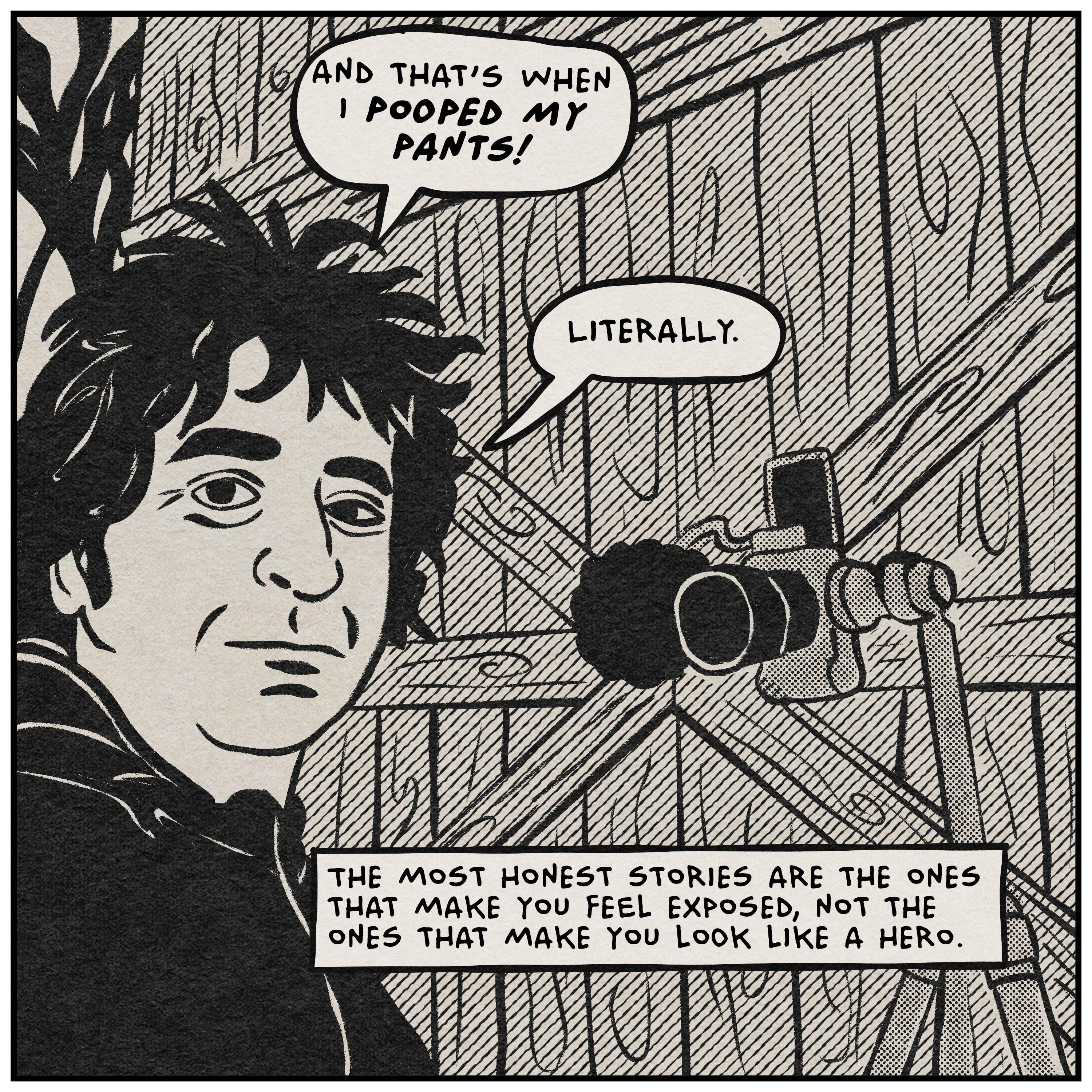
The drawing style this week is a little different, and I want to explain why. I think it’s actually relevant to the topic. Instead of drawing in my usual style, I went back to something I used to do a lot in animation—tracing and simplifying photographs. Everything you’re seeing in these panels started as a photo from my camera roll over the last couple of years. I brought them into the iPad and drew them out by hand. The result looks a lot like the photo. But it’s obviously not the photo. A significant amount of detail was edited out of the translation. I didn’t plan it this way, but it turned out to be a pretty good metaphor for the whole essay. Also, I just got a new Procreate brush pack that replicates halftones and cross hatching really well. You’re going to see over-using those effects a lot over the next few weeks.
Last month, my latest book, Dirt Rich Living, was released. If this essay felt a little cryptic and you’re looking for the more concrete version of the same story—how I left the corporate world, got started on the farm, started making videos—that’s what the book is. Same story, less metaphor.
Also, I think there are still a few copies of the Something Real zine I did with Jessica Sowards. You can find them here! There are rumors of a sequel. But those are just rumors… for now.
I know this week is a departure from last week, which was a departure from the week before. That’s intentional. One of the things I genuinely dislike about platforms like YouTube and TikTok is the pressure to stay in your lane. What I’m trying to build here is something defined more by how I tell stories than what they’re about. That’s the hope, anyway.
If this one resonated with someone you know—a writer, a creator, anyone who has ever pointed a camera at their own life—send it to them. Word of mouth is the only algorithm I’ve got. Thanks for reading, friends.
I found all three Morgans, but I won't spoil it for anyone else.
I think I now know what's holding me back from actually transferring all the ideas I have saved for stories I want to tell - my life isn't comfortable enough for the cortisol levels to come down. It's hard to wax poetic when the future is jittery and uncertain. But this makes me think.
Your pieces usually make me work. Let me get to work on this one now.